Dayworthy itinerary

Three days in Naples, from Spaccanapoli to Pompeii

A realistic 3-day Naples itinerary

A balanced first visit split into the historic center (the Duomo, Spaccanapoli, Santa Chiara, and the underground), a day trip to Pompeii, and a final day of hilltop views, the Royal Palace, and the waterfront.

Destination
Naples, Italy
Length
3 days
Pace
balanced
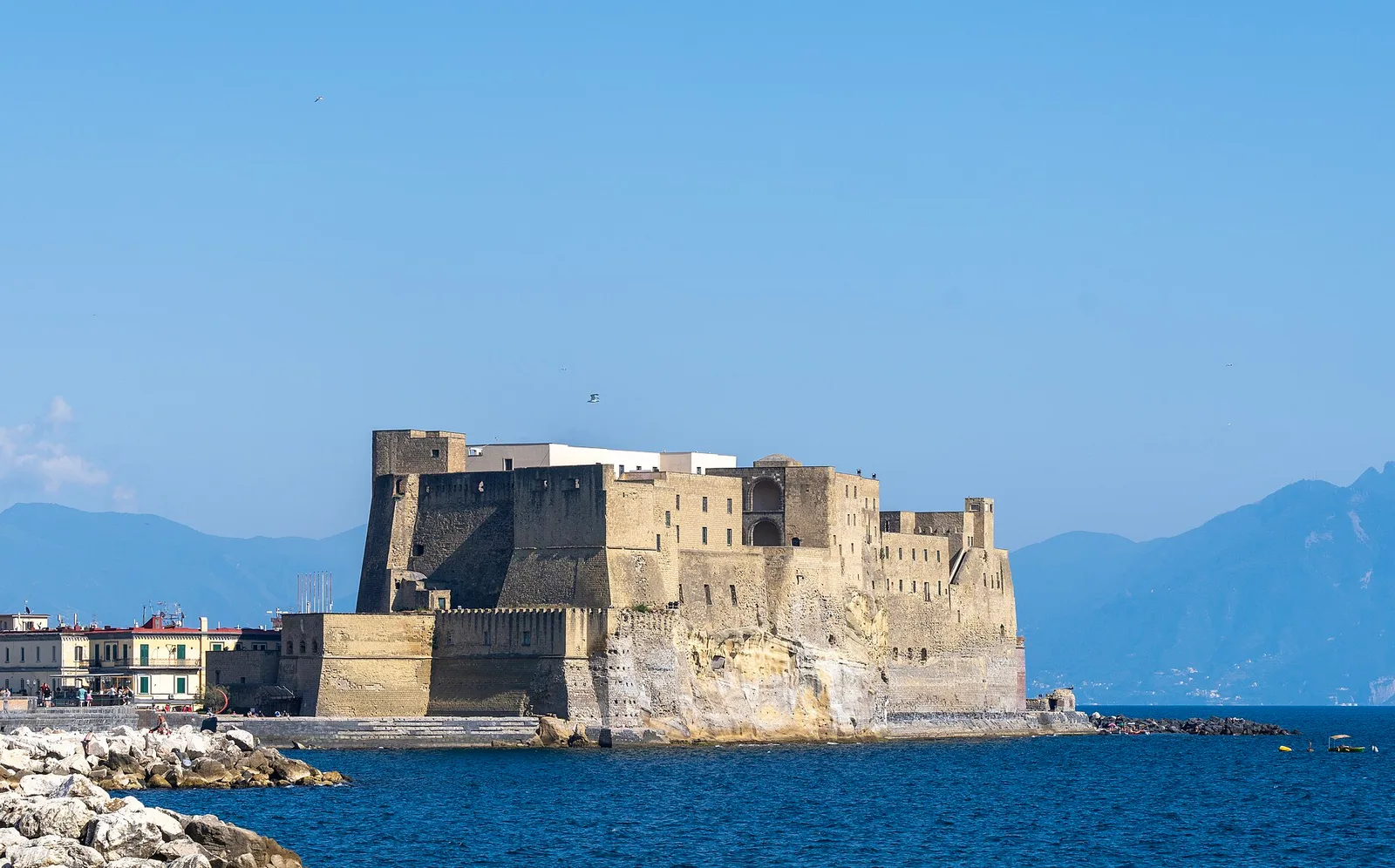
Castel dell'Ovo on its rocky islet beside the blue Bay of Naples
Photo: PaestumPaestum · CC BY-SA 4.0

Day-by-day plan

A paced plan, not an endless list.

Day1

Sansevero Chapel, San Gregorio Armeno, the Duomo, Naples Underground, and Spaccanapoli

Spend the day inside Naples' dense historic center: an early slot at the Sansevero Chapel, the nativity-workshop street, the Duomo before its midday break, and a guided underground tour after lunch. Finish in Santa Chiara's cloister and along Spaccanapoli, then an aperitivo and dinner.

  1. 1 hour

    Sansevero Chapel Museum

    See the Veiled Christ marble sculpture (booking is required).

    Sansevero Chapel Museum is one of those places that can completely change your opinion of a short museum stop: compact, intense, and packed with detail. It is best known for its extraordinary sculptural works and the sense that almost every surface has something worth slowing down for, so it rewards visitors who like art, symbolism, and a little historical atmosphere. Expect a visit that feels more like stepping into a carefully preserved masterpiece than touring a large museum.

  2. 45 min

    Via San Gregorio Armeno

    Explore the famous alley lined with traditional artisan nativity workshops.

    Via San Gregorio Armeno is the narrow lane of Naples known for its workshops making nativity figures and crib scenes. It is worth walking for the craft, the color, and the very Neapolitan street atmosphere. Expect it to be crowded and tight, with shops that are busiest in the weeks before Christmas, and keep your bag close.

  3. 1 hour

    Cathedral of Santa Maria Assunta

    Visit the Duomo, home to the royal chapel and relics of San Gennaro.

    The Cathedral of Santa Maria Assunta is one of the most important religious sites in Naples, with a layered interior that reflects centuries of rebuilding, patronage, and faith. It is worth visiting for the sense of history, the dramatic church setting, and the chance to see a place that still feels central to local life rather than frozen as a museum. Expect a serious church visit rather than a casual sightseeing stop, so it rewards unhurried attention and respectful behavior.
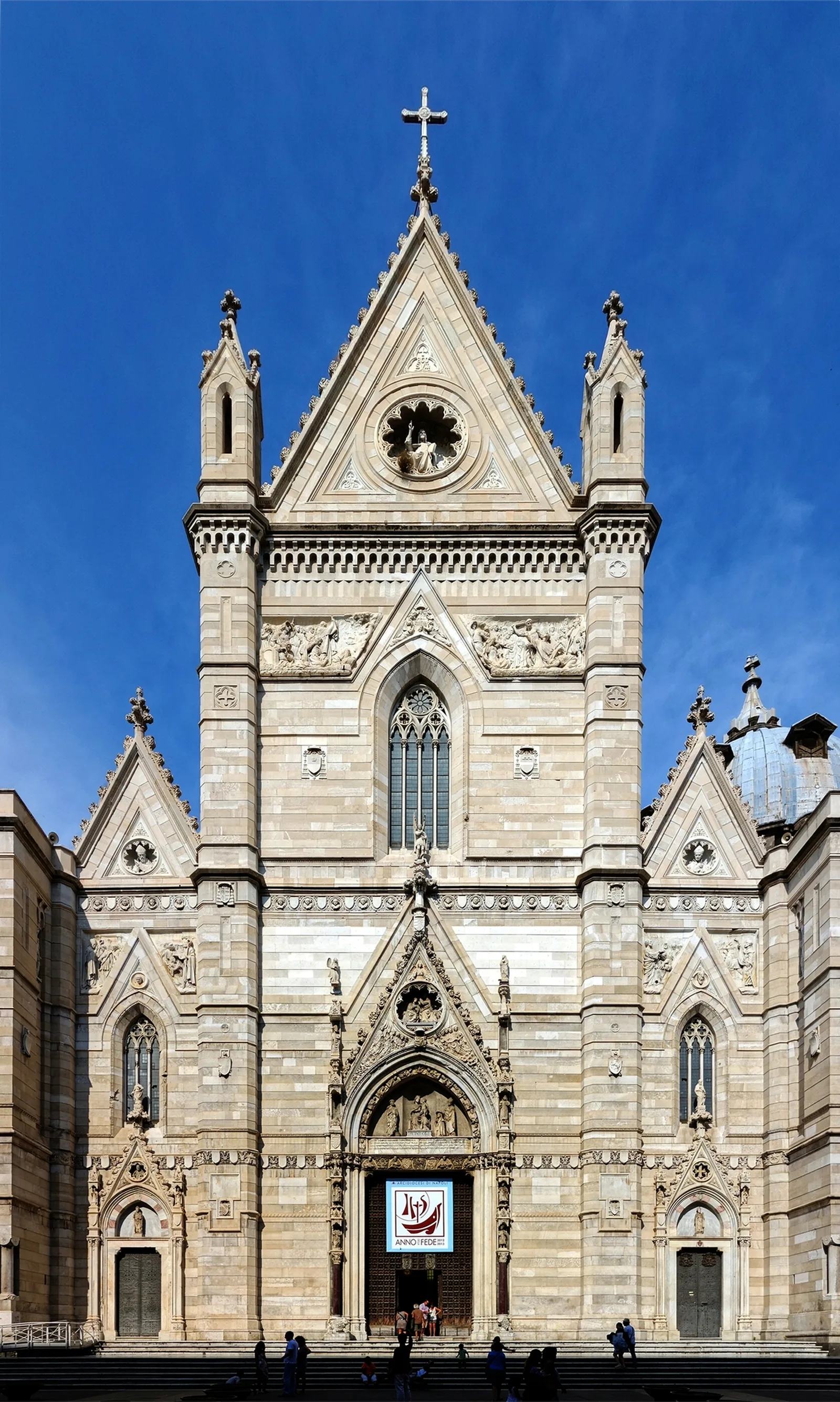
    The pointed neo-Gothic facade of the Naples Cathedral against a blue sky
    Photo: Velvet · CC BY-SA 3.0
  4. 1 hour 15 min

    Pizza lunch

  5. 1 hour 30 min

    Naples Underground

    Descend about 40 meters below street level into old aqueducts and wartime air-raid shelters (guided tours at set times from Piazza San Gaetano).

    Naples Underground lets you see a side of the city that most visitors never get to experience: a network of subterranean spaces shaped by ancient building, later reuse, and the city’s long, complicated history. It is worth it if you enjoy guided, story-rich visits and don’t mind a little atmosphere; expect cool temperatures, tight passages in places, and an experience that feels more interpretive than museum-like.

  6. 1 hour

    Complesso Monumentale di Santa Chiara

    Admire the quiet courtyard decorated with vibrant 18th-century majolica tiles.

    Complesso Monumentale di Santa Chiara is one of those places that lets you step out of Naples’ street energy and into a quieter, more contemplative world. Visitors come for the church and especially the cloister, where the atmosphere is gentler and the decorative details make the visit feel worthwhile even if you are not usually drawn to religious sites. It is a good stop if you want a mix of history, architecture, and a pause from the city’s pace.
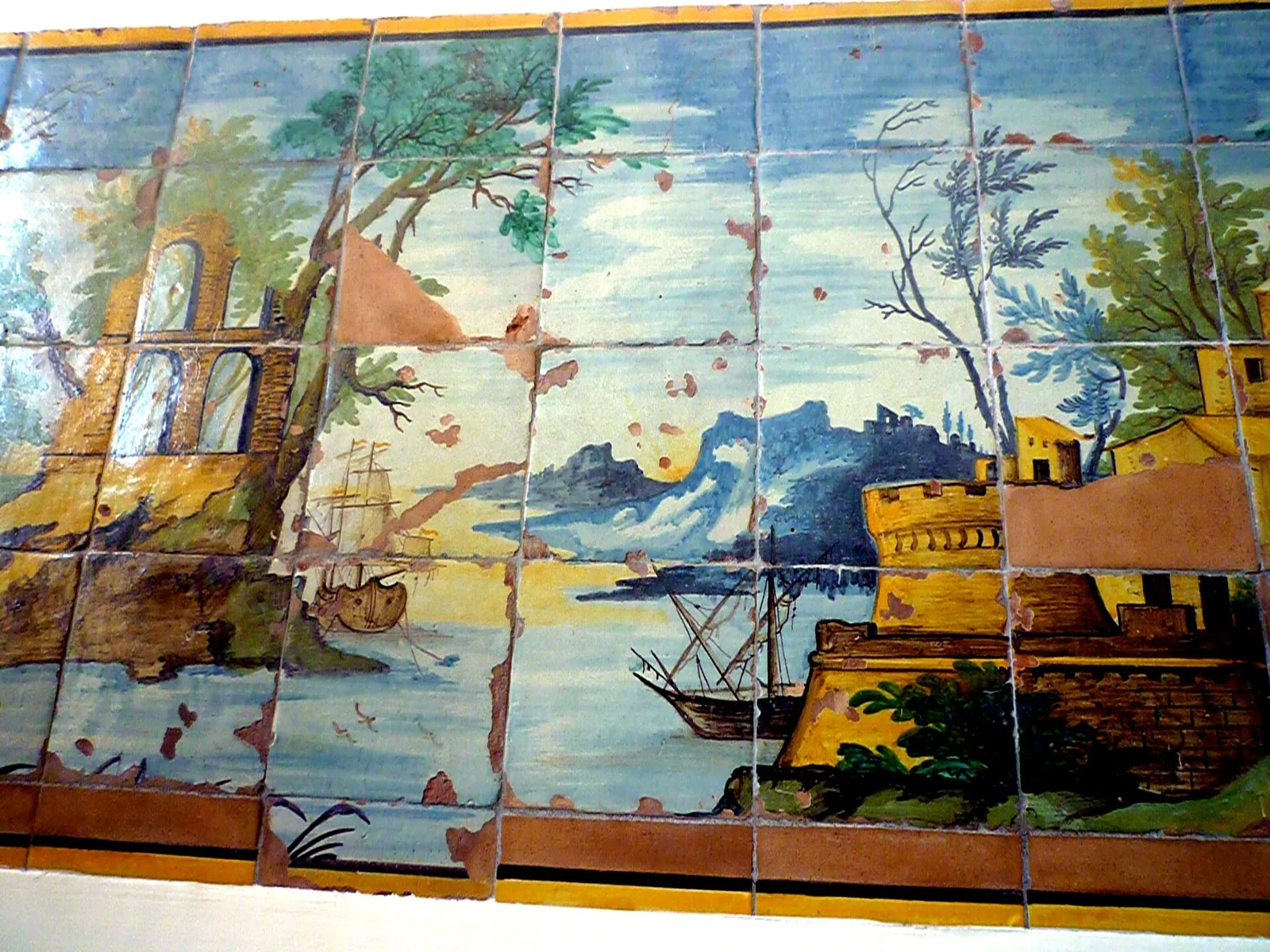
    A panel of painted majolica tiles showing a harbor scene, from the Santa Chiara cloister
    Photo: Pierfelice Licitra · CC BY 3.0
  7. 1 hour 15 min

    Spaccanapoli

    Wander the straight, bustling artery that cuts through the heart of old Naples.

    Spaccanapoli is less a single sight than the famous street corridor that cuts through the historic center, and that is exactly its appeal. It gives you the most direct feel for Naples: churches, workshops, apartments, scooters, laundry, and everyday life packed into one energetic slice of the city. Come here if you want atmosphere and a strong sense of place; skip it if you want a calm, polished stroll.
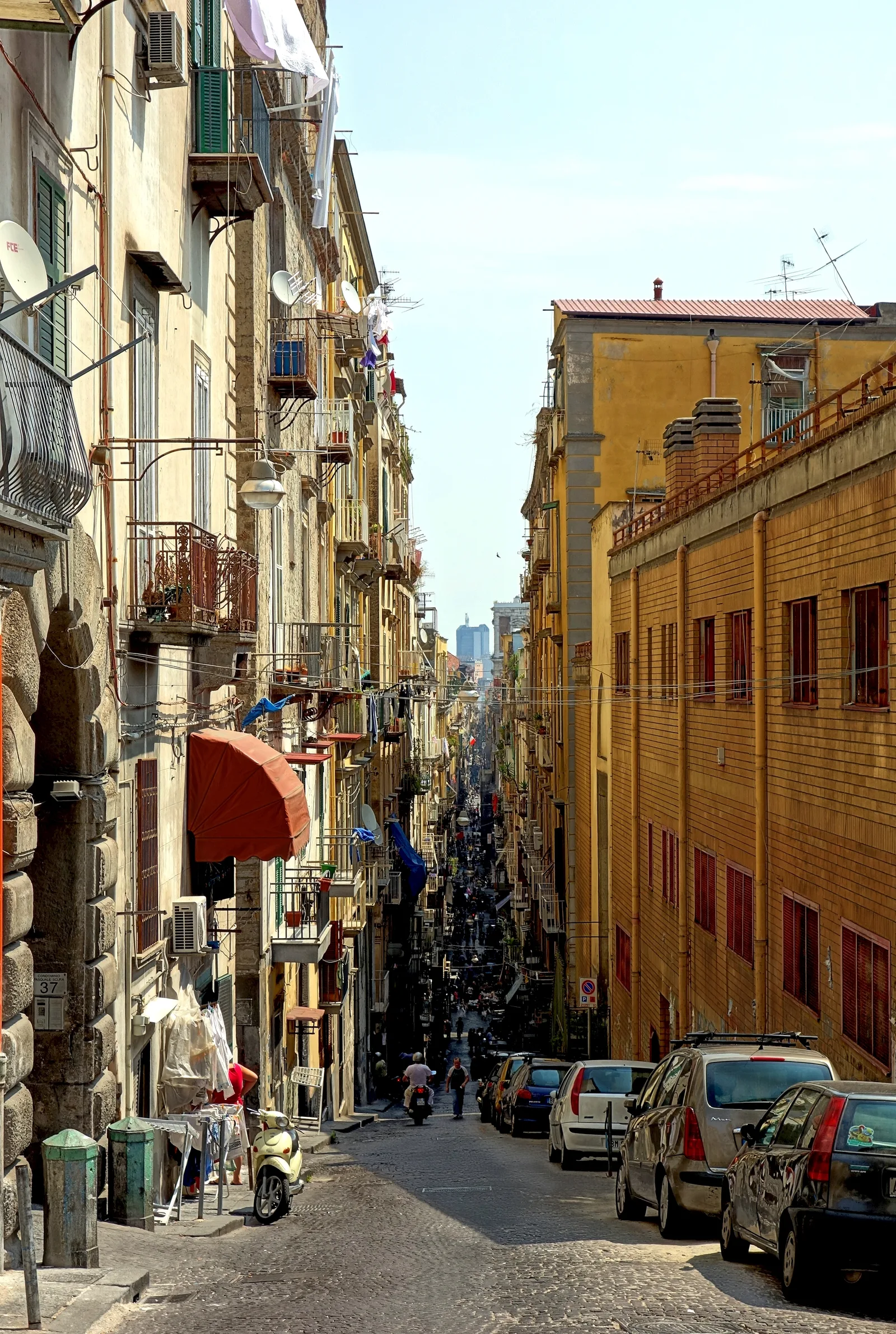
    A narrow, steep Naples street lined with balconies, laundry, and scooters, looking toward the city
    Photo: Velvet · CC BY-SA 3.0
  8. 1 hour

    Aperitivo and a rest

  9. 1 hour 30 min

    Dinner in the historic center
Day2

A day trip to Pompeii

Take the train out to Pompeii early, spend the morning in the ruins, and have a proper lunch before heading back to Naples in the afternoon. Keep the evening free; Mount Vesuvius is a separate, optional commitment.

  1. 1 hour

    Travel to Pompeii (Circumvesuviana train or a tour)

  2. 3 hours 30 min

    Pompeii Archaeological Park

    Explore the remarkably preserved Roman city buried by Vesuvius in AD 79.

    Pompeii is the Roman city buried by the eruption of Vesuvius in AD 79, and walking its streets, houses, and forum gives a vivid picture of everyday ancient life. It is worth a full morning, with the amphitheatre, the baths, and the preserved frescoed houses as highlights. Expect a lot of walking on uneven stone with little shade, so bring water, sun protection, and a plan for a limited number of sites.

  3. 1 hour 15 min

    Lunch near Pompeii

  4. 1 hour

    Return to Naples

  5. 2 hours 15 min

    Free afternoon and rest in Naples

  6. 1 hour 30 min

    Dinner in Naples

Day3

Castel Sant'Elmo, San Martino, the Royal Palace, and the waterfront

Start on the Vomero hill for views and the Certosa di San Martino, come down for the Royal Palace and Piazza del Plebiscito, and finish with a walk out to Borgo Marinari and the seafront promenade, followed by a farewell dinner.

  1. 1 hour 30 min

    Castel Sant'Elmo

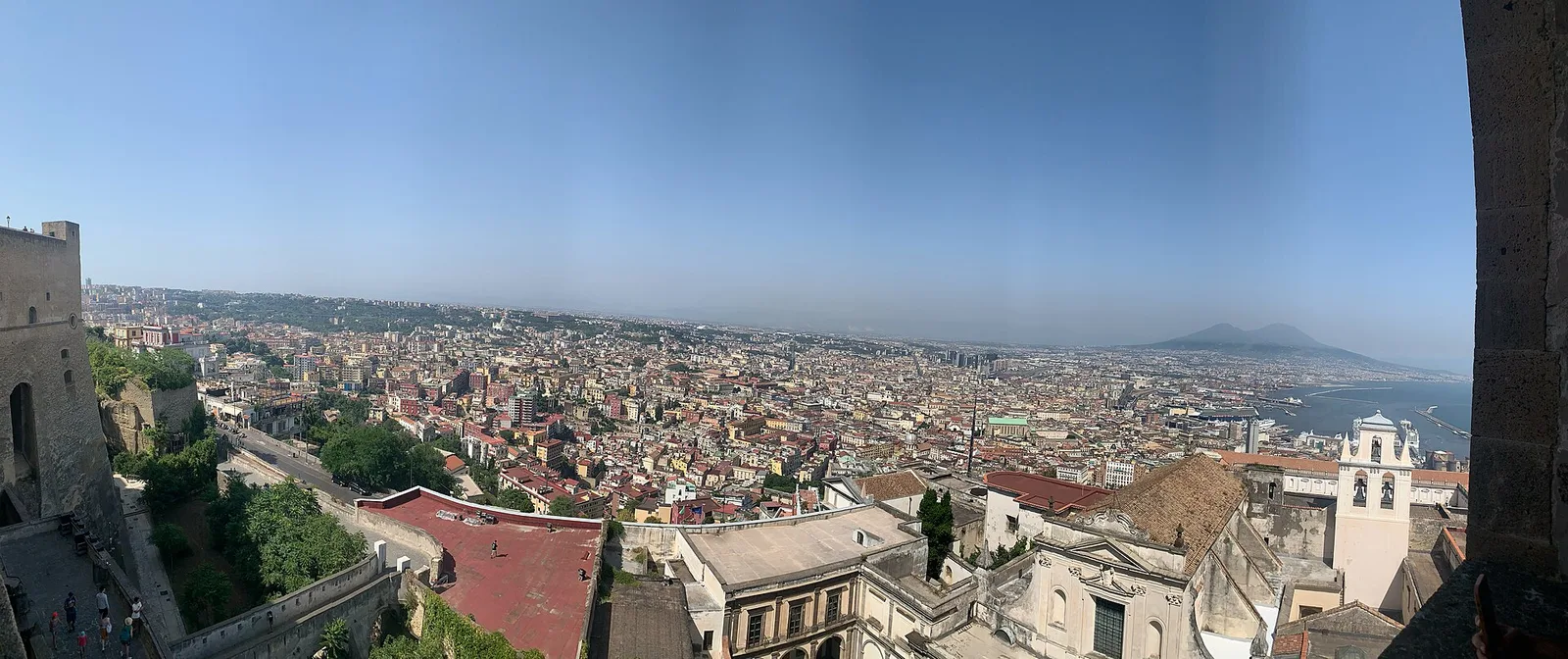
    Enjoy 360-degree hilltop views of Naples, Vesuvius, and the sea.

    Castel Sant'Elmo is a massive medieval fortress that rewards the climb with some of the best panoramic views in Naples. Inside, the experience is more about the setting and the architecture than a packed list of sights, so it works best if you like historic places with strong atmosphere and open vistas. It is worth it for the outlook alone, especially on a clear day, but it may feel light if you are expecting a large museum visit.

    A panoramic view over the rooftops of Naples toward Mount Vesuvius and the bay, seen from Castel Sant’Elmo
    Photo: Robot8A · CC BY-SA 4.0
  2. 1 hour 15 min

    Charterhouse & Museum of San Martino

    Visit the former monastery showcasing grand baroque architecture and art.

    Charterhouse & Museum of San Martino is one of Naples’ most atmospheric cultural stops, combining the elegance of a former religious complex with collections that help you understand the city’s history and artistic taste. The setting is as compelling as the displays: expect ornate interiors, quiet cloisters, and some of the best views over Naples and the bay. It rewards visitors who like places with both substance and a strong sense of place.

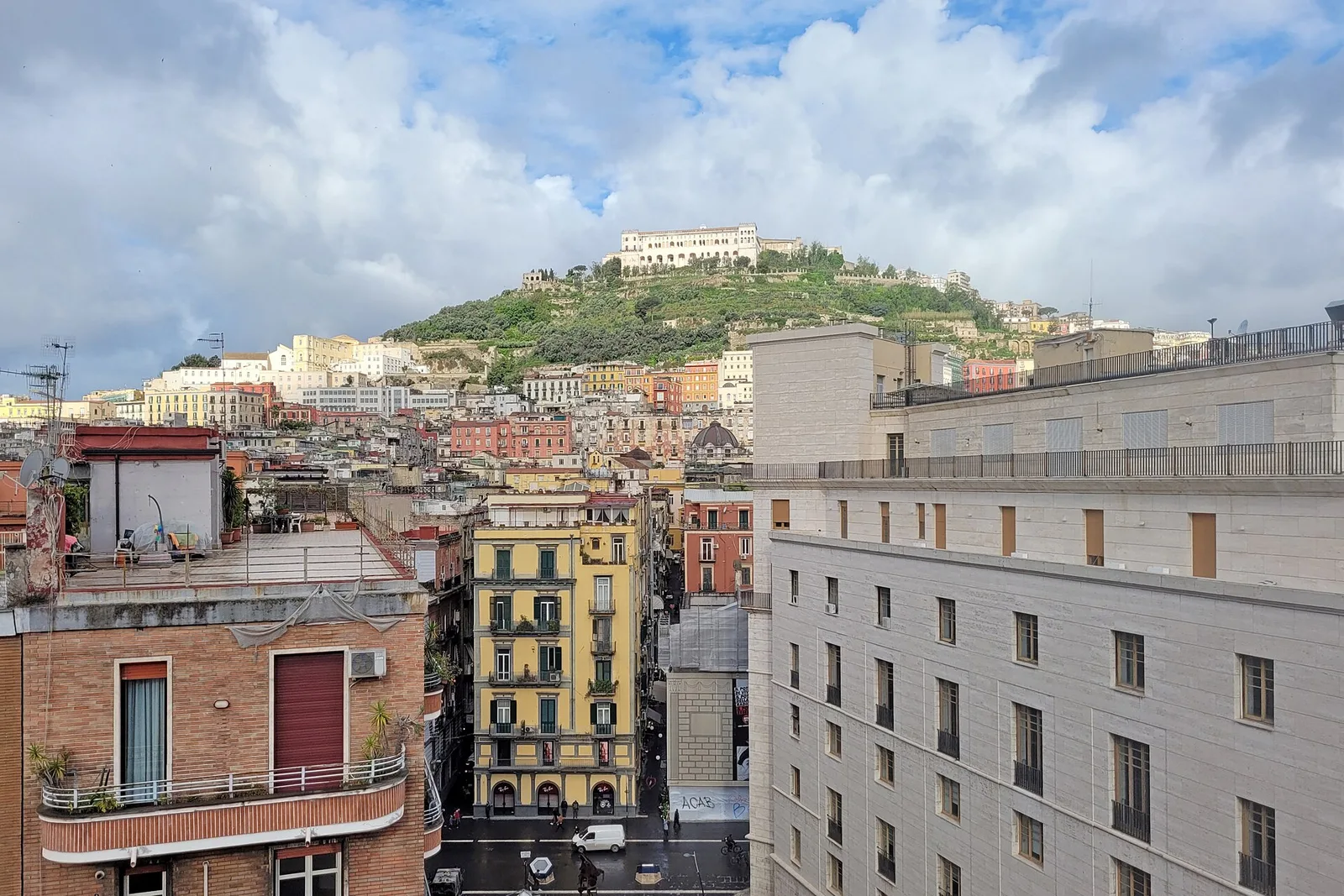
    The Vomero hill rising above the rooftops of Naples, with the Certosa di San Martino near the top
    Photo: Bernard Gagnon · CC BY 4.0
  3. 1 hour 30 min

    Lunch on the Vomero hill

  4. 1 hour 30 min

    Royal Palace of Naples

    Tour the lavish royal apartments and grand court staircase.

    The Royal Palace of Naples is a stately, old-world palace with formal rooms, ornate details, and the kind of atmosphere that makes the history feel tangible rather than distant. It is worth a visit if you enjoy royal interiors, architecture, and a central stop that pairs easily with other sights around Naples; if you are not interested in palaces or decorative historic spaces, it can feel more like a pleasant cultural stop than a must-see.

    The long, arcaded facade of the Royal Palace of Naples on Piazza del Plebiscito
    Photo: Sordelli · CC BY-SA 3.0
  5. 45 min

    Piazza del Plebiscito

    Stroll across the majestic public square, then past the glass-domed 19th-century Galleria Umberto I nearby.

    Piazza del Plebiscito is the kind of place you come to stand in the middle of Naples and take in a big, formal slice of the city’s history and scale. It is worth seeing for the sweeping architecture, the sense of space, and the easy connection to nearby streets and landmarks, though the square itself is more about atmosphere than activities. Expect a broad open piazza that can feel wonderfully dramatic in the morning or evening, and busier when events or crowds gather.

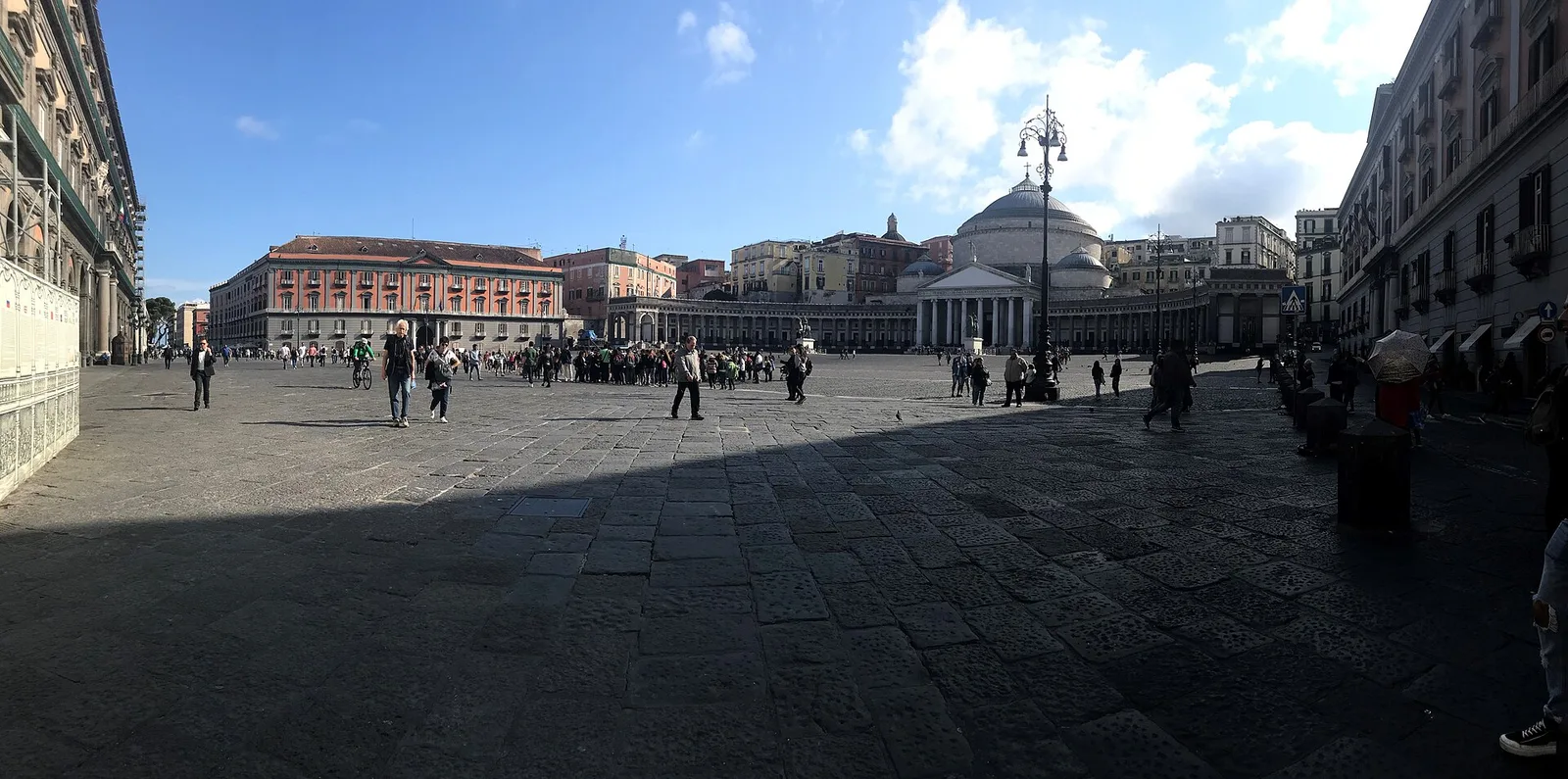
    The wide Piazza del Plebiscito, with the colonnade and dome of the church of San Francesco di Paola behind
    Photo: Giorgio Visco · CC BY-SA 4.0
  6. 1 hour 15 min

    Castel dell'Ovo and Borgo Marinari

    Walk out to the islet of Megaride for views of the castle, the harbor, and the bay (the castle interior has been closed for restoration).

    Castel dell'Ovo sits on the islet of Megaride at the edge of the bay, and the walk out along the causeway to the small harbor of Borgo Marinari is the easy, scenic part of the visit. It is worth it for the sea air, the views over Naples and Vesuvius, and the castle seen from the outside. Interior access has been restricted during restoration work, so treat this as a waterfront walk and confirm current access on the City of Naples page.

    Castel dell'Ovo on its rocky islet beside the blue Bay of Naples
    Photo: PaestumPaestum · CC BY-SA 4.0
  7. 1 hour

    Via Francesco Caracciolo

    Walk along the seaside promenade as the sun sets over the bay.

    Via Francesco Caracciolo is the seafront promenade along the Bay of Naples, with views toward Vesuvius, the castle, and the water. It is worth a slow walk at the end of the day, when the light softens and locals come out to stroll. Expect a long, open waterfront with traffic on one side and sea air on the other, not a single attraction.

  8. 1 hour 30 min

    Farewell dinner

Itinerary decisions

What makes the cut, what can wait, and what is less worth it.

Essential

  • Spaccanapoli and the historic center, with the Duomo and Santa Chiara
  • A Pompeii day trip
  • The Royal Palace and Piazza del Plebiscito
  • The waterfront and Borgo Marinari at the end of the day

Optional

  • The Sansevero Chapel and the Veiled Christ (booking required)
  • Naples Underground guided tour
  • Castel Sant'Elmo and San Martino, for the views
  • The Mount Vesuvius crater path, which needs its own timed ticket

Not prioritized

  • Fitting Pompeii and Mount Vesuvius into the same day
  • Adding Herculaneum, Capri, or the Amalfi Coast to this three-day version

Before you use this plan

  • Hours, closures, prices, and conditions can change.
  • Choose your days carefully: the Sansevero Chapel (Day 1) is closed on Tuesdays and needs a booking. On Day 3, the Royal Palace is closed on Wednesdays, and the Certosa di San Martino has one weekly closing day that sources currently give as either Tuesday or Wednesday (it appears to have changed recently), so check the museum's own page before fixing Day 3. The Museo Novecento inside Castel Sant'Elmo is closed on Tuesdays, but the castle grounds stay open. Thursday to Monday is the safe window for Day 3, and Day 1 should not be a Tuesday. Pompeii (Day 2) is open every day except a few holidays.
  • The Duomo is commonly open in the morning and again late afternoon with a midday break (and later on Sundays), and the Treasury Chapel of San Gennaro keeps its own hours; the Day 1 visit is placed in the morning, but confirm current hours.
  • Naples Underground runs guided tours from Piazza San Gaetano at set times (English tours are commonly offered every two hours, including 14:00); book the slot, and note that it is a short walk from the Duomo and San Gregorio Armeno.
  • Santa Chiara's cloister closes in the late afternoon and early on Sundays, so if Day 1 is a Sunday, visit it in the morning instead.
  • Pompeii has a last entry in the late afternoon (earlier in winter) and little shade. Tickets are named and carry a timed entry slot, so buy them in advance and book the morning slot; wear sturdy shoes and plan for the train from Naples, which takes roughly 40 minutes each way.
  • The Mount Vesuvius crater path requires a pre-booked timed ticket bought online, stops admitting visitors in the afternoon (mid-afternoon in winter, later in summer), and shuts in bad weather. It is optional and realistically needs a very early start or a day of its own.
  • Castel dell'Ovo has been closed to normal visits for restoration (any interior access has been by booked guided visit), so this stop is planned as a walk to Borgo Marinari, which is always open; confirm the castle's current status on the City of Naples page.
  • Naples is busy and fast-moving; keep bags close in crowded streets and be careful crossing roads shared with scooters.
  • This is a public example; Dayworthy adapts it to your dates, pace, hotel, and interests inside the app.

Dayworthy

Turn this example into your trip.

Dayworthy adapts the itinerary to your dates, pace, hotel, interests, and saved places.