Dayworthy itinerary

Two days in Hiroshima, from the Peace Park to Miyajima

A realistic 2-day Hiroshima itinerary

A balanced first visit split between the memorial sites and the city on Day 1 (the Atomic Bomb Dome, the Peace Park and Museum, the castle, Shukkeien and Hondori) and a ferry day trip to Miyajima on Day 2 for the floating torii, Daisho-in and a ropeway up Mount Misen.

Destination
Hiroshima, Japan
Length
2 days
Pace
balanced
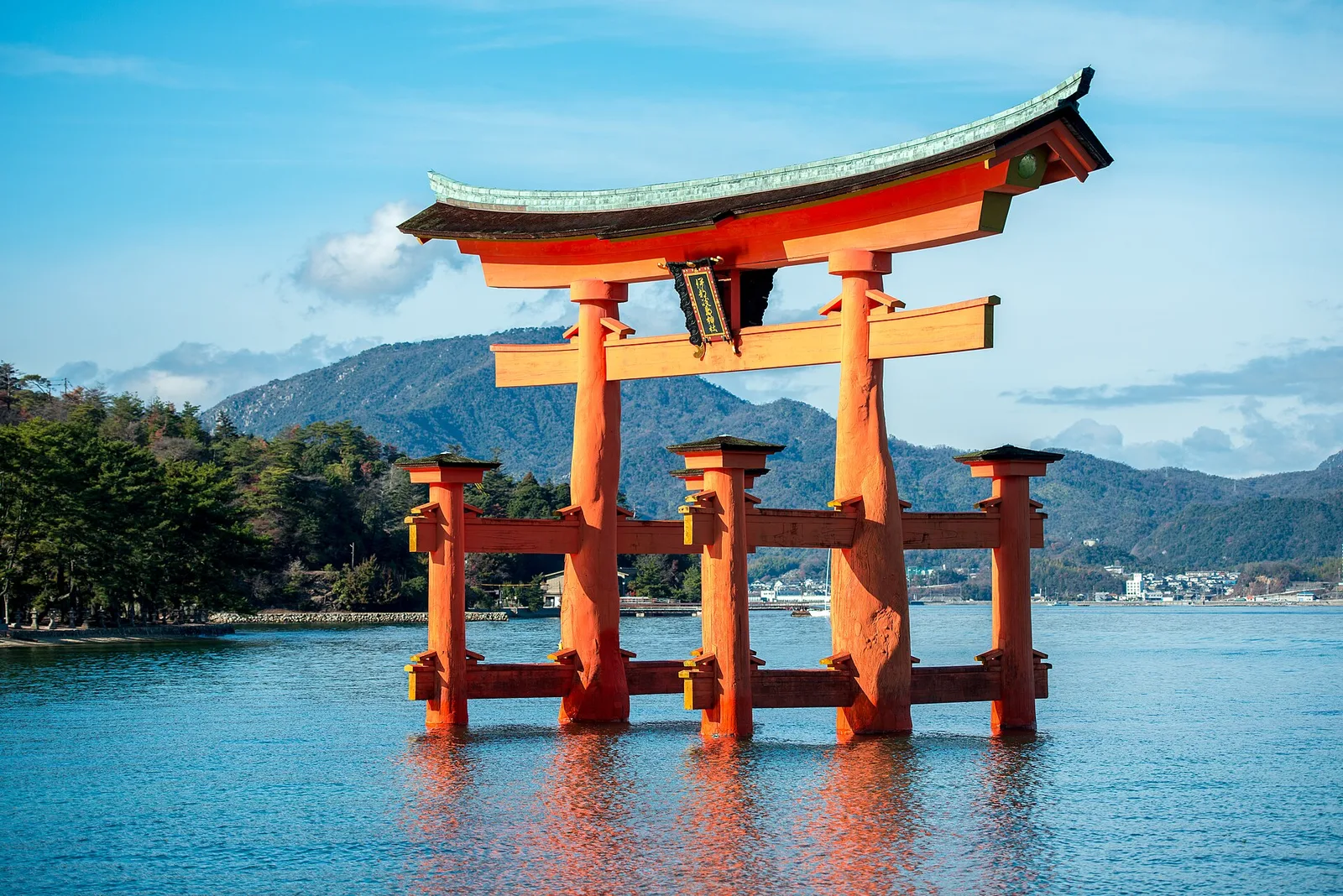
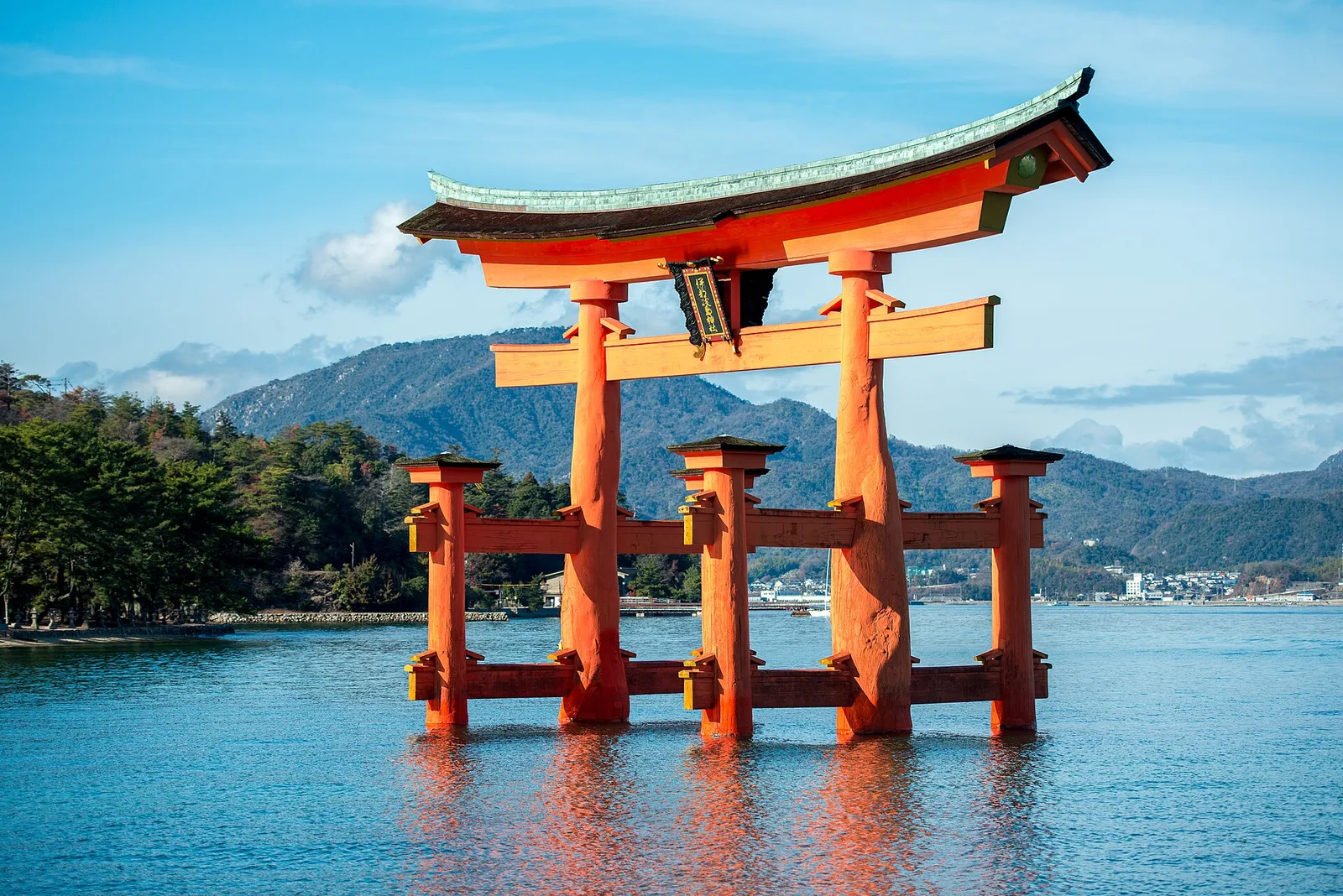
The great red torii gate of Itsukushima Shrine standing in the water with forested hills behind
Photo: JordyMeow · CC BY-SA 3.0

Day-by-day plan

A paced plan, not an endless list.

Day1

The Peace Park, Hiroshima Castle, Shukkeien, and Hondori

Start early at the Atomic Bomb Dome and walk through the Peace Memorial Park to the Museum, then break for Hiroshima-style okonomiyaki. In the afternoon walk the grounds of Hiroshima Castle and Shukkeien Garden, and finish with a stroll through the Hondori arcade and dinner.

  1. 30 min

    Atomic Bomb Dome

    See the ruined dome of the former Industrial Promotion Hall, left standing near the atomic bomb’s hypocenter (a UNESCO World Heritage Site).

    The Atomic Bomb Dome is the skeletal ruin of the former Hiroshima Prefectural Industrial Promotion Hall, one of the few buildings left standing near the hypocenter of the atomic bomb on 6 August 1945, and now a UNESCO World Heritage Site. It is worth starting the trip here, because it makes the human scale of the city’s history immediately clear before the museum. Expect a quiet, solemn place seen from outside, and a short stop of about half an hour that sits at the start of the Peace Memorial Park.
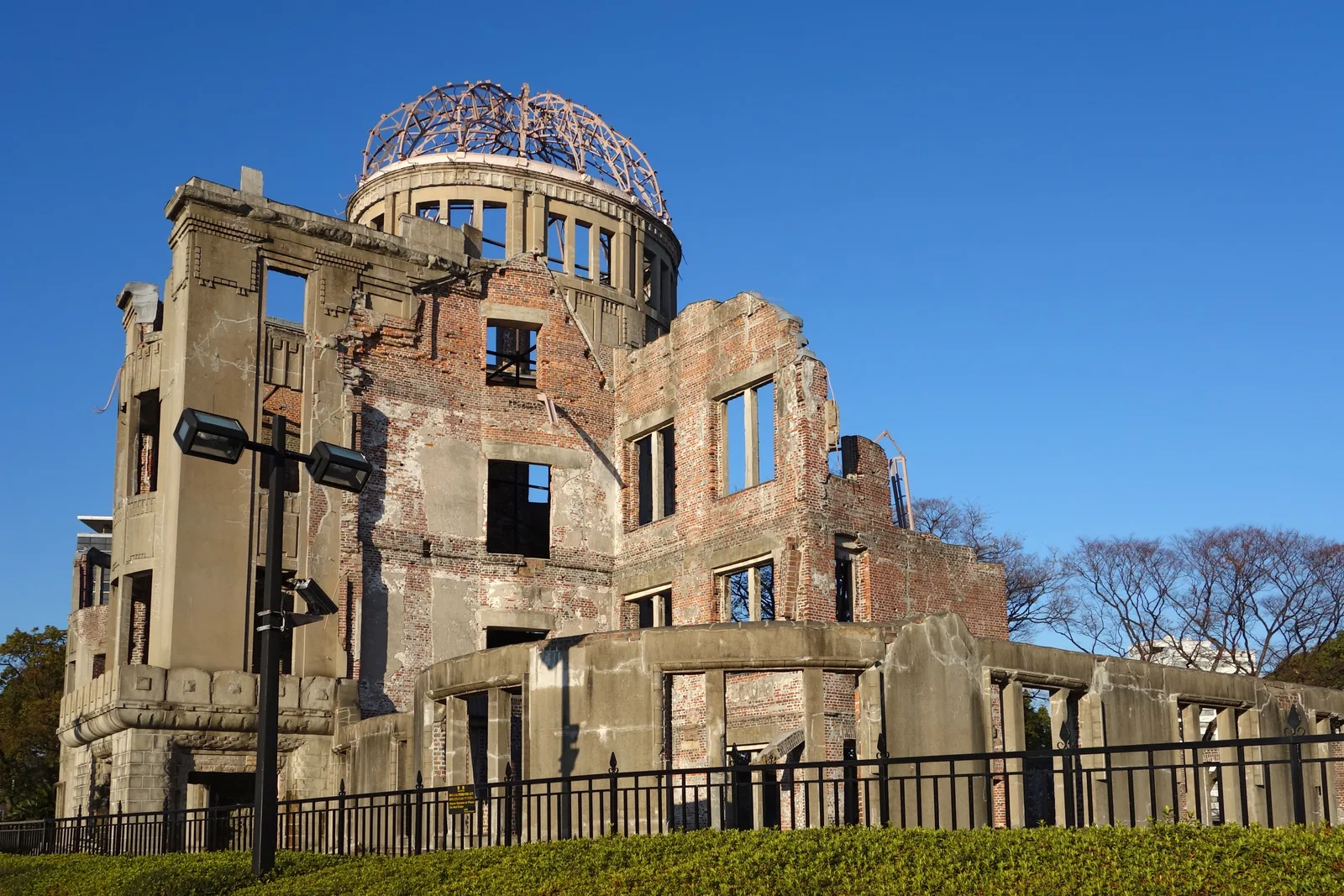
    The ruined brick-and-steel dome of the Atomic Bomb Dome against a clear blue sky, seen behind an iron fence
    Photo: Oilstreet · CC BY 2.5
  2. 55 min

    Hiroshima Peace Memorial Park

    Walk the memorial park across the river, with the Cenotaph, the Peace Flame, and the Children’s Peace Monument.

    Hiroshima Peace Memorial Park is a wide, tree-lined park on the delta where the city’s center once stood, with the Cenotaph for the atomic bomb victims, the Peace Flame, the Children’s Peace Monument hung with paper cranes, and the Peace Bell. It is worth a slow walk as the heart of the visit, a place for reflection that lies between the Dome and the Museum. Expect a calm, respectful atmosphere with school groups and international visitors, so keep voices low and take your time.

  3. 2 hours

    Hiroshima Peace Memorial Museum

    Visit the museum that documents the 1945 bombing and its aftermath (a small admission fee; hours vary by season).

    The Hiroshima Peace Memorial Museum documents the atomic bombing of 6 August 1945, with personal belongings, photographs, and testimonies from survivors, and the story of the city’s rebuilding and the call for nuclear disarmament. It is worth about two hours as the most important stop in the city, and one of the most affecting museums in Japan. Expect a sobering visit, with some graphic material, a small entry fee, and crowds in the middle of the day, so allow time to decompress afterward.
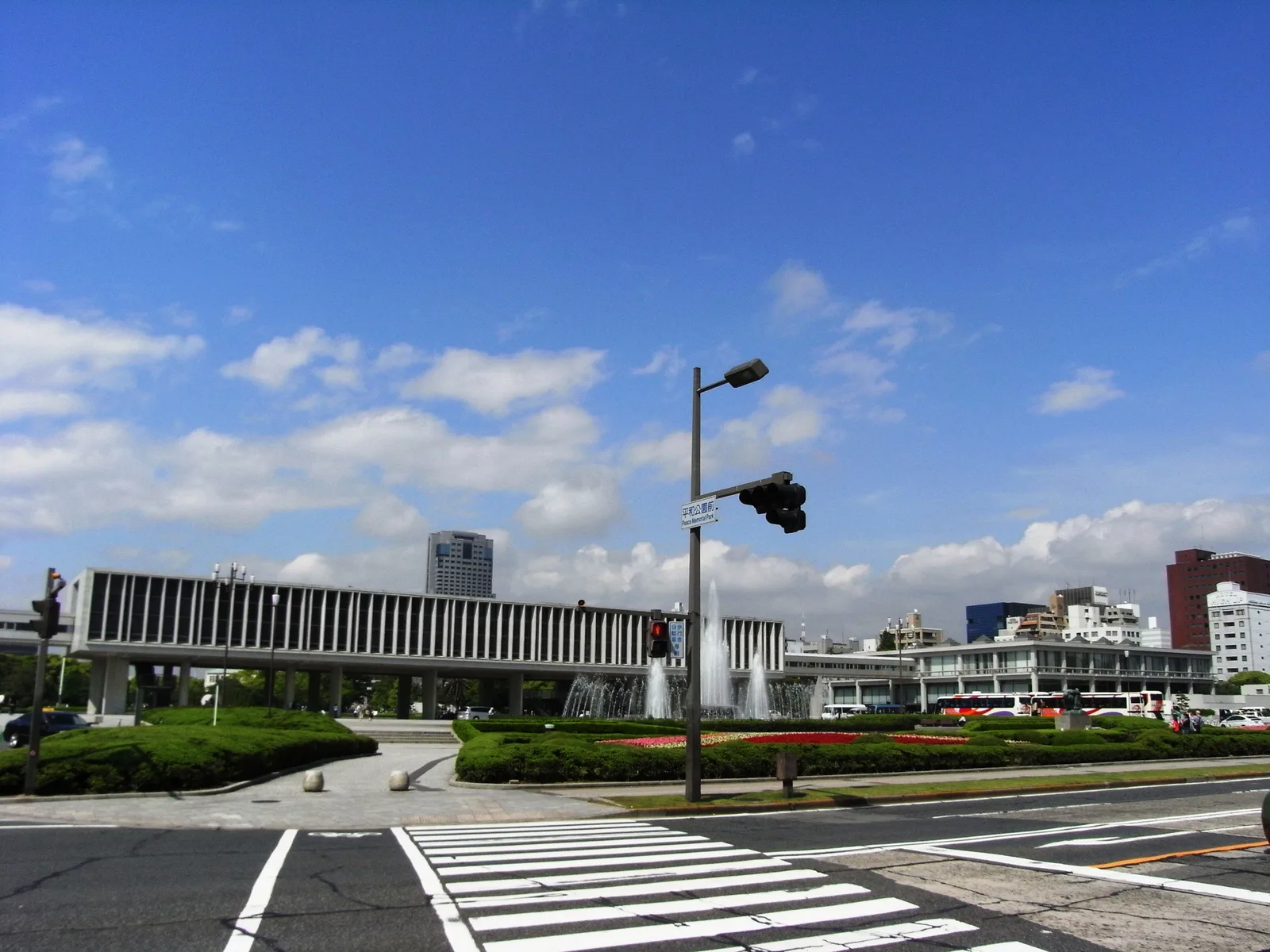
    The long, elevated concrete building of the Hiroshima Peace Memorial Museum seen across a street under a blue sky
    Photo: Taisyo · CC BY-SA 3.0
  4. 1 hour 10 min

    Lunch: Hiroshima-style okonomiyaki

  5. 45 min

    Hiroshima Castle

    Walk the moat and grounds of the castle of the Mori clan; the keep has been closed since March 2026, but the exterior can be viewed and the Ninomaru buildings are free to enter.

    Hiroshima Castle, or Carp Castle, was built in the 1590s, destroyed by the atomic bomb, and rebuilt in 1958 as a concrete reconstruction. Its keep closed in March 2026, but the exterior can still be viewed. It is worth a shorter visit for the moat, the stone walls, the grounds, and the free Ninomaru buildings, which make a gentler contrast to the memorial sites. Expect to see the keep from outside rather than visit its exhibits, and a quiet stop about a kilometer and a half north of the Peace Park; check the castle’s official site for the current hours.
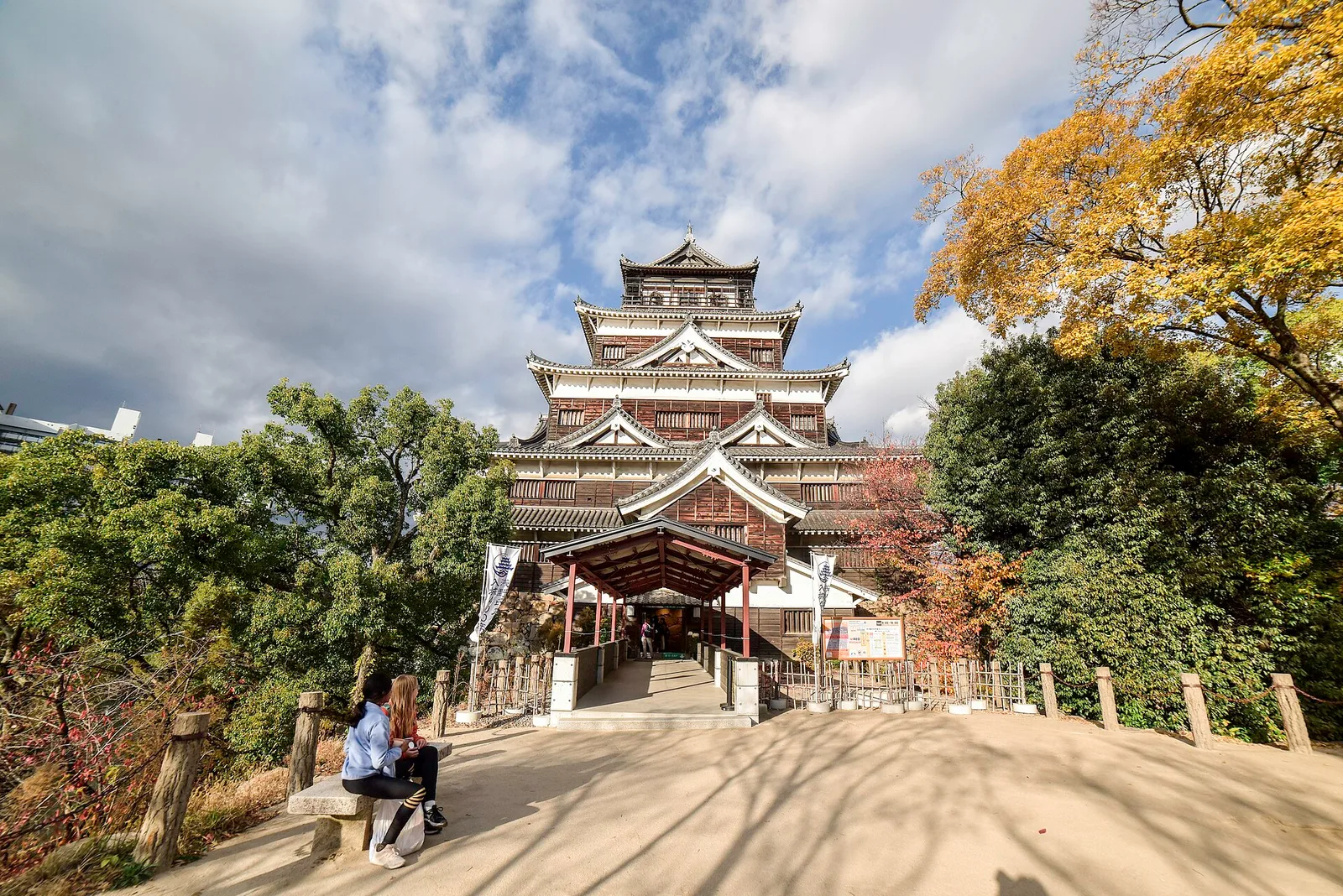
    The rebuilt keep of Hiroshima Castle framed by autumn trees at the end of a gravel approach
    Photo: Rachelle Haun · CC BY 2.0
  6. 1 hour 15 min

    Shukkeien Garden

    Stroll a compact Edo-period garden of ponds, bridges, and tea houses (a small fee; check closing time).

    Shukkeien Garden is a compact landscape garden first laid out in 1620, with a central pond, miniature mountains, stone bridges, and tea houses, rebuilt after the atomic bombing. It is worth a slow hour for a calm, scenic break and the changing colors of the seasons. Expect a small entry fee and an earlier closing time in the cooler months, so check the hours and last entry for your date and arrive with at least an hour in hand.
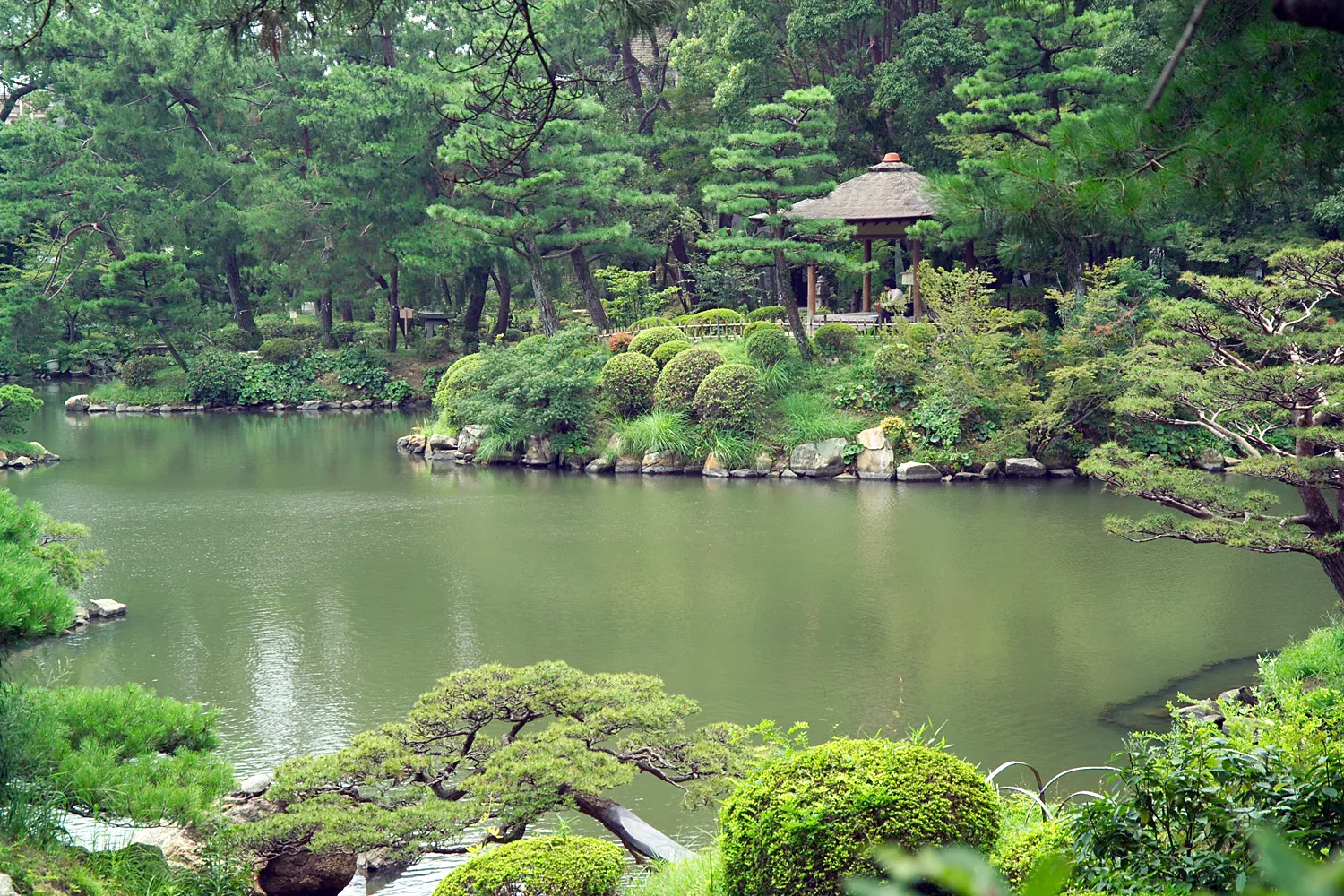
    A still pond ringed by pine trees and clipped shrubs in Shukkeien Garden
    Photo: Fg2 · Public domain
  7. 1 hour

    Hondori Shopping Street

    Browse the covered arcade of shops, cafes, and Carp baseball team stores in the city’s main shopping street.

    Hondori is Hiroshima’s main covered shopping arcade, a long street of department stores, shops, and cafes in the downtown center, with plenty of stalls selling Hiroshima Carp baseball merchandise. It is worth an easy evening stroll for the lively city atmosphere and a feel for the everyday rhythm of modern Hiroshima. Expect a busy arcade that is more about people-watching and souvenir shopping than a particular sight.
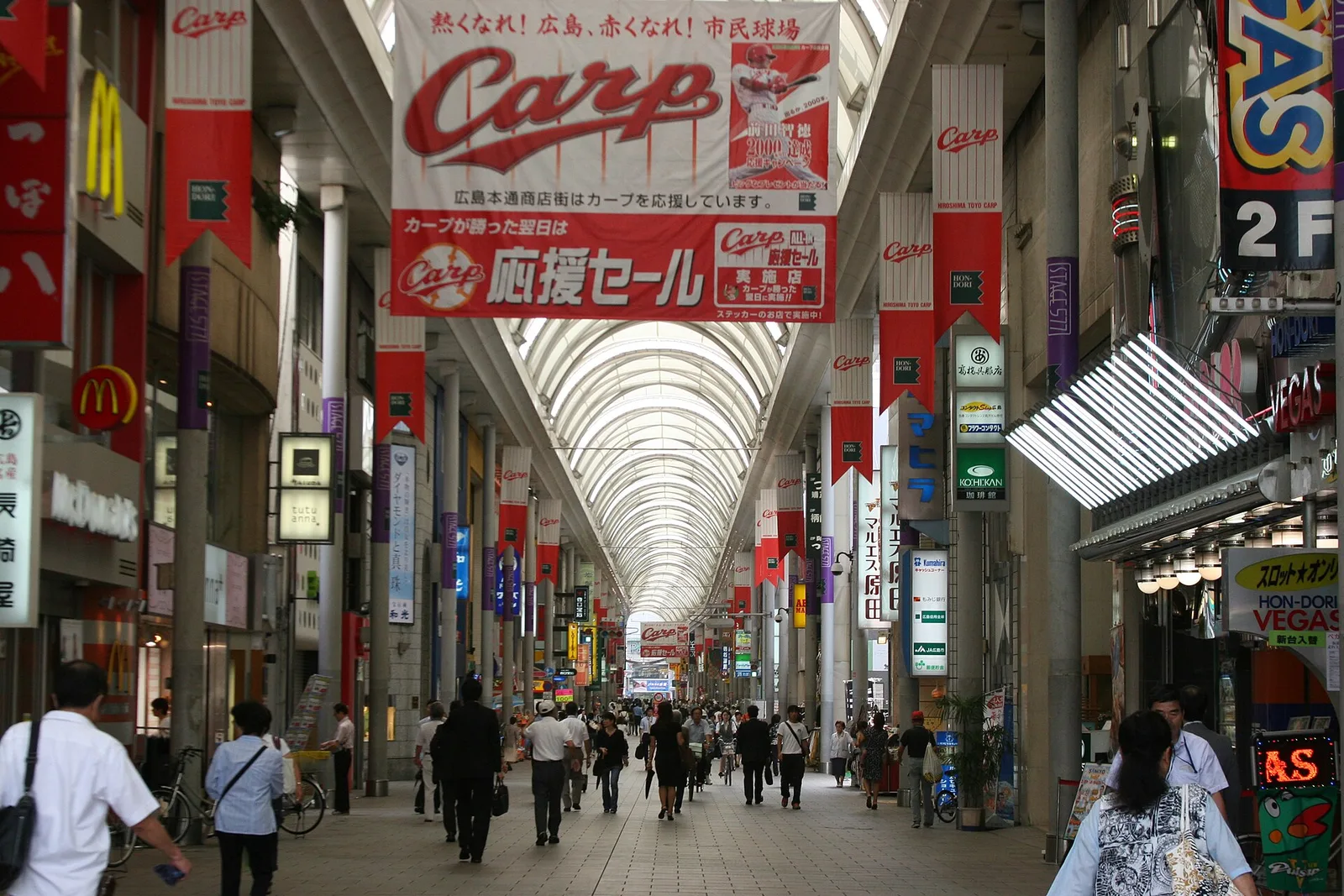
    The covered Hondori shopping arcade with a baseball banner and a crowd of shoppers
    Photo: Aude · CC BY-SA 3.0
  8. 1 hour 30 min

    Dinner in the Hondori area
Day2

A day trip to Miyajima: Itsukushima Shrine, Daisho-in, and Mount Misen

Take the train and ferry to Miyajima for the floating torii of Itsukushima Shrine and the hillside Daisho-in temple. After lunch ride the ropeway up toward Mount Misen and walk to the summit for the view, then return to Hiroshima for dinner.

  1. 1 hour

    JR train from Hiroshima Station to Miyajimaguchi, then the ferry to Miyajima (about 1 hour)

  2. 1 hour 15 min

    Itsukushima Shrine

    See the shrine whose red torii appears to float in the sea at high tide (a UNESCO World Heritage Site; a small admission fee).

    Itsukushima Shrine is a Shinto shrine on Miyajima island, with its corridors, halls, and stage built on stilts over the water, and a huge red torii gate standing in the bay, a UNESCO World Heritage Site. It is worth the day trip for one of the most famous sights in Japan, and for the setting of shrine, forest, and sea. Expect a small admission fee, crowds at midday, and a very different look depending on the tide, since the torii seems to float at high tide and stands on mud at low tide.

    The great red torii gate of Itsukushima Shrine standing in the water with forested hills behind
    Photo: JordyMeow · CC BY-SA 3.0
  3. 1 hour

    Daisho-in Temple

    Climb through the hillside Buddhist temple at the foot of Mount Misen, with its stairs, halls, and statues (free entry).

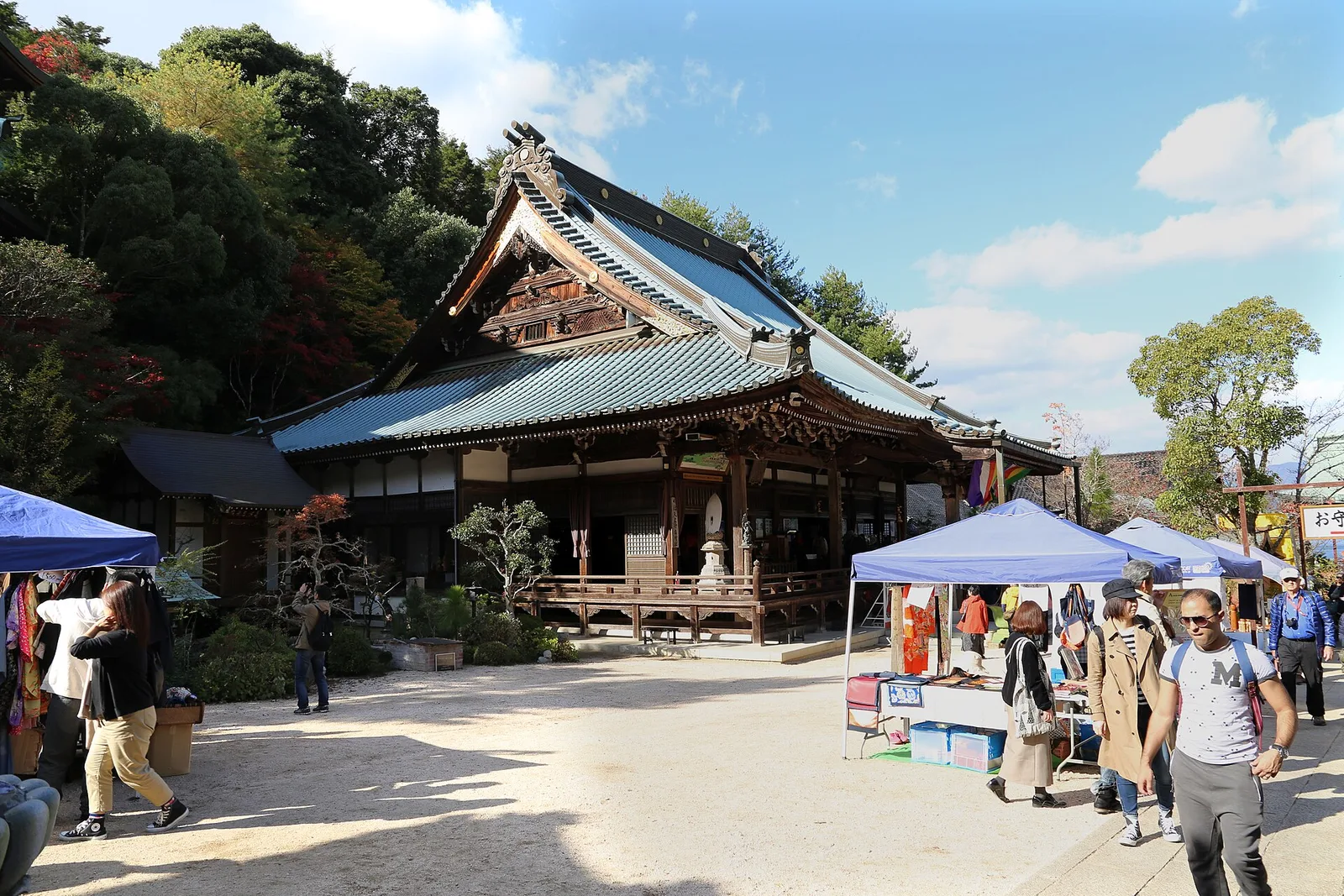
    Daisho-in is a Shingon Buddhist temple at the foot of Mount Misen on Miyajima, with a long stair of prayer wheels, a series of halls and statues, and a cave lined with lanterns, and it is one of the island’s oldest temples. It is worth an hour for its quieter, more atmospheric feel compared with the crowded shrine. Expect a lot of stairs, free entry, and a very different mood from the shrine, so take your time.

    A wooden hall with a tiled roof at Daisho-in Temple, with visitors and small stalls in front
    Photo: Sailko · CC BY 3.0
  4. 1 hour 10 min

    Lunch on Miyajima (oysters, anago, or momiji manju)

  5. 45 min

    Miyajima Ropeway

    Ride the two-stage ropeway up the slopes of Mount Misen (a ticketed ride; the last ride down is about 16:30).

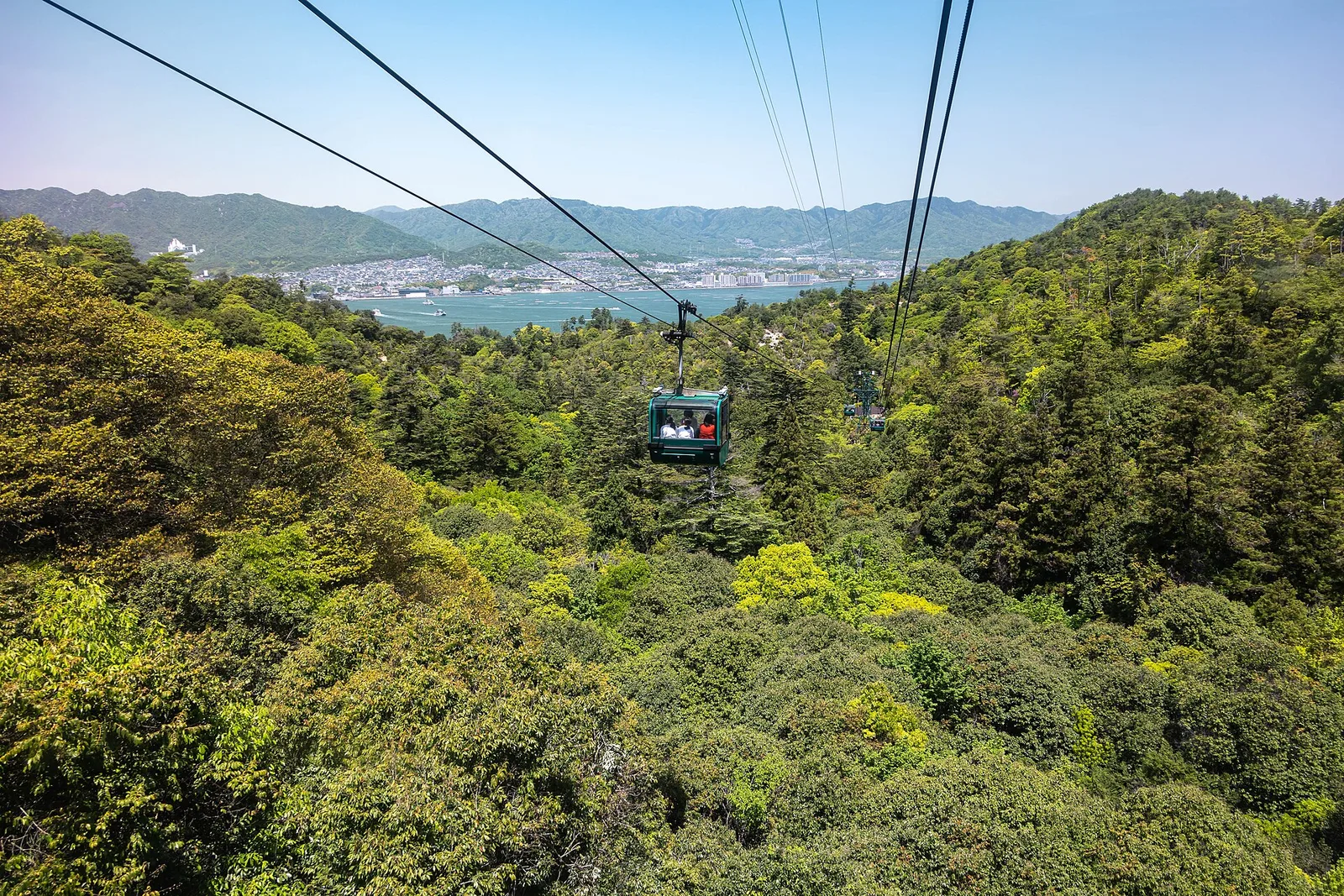
    The Miyajima Ropeway climbs the forested slopes of Mount Misen in two stages, with views of the island and the Seto Inland Sea, ending at Shishiiwa Station near the summit area. It is worth it to save the steep climb up the mountain, and for the view of the islands from the cabin. Expect a ticketed ride that does not run in strong wind, with the last ride down at about 16:30 and maintenance closures a couple of times a year, so check the official hours for your date.

    A ropeway cabin crossing above forested slopes on Miyajima, with the sea in the distance
    Photo: Naokijp · CC BY-SA 4.0
  6. 1 hour 30 min

    Mount Misen Summit Observatory

    Hike about 30 minutes from the upper ropeway station to the summit observatory for views of the Seto Inland Sea (a steady uphill walk on stone steps).

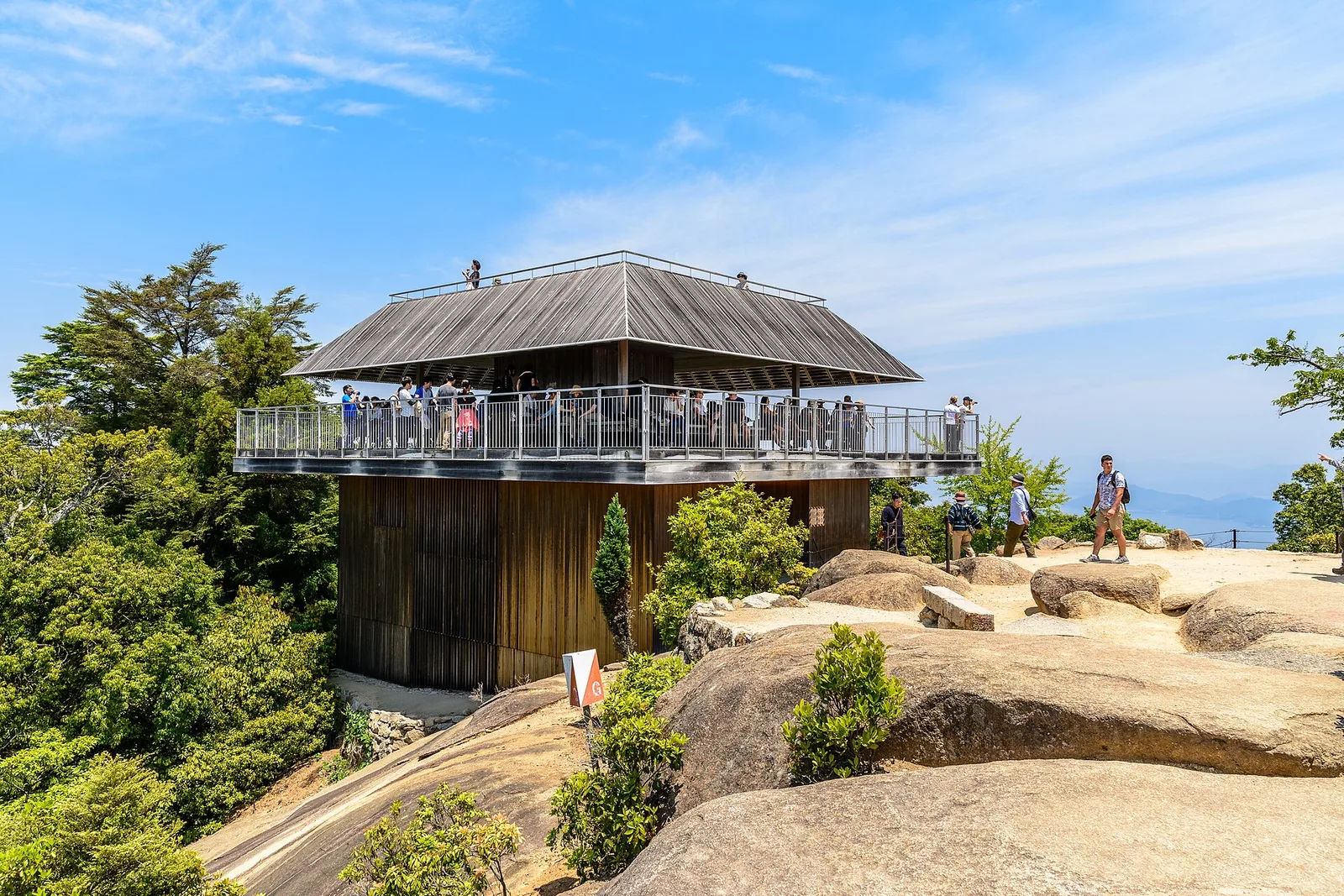
    Mount Misen is the sacred peak of Miyajima, and its 535-meter summit has an observatory with wide views of the Seto Inland Sea and its islands. It is worth the climb for the panorama and for the feel of the forested mountain. Expect a hike of about 30 minutes each way from Shishiiwa Station, the upper ropeway station, on a steady uphill path of stone steps, so wear sturdy shoes and keep an eye on the time of the last ropeway down.

    The wooden observatory building on the rocky summit area of Mount Misen under a blue sky
    Photo: dconvertini · CC BY-SA 2.0
  7. 45 min

    Ropeway down and walk to the ferry pier (about 45 minutes)

  8. 1 hour

    Ferry and JR train back to Hiroshima (about 1 hour)

  9. 45 min

    Rest at the hotel

  10. 1 hour 30 min

    Dinner in Hiroshima

Itinerary decisions

What makes the cut, what can wait, and what is less worth it.

Essential

  • The Atomic Bomb Dome, the Peace Memorial Park, and the Museum
  • Itsukushima Shrine on Miyajima
  • Hiroshima-style okonomiyaki

Optional

  • Hiroshima Castle and Shukkeien Garden
  • The Mount Misen ropeway and observatory
  • Daisho-in Temple

Not prioritized

  • Hiking up Mount Misen from Daisho-in instead of using the ropeway, which adds a lot of time
  • Adding Iwakuni or Onomichi to this two-day version

Before you use this plan

  • Hours, closures, prices, and conditions can change.
  • The Peace Memorial Museum and Shukkeien Garden have hours that vary by season and close earlier in winter, with last entry before closing. The Hiroshima Castle keep has been closed since March 2026 (the exterior and the free Ninomaru buildings can still be visited). Check each official site for your date.
  • The Peace Memorial Museum is an emotionally heavy visit. Leave time afterward for a quiet break, and spend the rest of Day 1 at an easy pace.
  • Miyajima is reached by JR train to Miyajimaguchi and a short ferry. The JR ferry runs until late in the evening (the last sailing from Miyajima is around 22:00), so the real constraint is the ropeway’s last ride down at about 16:30. A small visitor tax (about ¥100) is collected on Miyajima, usually with the ferry fare. Tides change the look of the floating torii, so check a tide table if you want to see it in the water.
  • The Miyajima Ropeway does not run in strong wind and its last ride down is about 16:30. Allow time for the hike to the summit, the ride down, and the walk to the ferry.
  • This is a public example; Dayworthy adapts it to your dates, pace, hotel, and interests inside the app.

Dayworthy

Turn this example into your trip.

Dayworthy adapts the itinerary to your dates, pace, hotel, interests, and saved places.