Dayworthy itinerary

Three days in Tbilisi, from the old town to Mtskheta

A realistic 3-day Tbilisi itinerary

A balanced first visit built around Tbilisi’s old town, its sulfur baths and the hilltop fortress, with a day trip to the ancient capital of Mtskheta and a last day among the city’s boulevards and viewpoints.

Destination
Tbilisi, Georgia
Length
3 days
Pace
balanced
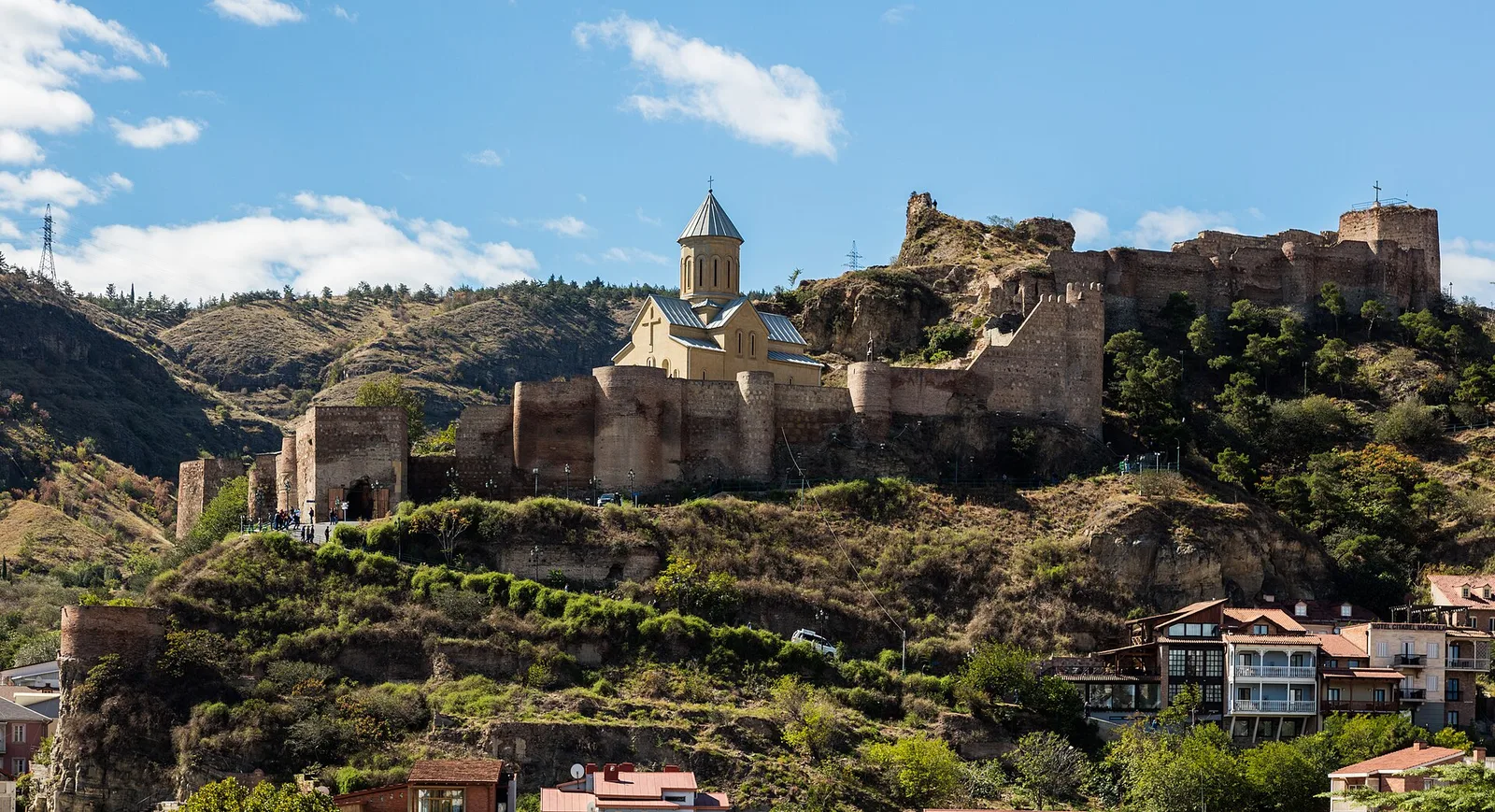
Narikala Fortress’s stone walls and towers on the hill above Tbilisi’s old town under a blue sky
Photo: Diego Delso · CC BY-SA 4.0

Day-by-day plan

A paced plan, not an endless list.

Day1

The old town, Narikala and the sulfur baths

Start in a quiet old-town church and the leaning clock tower, then cross the river to Rike Park and ride the cable car up to Narikala and the Mother of Georgia for the first big views. After lunch, walk down to the sulfur-bath district and the waterfall, and finish with a soak or a slow wander through Abanotubani. The day stays compact, with most hops on foot or by cable car.

  1. 40 min

    Anchiskhati Basilica

    One of Tbilisi’s oldest surviving churches, with origins in the 6th century, and a quiet start before the old town fills up.

    Anchiskhati Basilica is a small, restrained church just off Shavteli Street, valued for its age and for the calm it offers after the busier lanes of the old town. Allow about 40 minutes for the interior and courtyard. Dress modestly, with shoulders and knees covered.
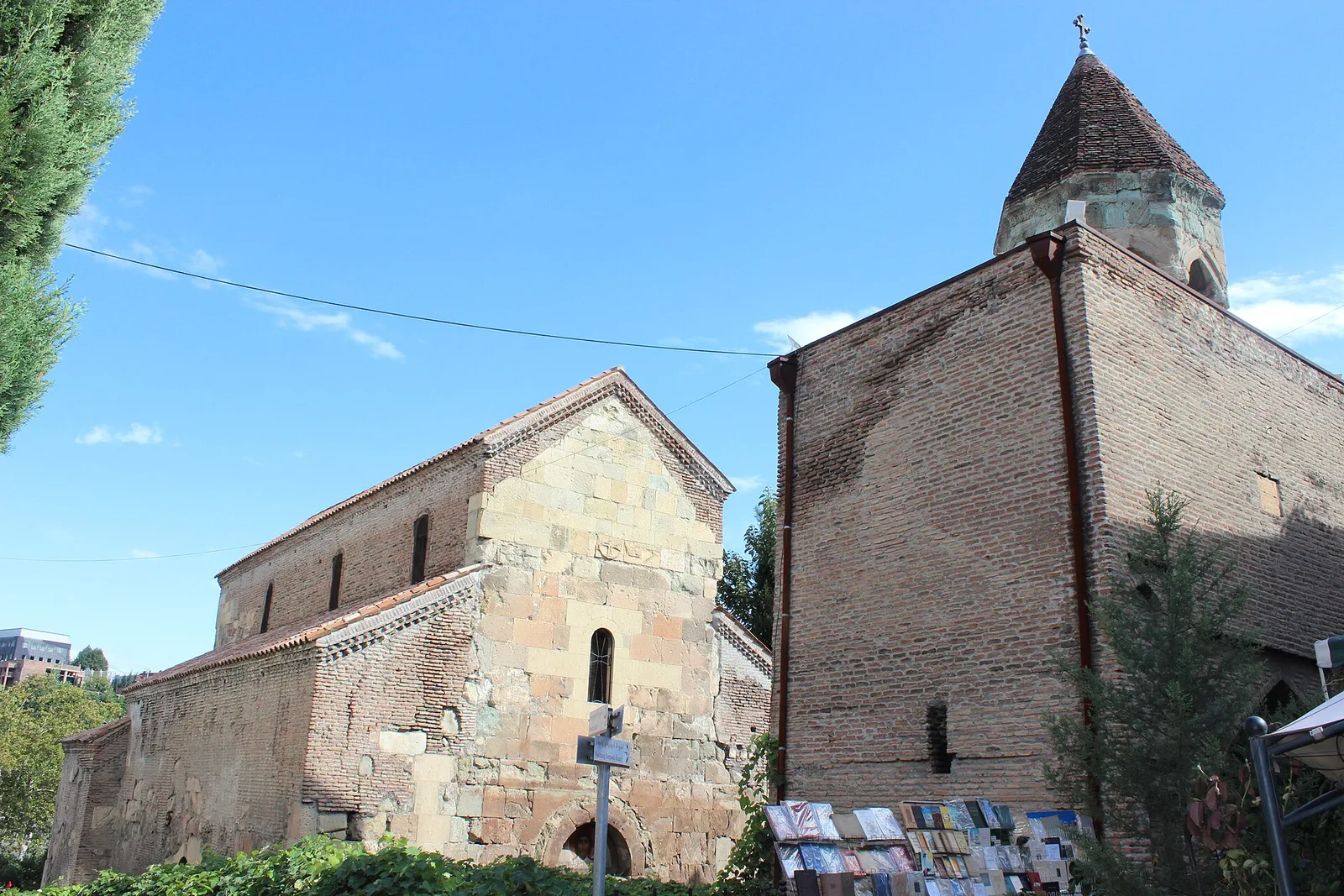
    Anchiskhati Basilica, a small brick and stone church with a tiled gabled roof, beside a brick bell tower with a conical roof, seen from the street
    Photo: კოლხი · CC BY-SA 4.0
  2. 30 min

    Gabriadze Clock Tower and Theater

    The leaning clock tower beside Rezo Gabriadze’s marionette theater, a short walk from the church.

    Built in 2010, the crooked clock tower at the Gabriadze Theater looks like something from a storybook, with a small angel figure that strikes the hour. It is a quick photo and coffee stop on the square. If you would like to see a marionette performance, check the theater’s schedule and book ahead, since seating is small.

  3. 30 min

    Rike Park

    Cross the glass Peace Bridge into the riverside gardens at the foot of the cable car.

    Rike Park is a modern park on the left bank of the Mtkvari River, reached on foot over the pedestrian Peace Bridge. It has gardens, lawns and open views back toward the old town, and it is where the cable car up to Narikala starts. Keep this to a short stroll and a look at the river.
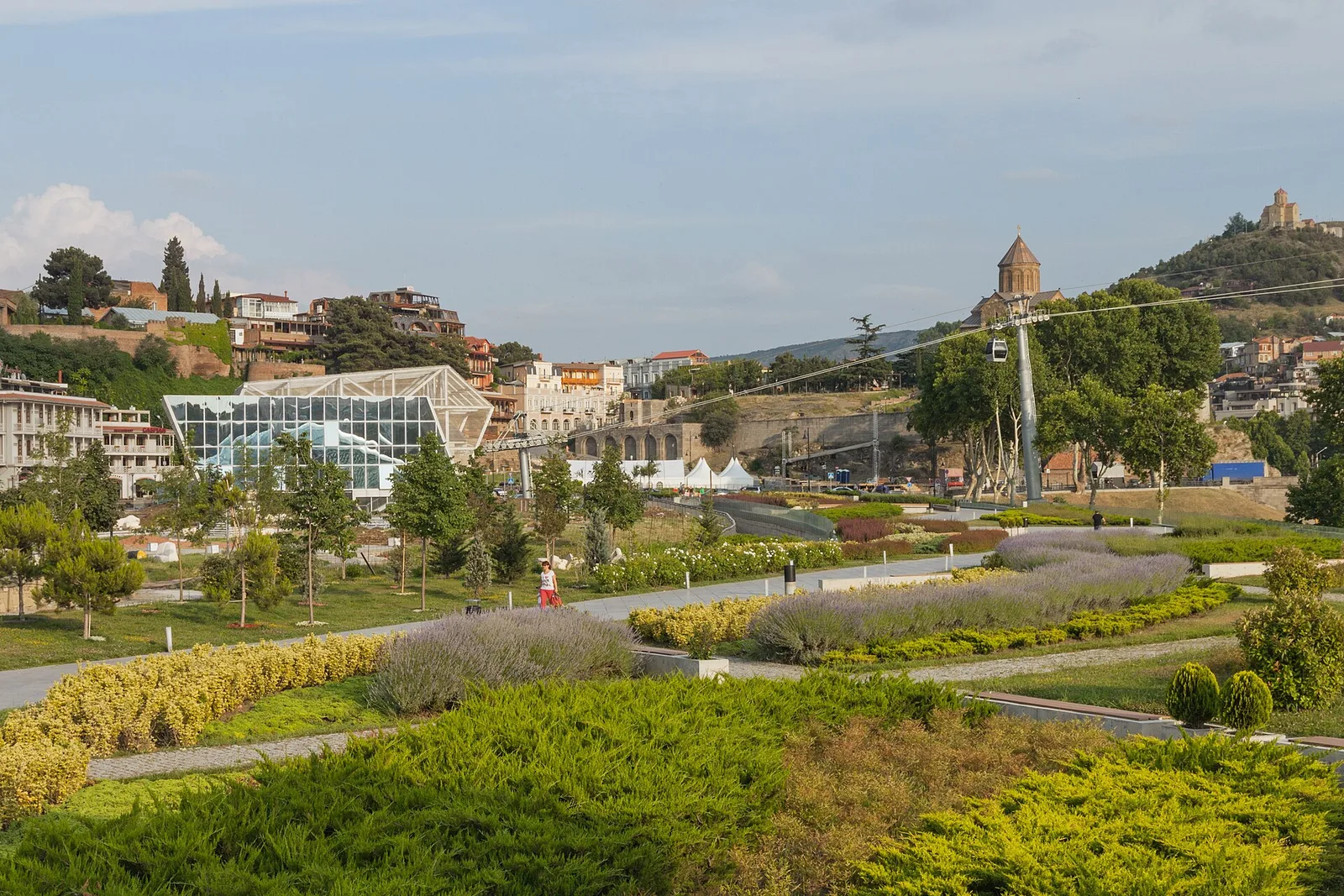
    Landscaped beds and paths in Rike Park, with the old town, Metekhi Church and the Narikala ridge rising behind
    Photo: Marcin Konsek · CC BY-SA 4.0
  4. 25 min

    Rike–Narikala cable car

    A short ride up the hill with views over the Mtkvari and the old town.

    The cable car runs from Rike Park to the hill below Narikala Fortress and saves a steep climb. Check the current fare, payment method and operating hours at the station, and keep the walking route up from Abanotubani as a fallback if service is paused.

  5. 40 min

    Narikala hill and viewpoints

    The hill below the old fortress, with broad views over the rooftops and the river.

    Narikala dates back to the 4th century, was expanded over the following centuries and was badly damaged by an explosion and earthquake in 1827. The fortress complex itself, including its interior, walls and church, has been closed to visitors during restoration, with no announced reopening date, so treat this as a visit to the hill and its viewpoints, seeing the fortress from outside. The terraces around the hill still give some of the best views of the old town. Check current access before you go. Wear shoes with grip, since the paths are uneven.
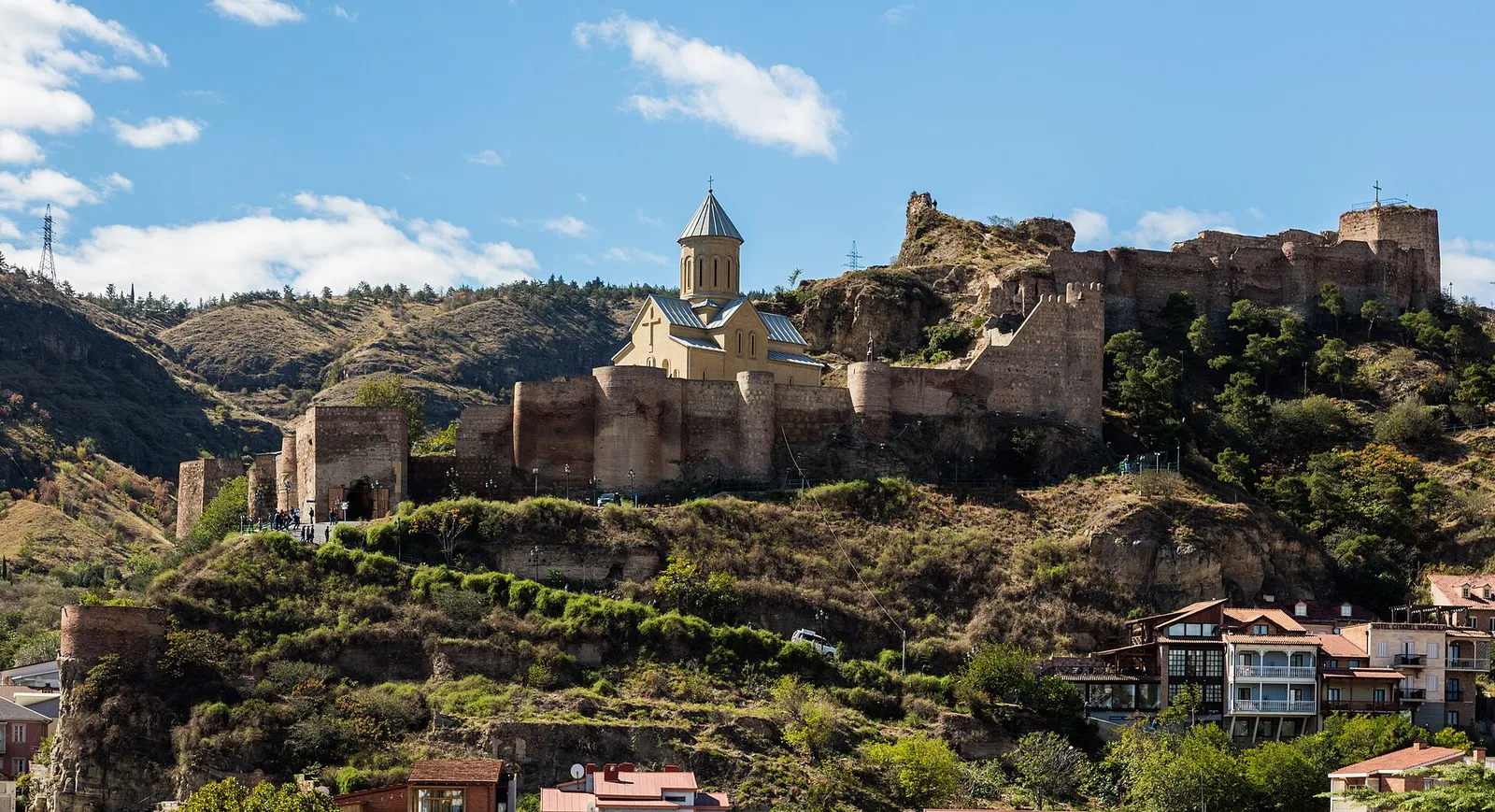
    Narikala Fortress’s stone walls and towers on the hill above Tbilisi’s old town under a blue sky
    Photo: Diego Delso · CC BY-SA 4.0
  6. 20 min

    Mother of Georgia

    A 20-meter aluminum statue holding a sword for enemies and a bowl of wine for friends.

    Kartlis Deda stands on the ridge above the old town and is a short walk along the path from Narikala. The sword and the wine bowl are the symbolic point: they are said to stand for how Georgians treat enemies and guests. It is a quick stop for the view over the city.

  7. 1 hour 15 min

    Lunch break

  8. 40 min

    Leghvtakhevi Waterfall

    A small waterfall in a rocky gorge tucked behind the sulfur baths, a short walk from the old town.

    The Leghvtakhevi (Leselidze) gorge is an easy detour from the sulfur-bath district, with a path along the stream up to a small waterfall. It is free, and a short walk up the gorge and back fits comfortably in 40 minutes. Be careful on wet stones, and expect fewer people the earlier you go.
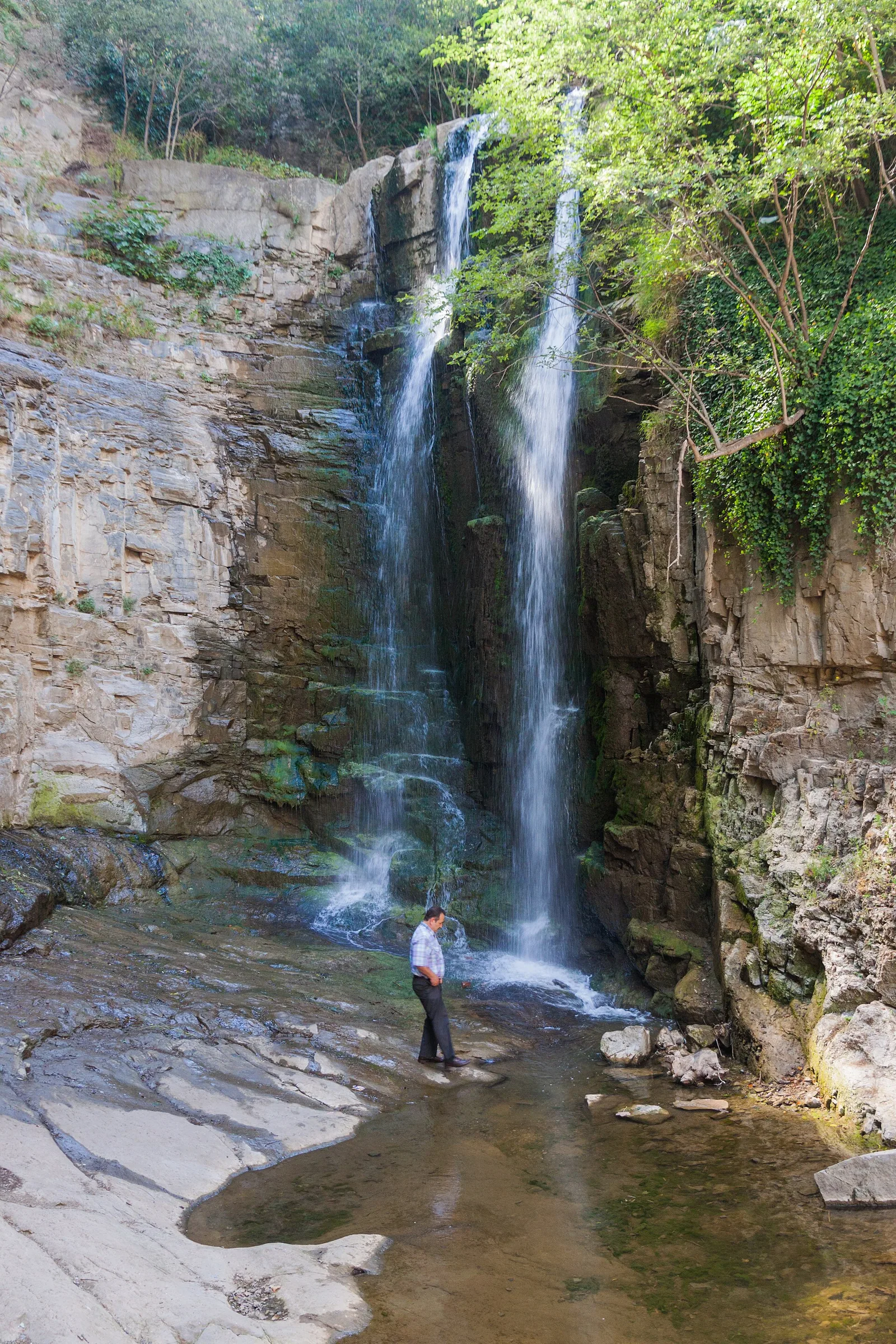
    The Leghvtakhevi waterfall dropping through a green rocky gorge
    Photo: Marcin Konsek · CC BY-SA 4.0
  9. 1 hour 30 min

    Abanotubani sulfur baths

    The domed brick bathhouses of the old sulfur-bath district, with the blue-tiled Orbeliani (Chreli Abano) facade.

    Abanotubani is the historic bath district, built around natural sulfur springs and recognizable by its low brick domes. Most visitors book a private room with a sulfur-water pool, usually by the hour, and reserve ahead on weekends. If you would rather not bathe, walk the district to see the domes and tilework and spend the time at a café nearby.
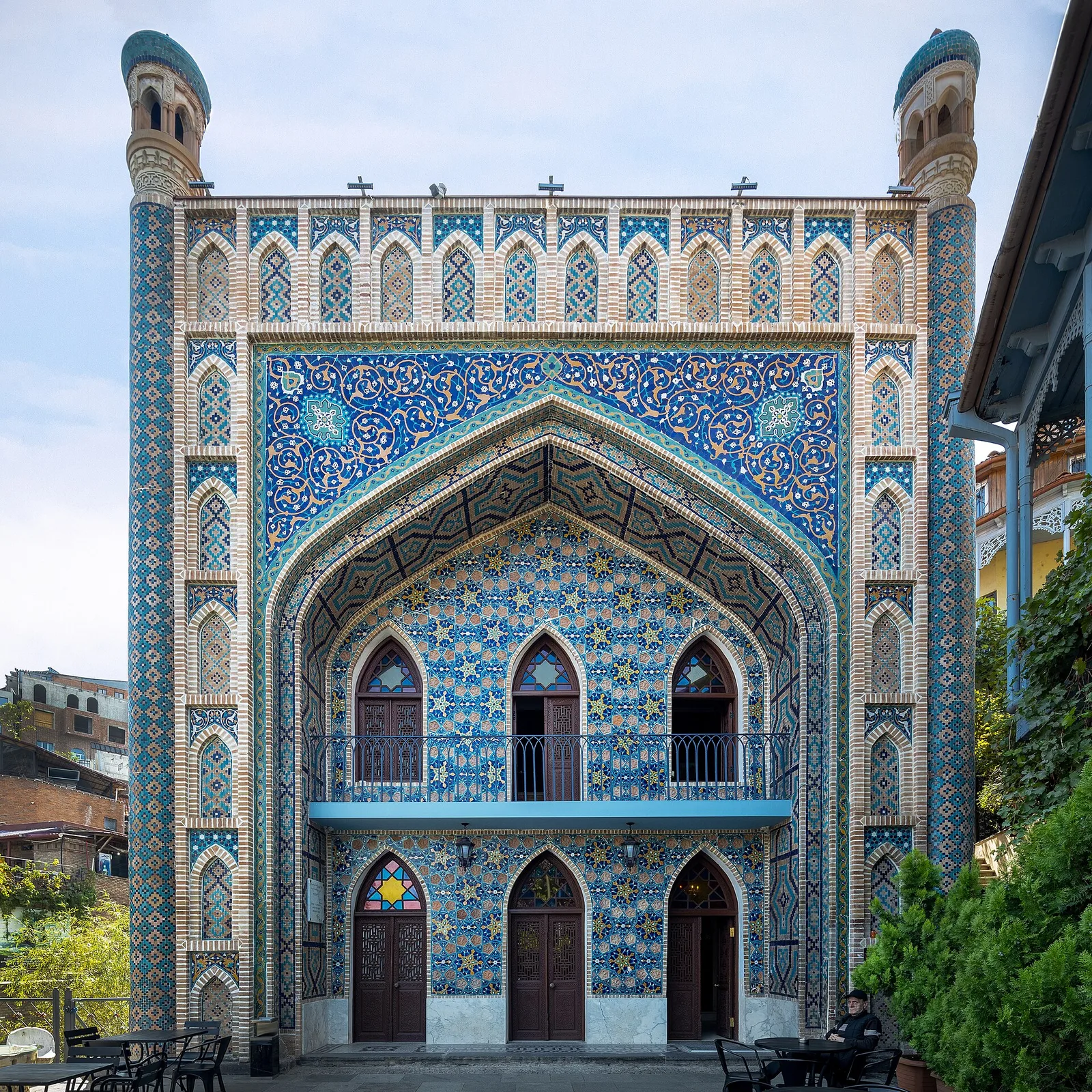
    The blue-tiled Persian-style facade of the Orbeliani sulfur baths in Abanotubani
    Photo: Supanut Arunoprayote · CC BY 4.0
Day2

Mtskheta day trip: Jvari and Svetitskhoveli

Take a morning trip to Mtskheta, Georgia’s ancient capital, starting with the hilltop Jvari Monastery and the view over the river meeting, then moving down to Svetitskhoveli. Have lunch in the town, visit Samtavro and head back to Tbilisi by mid-afternoon, leaving time for Sameba Cathedral and an easy evening.

  1. 45 min

    Transfer to Mtskheta

  2. 1 hour

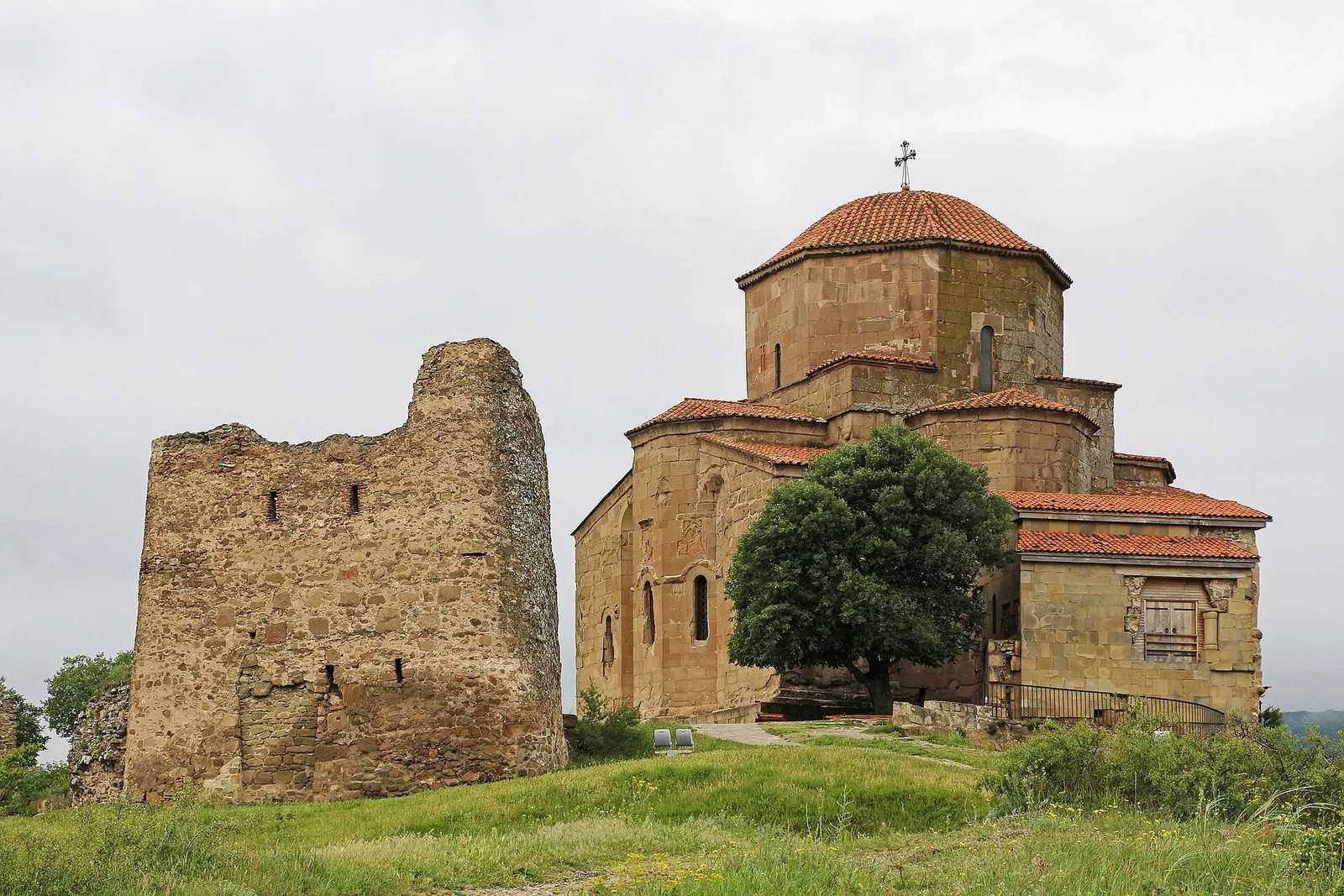
    Jvari Monastery

    A 6th-century monastery on a hilltop above the meeting of the Mtkvari and Aragvi rivers.

    Jvari sits high above the confluence of the two rivers and Mtskheta, which is the main reason to climb up. It is a compact stone church, among the earliest of its type in Georgia, and part of the UNESCO-listed historic monuments of Mtskheta. Come early for the view and the quiet; a taxi or Bolt is the practical way up.

    Jvari Monastery’s small stone church with a red-tiled roof next to a ruined tower on its hilltop
    Photo: Bernard Gagnon · CC BY 4.0
  3. 1 hour 15 min

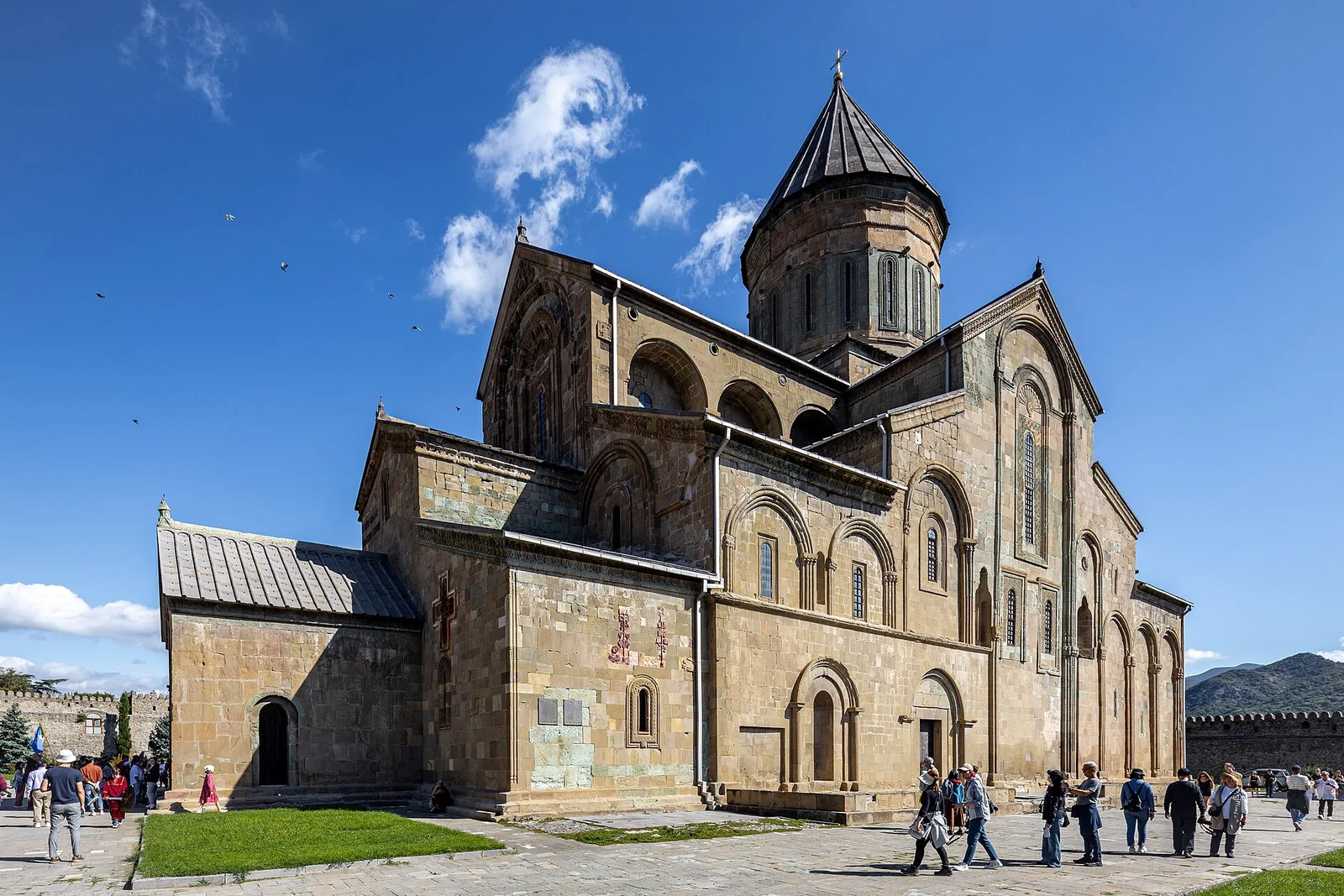
    Svetitskhoveli Cathedral

    The 11th-century cathedral of Mtskheta and a burial place of Georgian kings.

    Svetitskhoveli is one of Georgia’s most important churches, built in the early 11th century on a site tied to the country’s Christian beginnings. The interior is lofty and quiet, with frescoes and royal tombs. It is a working church, so dress modestly and expect the occasional service.

    Svetitskhoveli Cathedral’s stone walls and central dome with visitors in the courtyard
    Photo: Supanut Arunoprayote · CC BY 4.0
  4. 1 hour 15 min

    Lunch in Mtskheta

  5. 40 min

    Samtavro Convent

    A working convent near the cathedral, tied to King Mirian and Queen Nana.

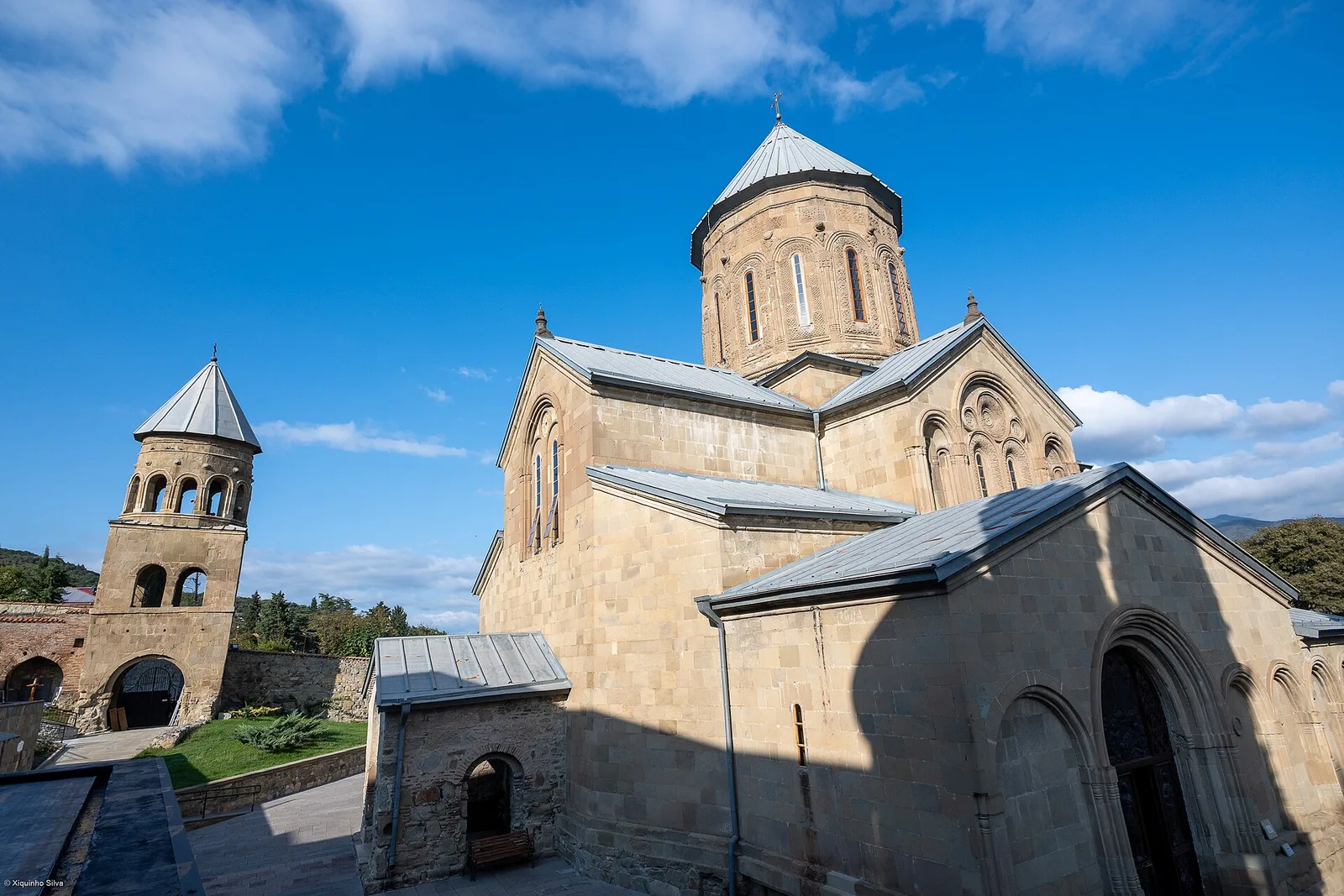
    Samtavro is a quiet convent complex a few minutes’ walk from Svetitskhoveli, with a church from the 11th century and the graves of King Mirian and Queen Nana. It is a calmer stop than the cathedral and fits well after lunch. Keep voices low and dress modestly.

    Samtavro Convent’s stone church and bell tower under a clear sky in Mtskheta
    Photo: xiquinhosilva · CC BY 4.0
  6. 1 hour

    Return to Tbilisi

  7. 1 hour

    Holy Trinity Cathedral (Sameba)

    The principal cathedral of the Georgian Orthodox Church, consecrated in 2004.

    Sameba is among the largest Orthodox cathedrals in the world and rises on a hill above the left bank of the river, with wide grounds around it. It is a modern landmark rather than a medieval one, and worth the stop for the scale and the view back toward the center. Dress modestly, and expect women to be asked to cover their heads.

Day3

Dry Bridge, Rustaveli and Mtatsminda

Start at the Dry Bridge Market once the stalls are set up, then cross to the calmer Davit Aghmashenebeli Avenue for a stroll and lunch. After lunch, walk Rustaveli Avenue and head uphill to the funicular, then ride up Mtatsminda for the long view over the city in the late afternoon.

  1. 1 hour 15 min

    Dry Bridge Market

    An open-air flea market of Soviet memorabilia, antiques, art and secondhand finds.

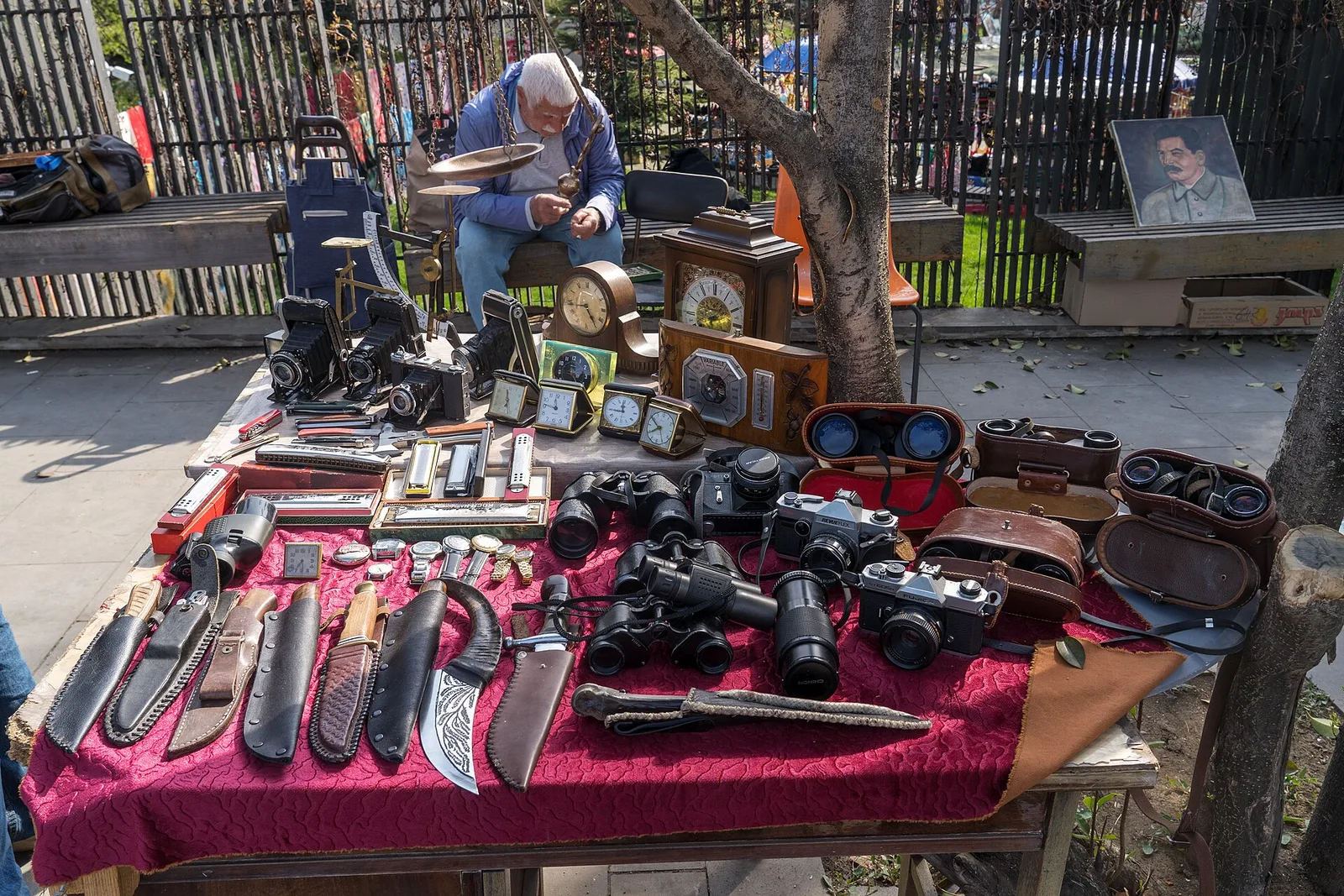
    The Dry Bridge Market is less about polished shopping and more about the scene: Soviet badges and cameras, paintings, jewelry and every kind of secondhand object, often sold by vendors with a story to tell. It is liveliest on weekends, and fewer stalls are out on weekdays. Bargaining is normal, so carry small notes.

    A stall at the Dry Bridge Market laid with vintage cameras, knives and other secondhand finds
    Photo: Alexkom000 · CC BY 4.0
  2. 1 hour

    Davit Aghmashenebeli Avenue

    A long avenue of restored 19th-century facades, cafés and pedestrian stretches.

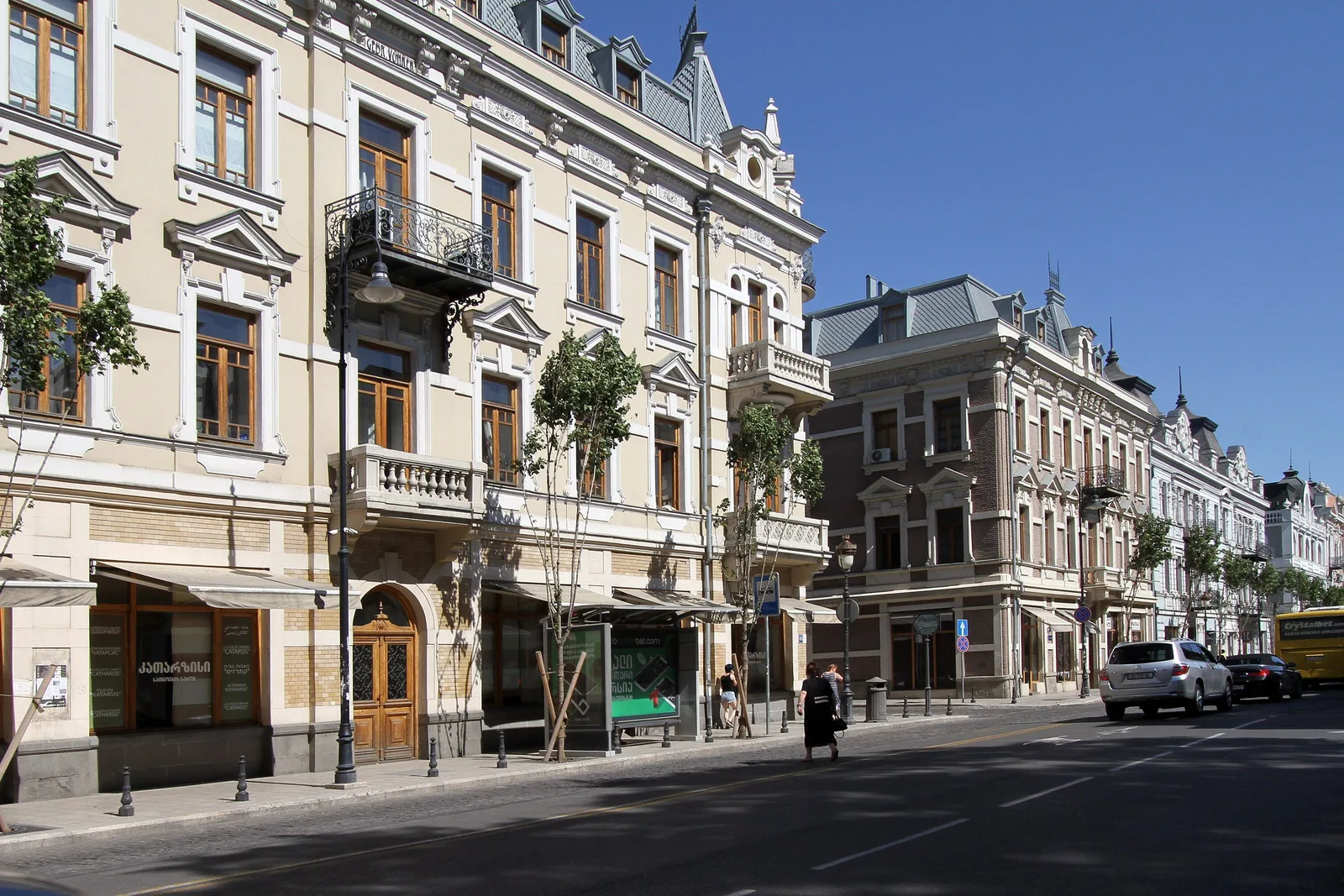
    Davit Aghmashenebeli Avenue is a calmer, more local counterpart to Rustaveli, known for its restored eclectic and Art Nouveau facades and for stretches of café-lined pedestrian street. It is a pleasant place to wander and to look up at the buildings. Expect shops and cafés rather than major sights.

    Restored 19th-century façades with wrought-iron balconies lining Davit Aghmashenebeli Avenue on a sunny day
    Photo: Gerd Eichmann · CC BY-SA 4.0
  3. 1 hour 15 min

    Lunch break

  4. 1 hour 10 min

    Rustaveli Avenue

    The city’s main boulevard, with the Parliament, the Opera House and the National Museum.

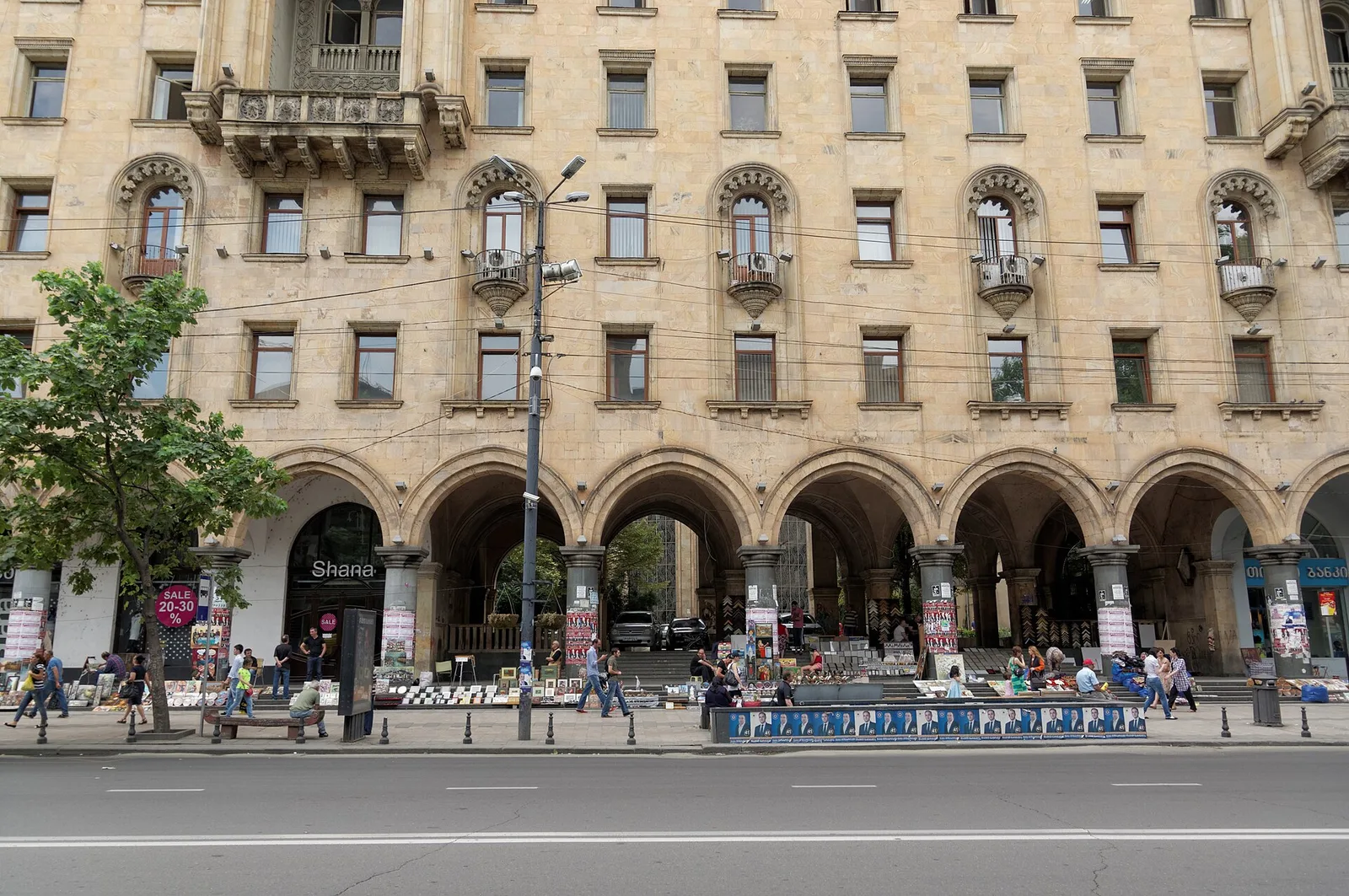
    Rustaveli Avenue is Tbilisi’s grand 19th-century boulevard, lined with plane trees, theaters, cafés and public buildings. Walk it at an easy pace and go inside the one building that appeals to you rather than trying to see them all. It is a good place to stop for coffee, and from here the funicular station is a short, steep walk uphill, about 10 minutes. If you lunch near Marjanishvili, it is one metro stop or about a 20-minute walk to Rustaveli.

    The arcaded stone facade of a building on Rustaveli Avenue, with pedestrians and street vendors under the arches
    Photo: © Vyacheslav Argenberg · CC BY 4.0
  5. 30 min

    Tbilisi Funicular (lower station)

    A historic funicular that climbs Mtatsminda from the city center.

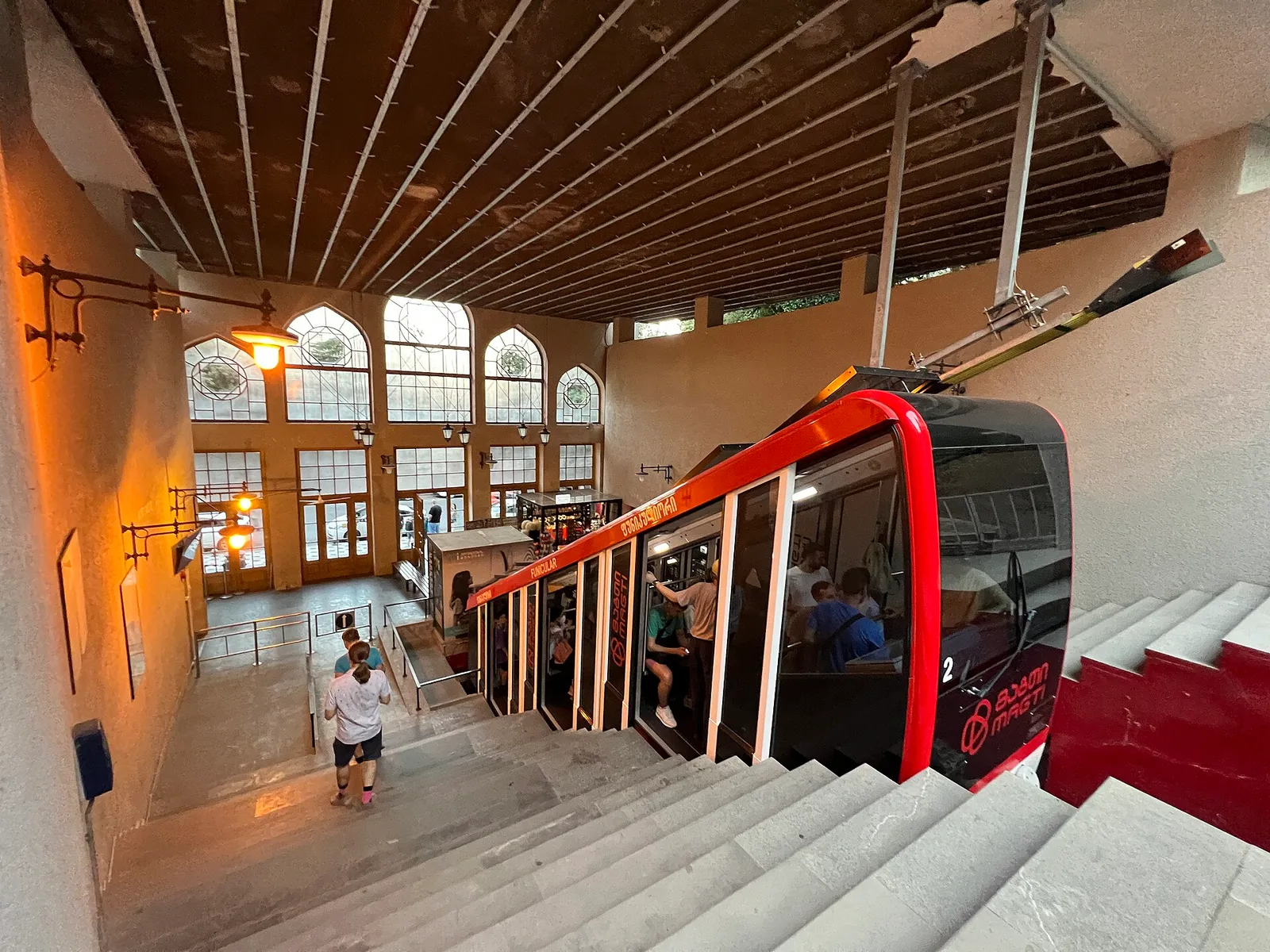
    The funicular opened in 1905 and carries riders from the lower station up the slope of Mtatsminda to the park at the top. The ride is short and the views widen as you climb. Check ahead that it is running, since it has paused for maintenance in the past, and keep a taxi or the Rustaveli–Mtatsminda cable car, if it is running, as a fallback.

    A red funicular car waiting beside the stepped platform inside the lower station, with arched windows behind
    Photo: Andrewlevint · CC BY-SA 4.0
  6. 2 hours

    Mtatsminda Park

    A hilltop park with wide views over Tbilisi, a small amusement park and walking paths.

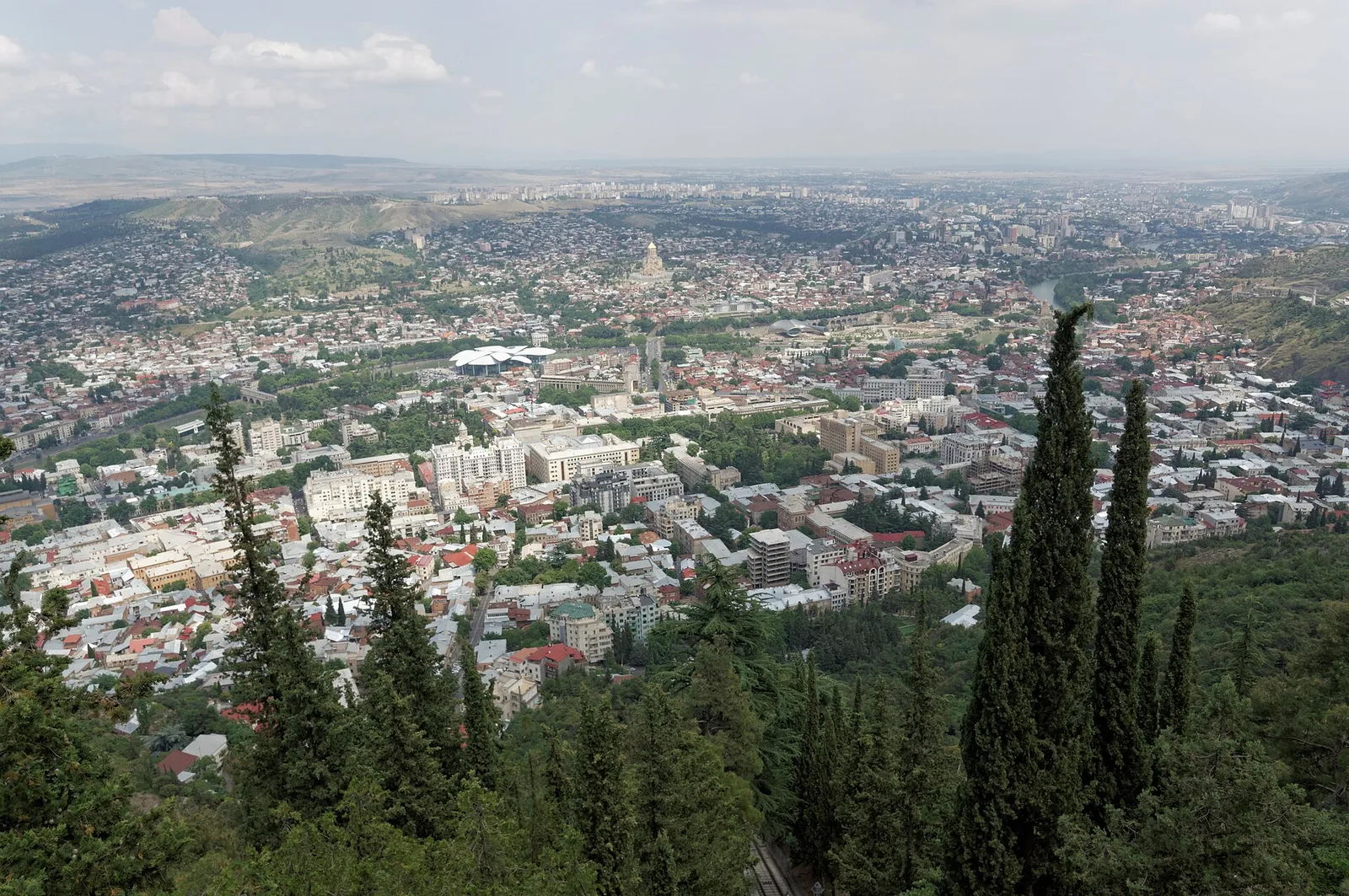
    Mtatsminda Park sits high above the city, so the main draw is the setting: open viewpoints, fresh air and a place to wander above the rooftops. There is a small amusement park and a cluster of cafés, but the views are the point. Go in the late afternoon for softer light and stay until the city lights come on if you like.

    The view from Mtatsminda Park over cypresses to Tbilisi spreading across the valley, with Sameba Cathedral in the distance
    Photo: © Vyacheslav Argenberg · CC BY 4.0

Itinerary decisions

What makes the cut, what can wait, and what is less worth it.

Essential

  • Narikala hill, the Mother of Georgia and the old town, which carry Day 1
  • Svetitskhoveli Cathedral in Mtskheta on Day 2
  • Mtatsminda Park for the views on Day 3, since the funicular ride is half the point

Optional

  • A sulfur bath in Abanotubani, booked as a private room, if you want an hour of relaxation; otherwise walk the district and spend the time on the old town
  • Samtavro Convent, the last Mtskheta stop, if energy or time is short
  • Holy Trinity Cathedral (Sameba) on Day 2, if you prefer a free afternoon
  • A marionette performance at the Gabriadze Theater, if a show fits your timing and you can book ahead

Not prioritized

  • Day trips to Kazbegi or the Kakheti wine region, which each need a full day and suit a longer stay
  • Museums such as the Georgian National Museum, which would need an extra half day

Before you use this plan

  • Hours, closures, prices, and conditions can change.
  • The Rike–Narikala cable car and the Mtatsminda funicular can pause service for maintenance or weather, so check before relying on them. Narikala can also be reached on foot from Abanotubani, and Mtatsminda by taxi or by the Rustaveli–Mtatsminda cable car.
  • The Narikala fortress complex, including its interior, walls and church, has been closed to visitors during restoration, with no announced reopening date. The hill, the Mother of Georgia and the viewpoints around them remain reachable, but check current access before you go.
  • Svetitskhoveli, Jvari, Samtavro, Anchiskhati and Sameba are working religious sites: dress modestly, with shoulders and knees covered, and expect women to be asked to cover their heads (wraps are sometimes available at the door).
  • Minibuses to Mtskheta leave from Didube station without a fixed timetable, and Jvari is a taxi ride above the town, so a Bolt or taxi is the more predictable option for Day 2.
  • Private bath rooms in Abanotubani are usually booked by the hour and fill up on weekends, so reserve ahead if you plan to bathe.
  • The Dry Bridge Market is liveliest on weekends and many vendors only set up around 10:00; on weekdays fewer stalls are open, so shift Day 3 to a weekend if you can.
  • Rustaveli Avenue is under a rehabilitation project, with sidewalk works and traffic restrictions expected to run until around the end of November 2026, so parts of it may be a construction zone; check the current status before you go.
  • This is a public example; Dayworthy adapts it to your dates, pace, hotel, and interests inside the app.

Dayworthy

Turn this example into your trip.

Dayworthy adapts the itinerary to your dates, pace, hotel, interests, and saved places.

Download Dayworthy on the App StoreDownload Dayworthy on Google Play