
Dayworthy itinerary

Three days in Budapest, from Buda Castle to Szentendre

A realistic 3-day Budapest itinerary

A balanced first visit split into the Buda hill (the castle, Matthias Church, Gellért Hill), the grand boulevards of Pest (Parliament, the Basilica, Andrássy Avenue, City Park), and a slower day trip to Szentendre ending in a thermal-bath soak.

Destination
Budapest, Hungary
Length
3 days
Pace
balanced
The neo-Gothic Hungarian Parliament Building and its red dome on the Danube bank
Photo: Source: User:Godot13 Derivative: User:MathKnight · CC BY-SA 4.0

Day-by-day plan

A paced plan, not an endless list.

Day1

Buda Castle, Matthias Church, Fisherman’s Bastion, and Gellért Hill

Spend the day on the Buda side: the castle district in the morning, lunch among the old streets, then down to the Castle Garden Bazaar and up Gellért Hill for the view over the Danube, with a rest and dinner by the river.

  1. 1 hour 30 min

    Buda Castle

    Grand royal palace complex perched high above the Danube.

    Buda Castle is the former royal seat of the Hungarian kings, and today its rebuilt Baroque form dominates the Buda side of the city. It is worth visiting if you want a mix of history, architecture, and panoramic views, especially since the complex now houses the Hungarian National Gallery, the Budapest Historical Museum, and the National Széchényi Library. Expect a large site with a lot to take in rather than a single neatly packaged monument.
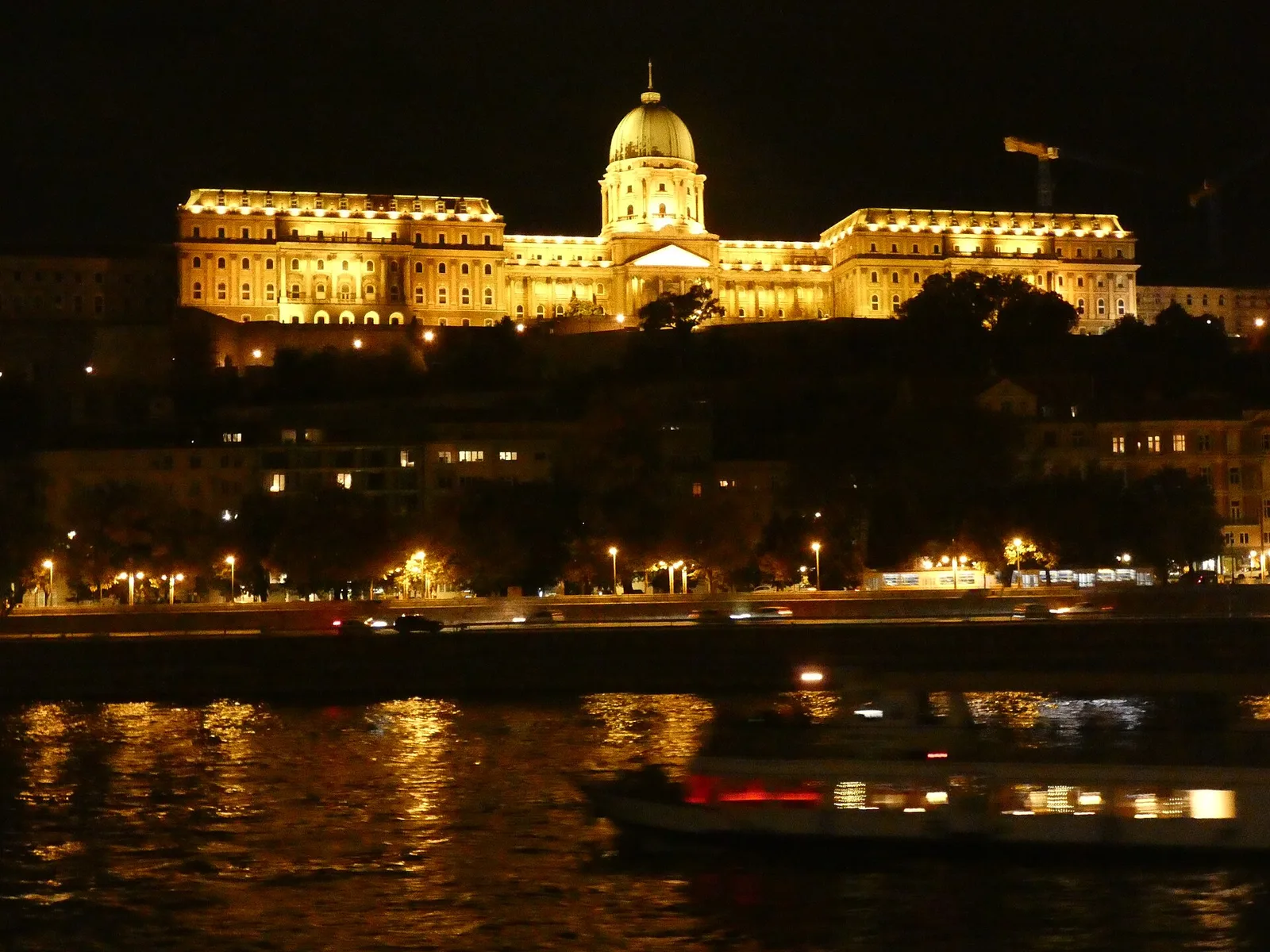
    The floodlit Buda Castle palace and its dome on the hill above the Danube at night
    Photo: Bingar1234 · CC BY-SA 4.0
  2. 1 hour

    The Church of Our Lady of Buda Castle

    See the colorfully painted Gothic church famous for its patterned tile roof (ticketed; limited hours on Sundays).

    The Church of Our Lady of Buda Castle sits in one of Budapest’s most atmospheric districts, where the castle streets and viewpoints do much of the work before you even step inside. It is worth visiting if you enjoy landmark churches with a strong sense of place, especially when you want a break from the busier sights on the Pest side. Expect a compact visit rather than a long one: the appeal is the architecture, the setting, and the feeling of old Buda rather than a large museum-like experience.
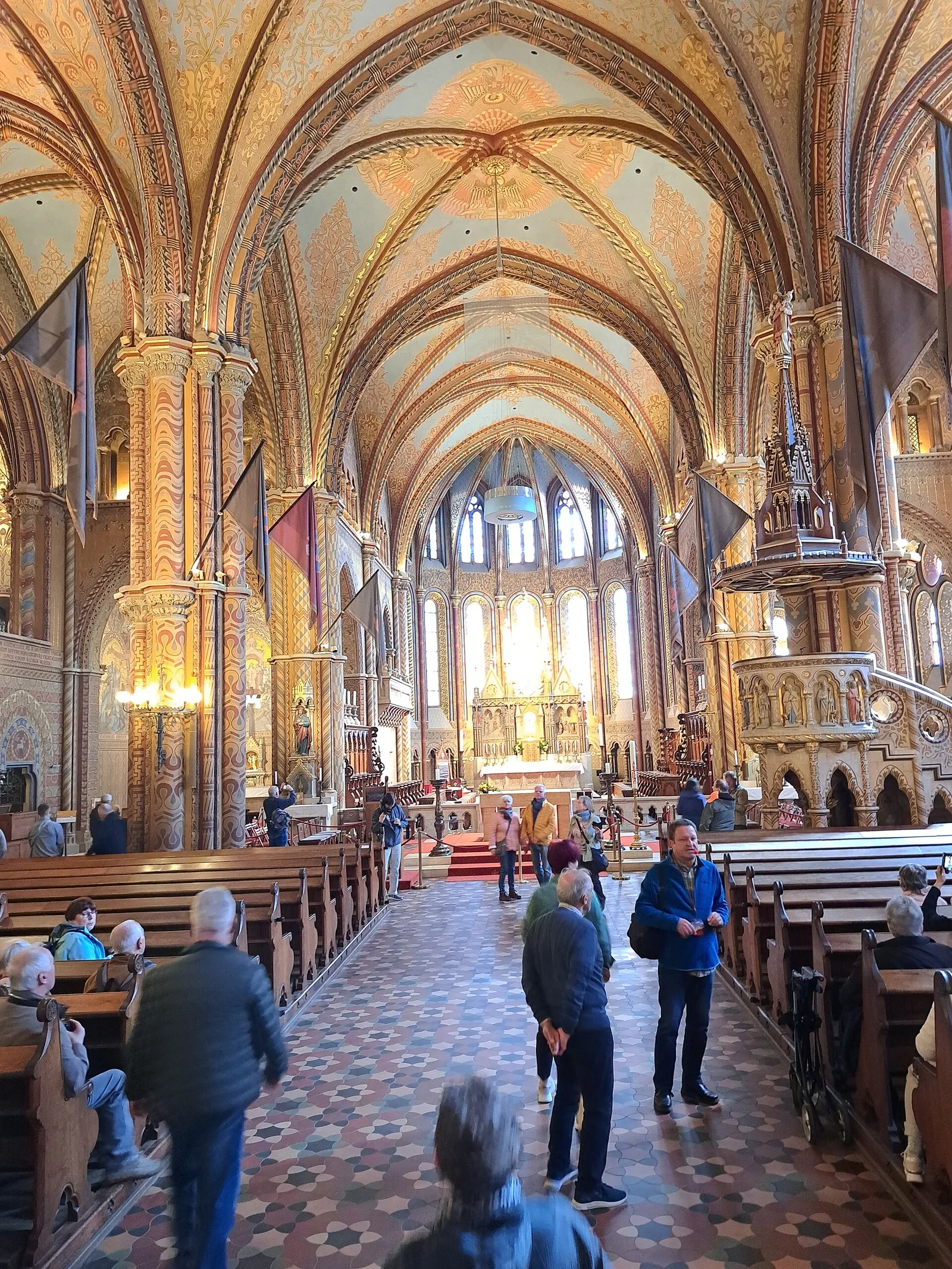
    The painted Gothic interior of the Matthias Church, with patterned pillars and vaulting
    Photo: Bybbisch94, Christian Gebhardt · CC BY-SA 4.0
  3. 45 min

    Fisherman's Bastion

    Walk the neo-Romanesque terraces for views across the Danube to Pest (the upper towers are ticketed in the daytime).

    Fisherman's Bastion is a neo-Romanesque lookout and monument near Buda Castle, known less for being a museum and more for the atmosphere and views. It is worth visiting for the sweeping panoramas over the Danube and Pest, especially at sunrise or after dark, when the city lights make the scene feel especially dramatic. Expect a popular, photogenic spot with plenty of foot traffic, so it is best enjoyed as part of a wider walk around the castle district rather than as a long standalone stop.
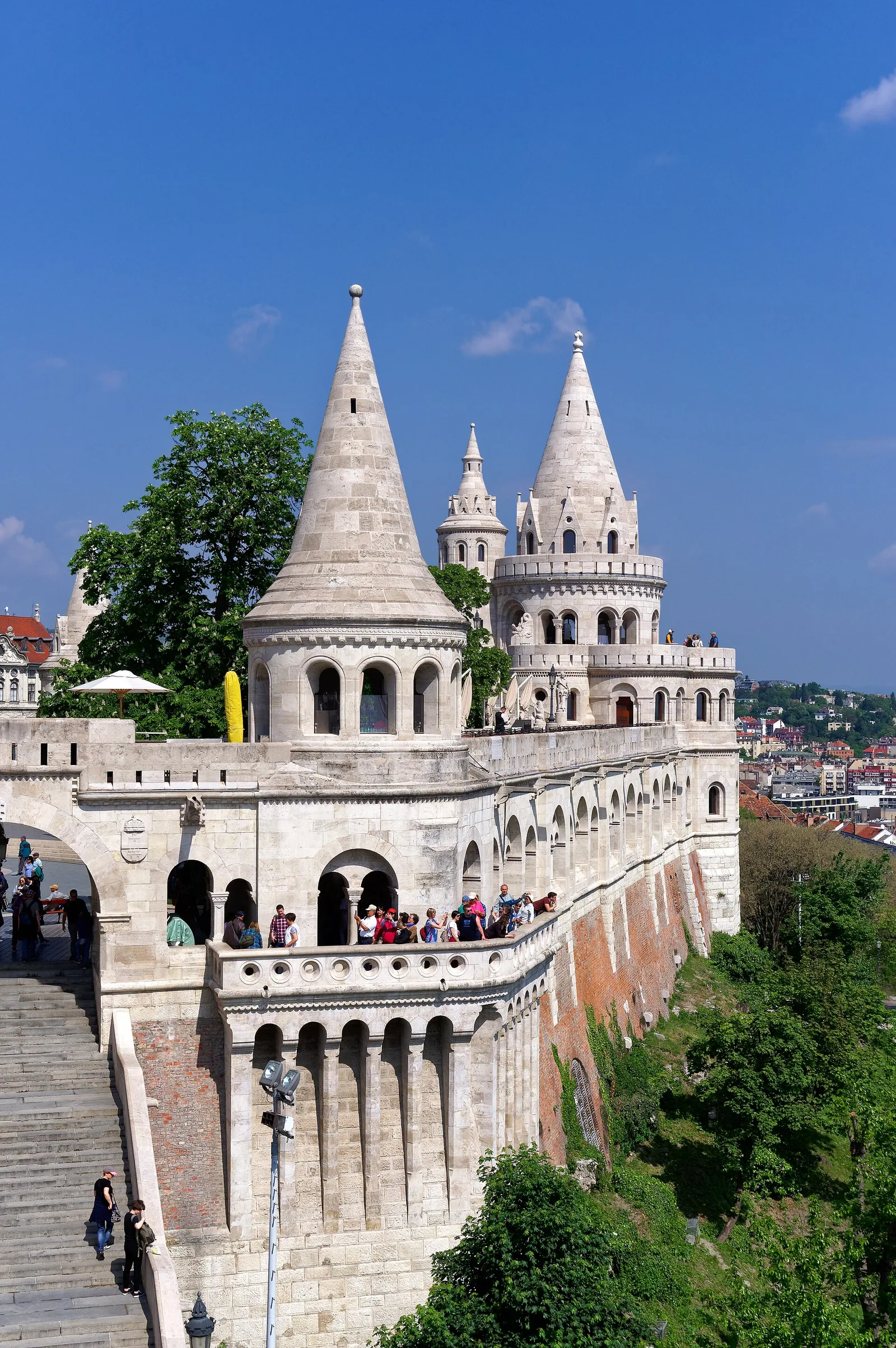
    The white conical towers and arcaded terraces of the Fisherman’s Bastion with visitors on the terraces below
    Photo: Jakub Hałun · CC BY-SA 4.0
  4. 1 hour 15 min

    Lunch in the Castle District

  5. 45 min

    Castle Garden Bazaar

    Restored Neo-Renaissance garden pavilion at the foot of Castle Hill.

    Castle Garden Bazaar is the restored gateway space below Buda Castle, where elegant 19th-century architecture meets terraces, gardens, and the riverfront. It is worth a stop if you enjoy scenic urban spaces, especially for the setting and the way it frames the castle above you; expect more of a leisurely stroll and photo stop than a deep museum-style visit.
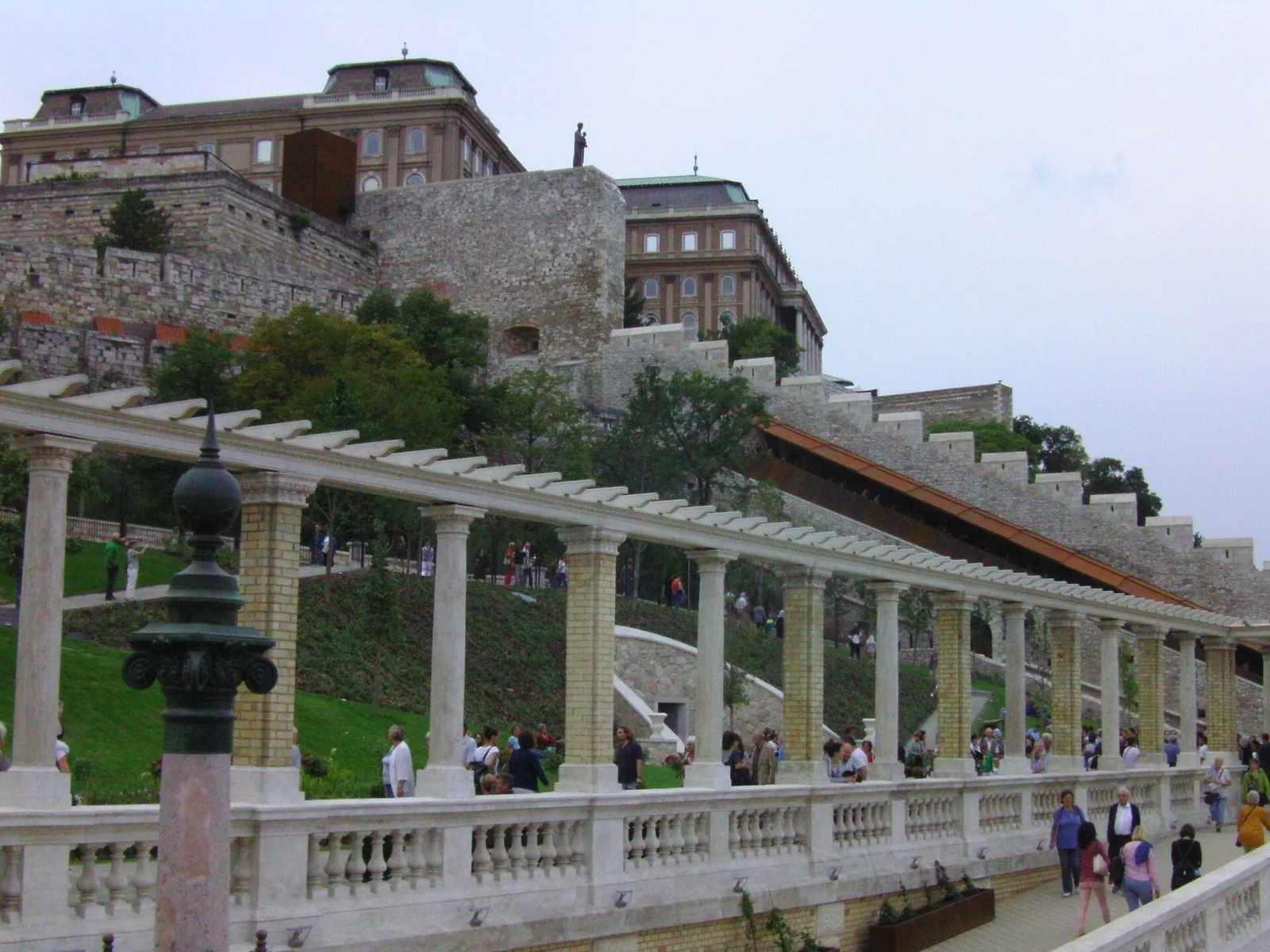
    The colonnade and ramparts of the Castle Garden Bazaar below the Buda Castle hill
    Photo: Globetrotter19 · CC BY-SA 4.0
  6. 1 hour 45 min

    Gellért Hill

    Climb to the Citadella and Liberty Statue for a wide view of the Danube and both halves of the city (the park inside the walls is free).

    Gellért Hill is a classic Budapest ascent: part park, part lookout, part landmark, crowned by the Liberty Statue and the Citadella fortress, whose renewed grounds reopened to the public in 2026. It is worth the climb for the sweeping views of the river, bridges, and both sides of the city, best in clear late-afternoon light. Expect a steady uphill walk of about half an hour on marked paths; the park is free, while the exhibition inside the Citadella is ticketed.
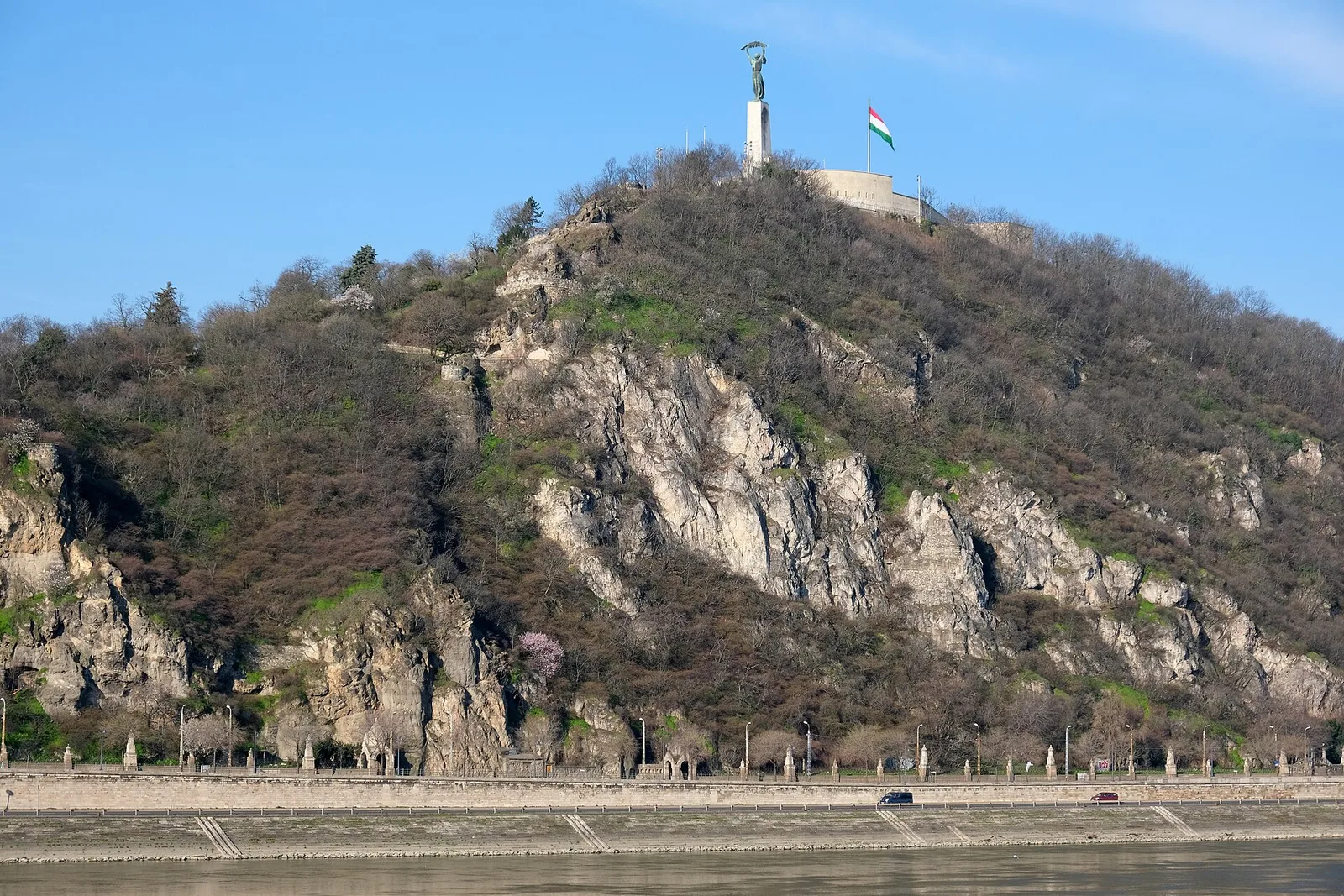
    Gellért Hill with the Liberty Statue on its summit, seen across the Danube
    Photo: kallerna · CC BY-SA 4.0
  7. 1 hour 15 min

    Rest at the hotel or a riverside cafe

  8. 1 hour 30 min

    Dinner by the Danube
Day2

Parliament, St. Stephen’s Basilica, Andrássy Avenue, and City Park

A grand Pest day: a pre-booked Parliament tour, the Basilica, then Andrássy Avenue out to Heroes’ Square and Vajdahunyad Castle in City Park. After a break, finish with an evening walk through the Jewish Quarter and dinner.

  1. 1 hour

    Hungarian Parliament Building

    Take a guided tour of the Gothic Revival Parliament (timed tickets; book ahead).

    The Hungarian Parliament Building dominates the Pest riverfront with a dramatic neo-Gothic silhouette and a richly detailed exterior. It is worth visiting for one of Budapest’s signature sights, and the interior is only open on a guided tour of about 45 minutes, which must be booked in advance for a set time; English tours run several times a day. If you cannot get a slot, the building is just as striking from Kossuth Square or from the river.

    The neo-Gothic Hungarian Parliament Building and its red dome on the Danube bank
    Photo: Source: User:Godot13 Derivative: User:MathKnight · CC BY-SA 4.0
  2. 1 hour

    St. Stephen's Basilica

    Visit the neoclassical basilica, with a panorama terrace above (the church hall is ticketed and opens late on Sundays).

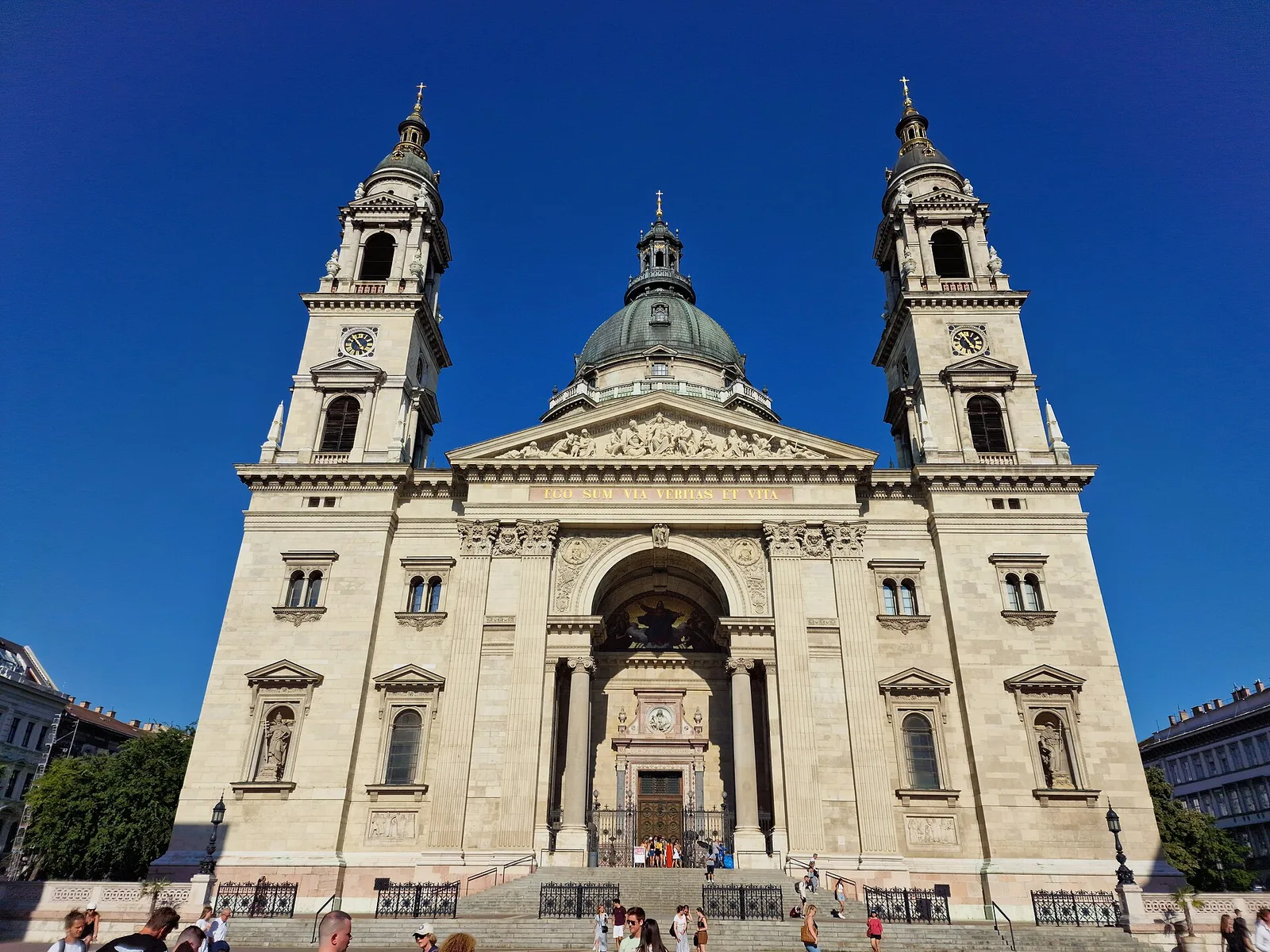
    St. Stephen's Basilica is a Roman Catholic church in Budapest that honors Stephen, the first King of Hungary, and it is known for the reliquary said to hold his right hand. The interior and overall scale make it worth seeing if you appreciate ornate architecture, major civic-religious monuments, or a place that feels central to the city’s identity. Expect a polished, often busy stop rather than a hidden, contemplative church, so it works best when you want a classic Budapest highlight.

    The twin bell towers and dome of St. Stephen’s Basilica above its steps
    Photo: Tom Corser · CC BY-SA 3.0
  3. 1 hour 15 min

    Lunch near the Basilica

  4. 1 hour

    Andrássy út

    UNESCO-listed boulevard lined with grand townhouses and high-end storefronts.

    Andrássy út is one of Budapest’s signature streets: a wide, formal boulevard laid out in 1872 and now part of the city’s World Heritage fabric. It is worth visiting for the sequence of Neo-renaissance mansions, ornate facades, and important stops like the State Opera House, the Hungarian University of Fine Arts, and several museums and theaters. Expect a pleasant but urban stroll rather than a single monument — it is best if you enjoy architecture, city atmosphere, cafes, and browsing shops.

  5. 45 min

    Heroes' Square

    Imposing plaza dedicated to the chieftains and leaders who founded Hungary.

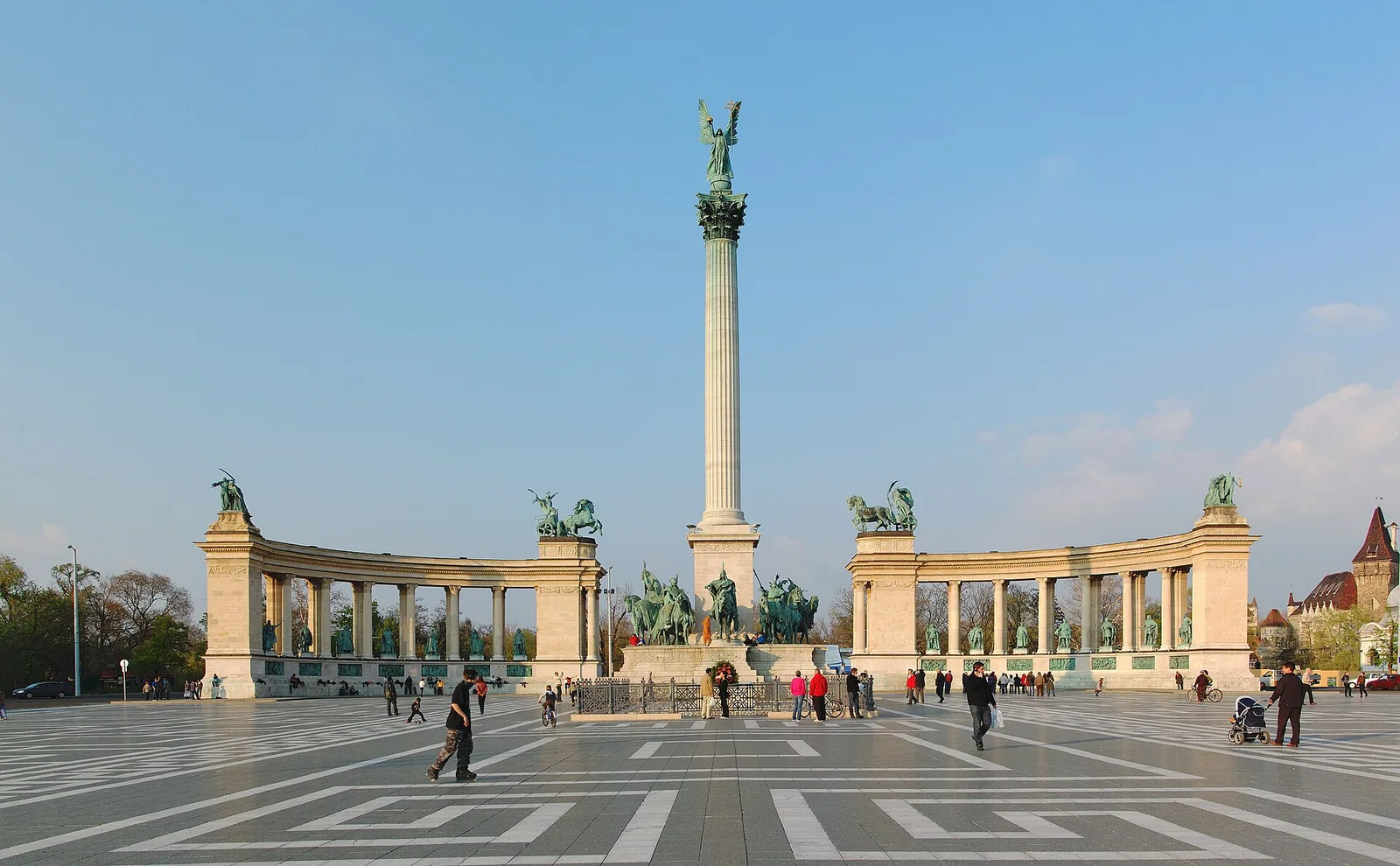
    Set at the end of Andrássy Avenue, Heroes' Square is a broad, dramatic plaza framed by monumental statues and the Millenary Monument. It is worth visiting if you want a classic Budapest landmark that feels grand without requiring much time; most people pair it with nearby City Park and the museums around the square. Expect a very open, wind-swept space that is better for atmosphere, architecture, and photos than for lingering.

    The Millennium Monument and colonnades of Heroes’ Square
    Photo: Petr Šmerkl, Wikipedia · CC BY-SA 3.0
  6. 1 hour

    Vajdahunyad Castle

    Stroll the fairytale castle and its courtyards in City Park (the interior museum is closed Mondays).

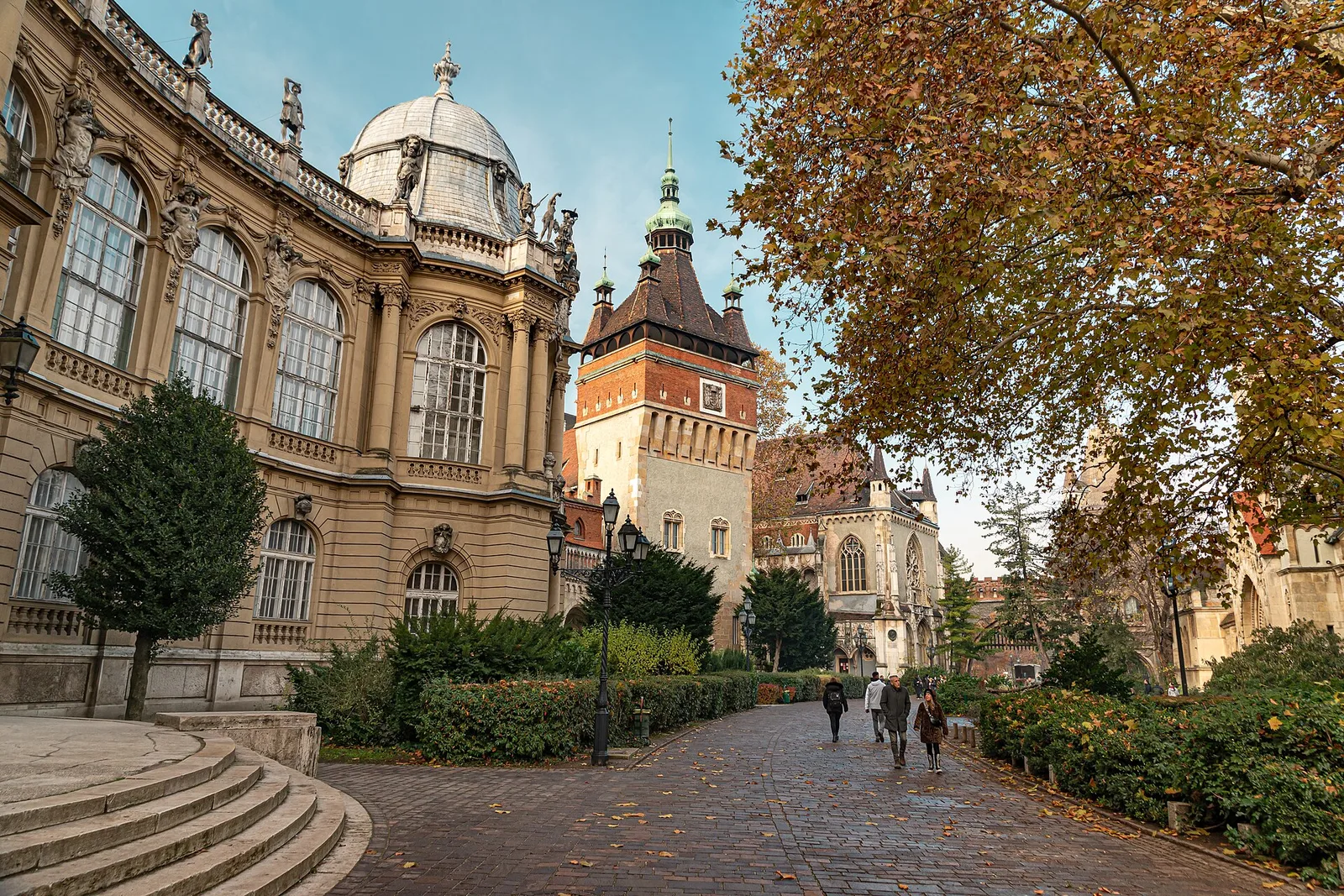
    Vajdahunyad Castle sits in the middle of City Park and is worth a visit if you enjoy atmospheric architecture and a relaxed park setting rather than a single grand museum experience. Its appeal is in the mix of styles and the picturesque setting, which make it an easy place to stroll, photograph, and pair with nearby park activities.

    A tower and the domed wing of Vajdahunyad Castle beside a tree-lined path in autumn
    Photo: Jorge Franganillo · CC BY 2.0
  7. 1 hour

    Afternoon coffee and downtime

  8. 1 hour

    Jewish Quarter and the Pest ghetto boundary

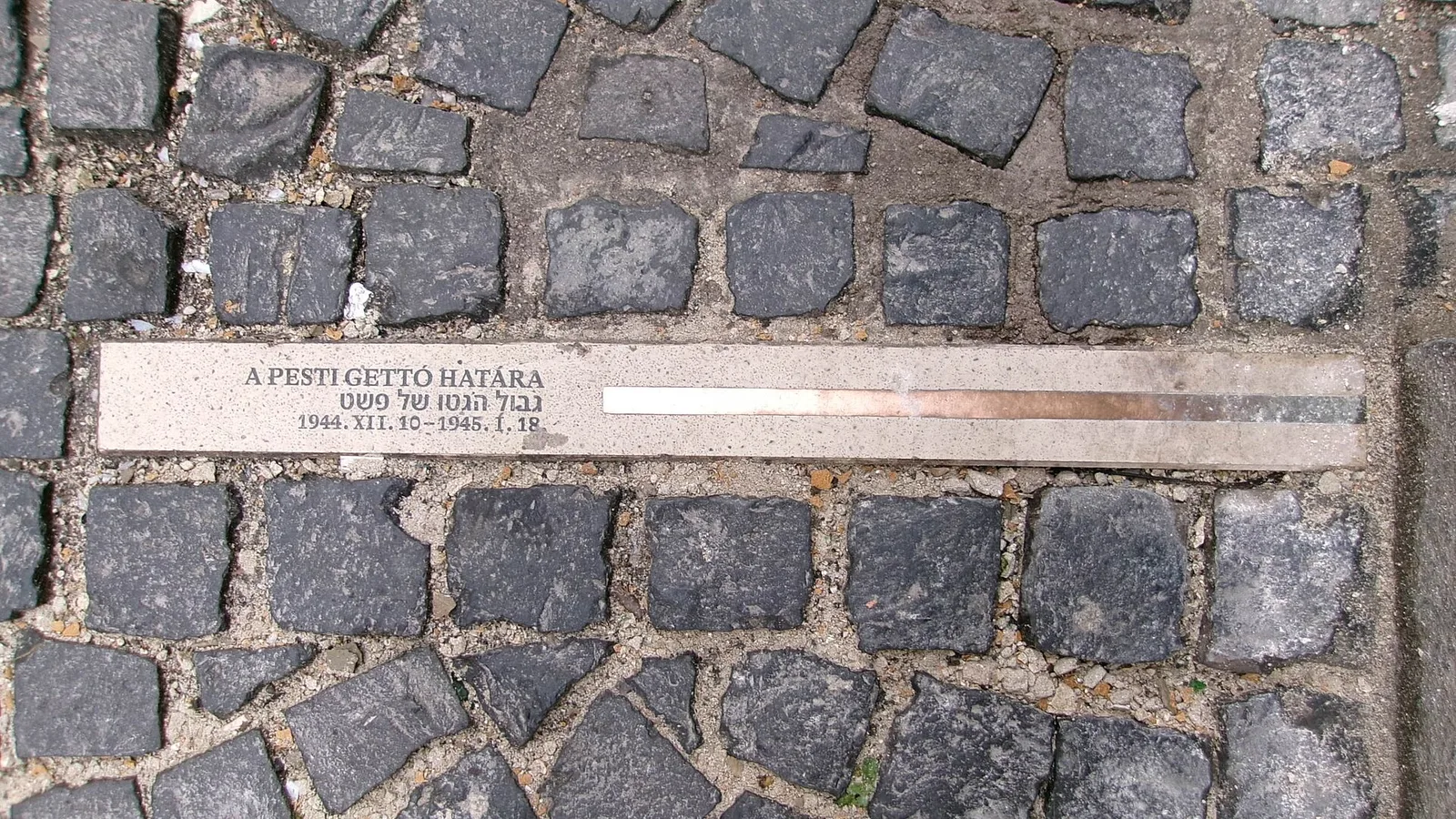
    Walk the old Jewish Quarter, with its courtyards, street art, and ruin bars, and find the marker for the ghetto boundary.

    The Jewish Quarter is the old district of Pest around Dohány and Kazinczy streets, now a mix of courtyards, synagogues, street art, and ruin bars. It is worth a slow walk for its layered history, including the boundary markers set into the pavement that trace the wartime Pest ghetto of 1944 to 1945. Expect a lively evening district beside quiet sites of remembrance, so keep the mood respectful.

    A metal strip set in the cobblestones, inscribed with the words “A Pesti Gettó határa”, marking the boundary of the Pest ghetto
    Photo: Globetrotter19 · CC BY-SA 4.0
  9. 1 hour 30 min

    Dinner in the Jewish Quarter

Day3

A day trip to Szentendre, and an evening at Széchenyi Baths

Take the suburban railway to Szentendre for colorful lanes, small museums, and a slow lunch, then come back to Budapest and end the trip with an evening soak at Széchenyi Thermal Bath.

  1. 1 hour

    HÉV suburban train to Szentendre

  2. 2 hours

    Szentendre old town

    Wander a Danube Bend town of colorful Baroque houses, galleries, and small museums.

    Szentendre is a compact riverside town north of Budapest, built for unhurried strolling, with colorful Baroque houses, small galleries and museums, and a Mediterranean feel. It is worth a day if you want an easy change of pace from the city. Expect a charming, tourist-friendly atmosphere rather than a hidden local secret, and note that some museums are closed on Mondays.

  3. 45 min

    Marzipan Museum

    Visit a small museum of marzipan figures and sweets (an optional stop).

    The Marzipan Museum in Szentendre is a small, playful museum and shop where marzipan is shaped into figures and scenes. It is worth a short stop if you like sweets and quirky museums, and it is an easy indoor break from the lanes. Expect a quick, family-friendly visit and a shop at the end.

  4. 1 hour 15 min

    Lunch in Szentendre

  5. 1 hour 30 min

    Free time on the river promenade and in the galleries

  6. 1 hour

    HÉV back to Budapest

  7. 2 hours

    Széchenyi Thermal Bath

    Soak in one of Europe’s largest thermal bath complexes, in a neo-Baroque palace in City Park (an optional evening stop).

    Széchenyi Thermal Bath is a huge neo-Baroque spa complex in City Park, with indoor and outdoor thermal pools, saunas, and steam rooms. It is worth ending the trip here for a warm, relaxed soak. Expect crowds at weekends, a ritual of lockers and flip-flops, and a visit of about two hours; book online to skip the ticket queue, and check the day’s closing time, since the pools close earlier than many visitors expect.

  8. 1 hour 15 min

    Dinner near City Park

Itinerary decisions

What makes the cut, what can wait, and what is less worth it.

Essential

  • Buda Castle, Matthias Church, and Fisherman’s Bastion
  • Parliament (a booked tour) and St. Stephen’s Basilica
  • Andrássy Avenue and Heroes’ Square
  • A day trip to Szentendre

Optional

  • Gellért Hill and the Citadella
  • An evening at Széchenyi Thermal Bath
  • The Marzipan Museum in Szentendre

Not prioritized

  • Adding a second day trip, such as Eger or the Danube Bend, to this three-day version
  • Visiting every museum inside Buda Castle

Before you use this plan

  • Hours, closures, prices, and conditions can change.
  • Matthias Church hours vary from day to day and pause for services, and on Sundays it only opens to visitors from about 13:00, so check the church’s official site for that day’s times. If Day 1 is a Sunday, do Fisherman’s Bastion and Gellért Hill first and the church in the afternoon. Museums inside Buda Castle are commonly closed on Mondays.
  • The Hungarian Parliament can only be visited on a guided tour with a booked time, so reserve a slot on the official site before you go; English tours run through the day, but some days are closed for official events, so check the dates. St. Stephen’s Basilica opens its church hall to visitors from about 13:00 on Sundays.
  • The Castle Hill funicular is a handy way up, but it has scheduled maintenance closures (including 5 to 16 October 2026) and on some Mondays; otherwise walk up the steps from the river or take bus 16 to the Castle District.
  • Fisherman’s Bastion is free to walk, but the upper towers charge a small fee in the daytime and are free outside those hours. The Citadella park on Gellért Hill is free; only its exhibition needs a ticket.
  • For Szentendre, take the HÉV suburban railway from Batthyány tér (about 40 minutes, every 20 minutes or so). Several of its museums are closed on Mondays, though the lanes are always open.
  • Széchenyi Thermal Bath is open until 20:00 Monday to Thursday and weekends and until 22:00 on Fridays, but the pools and saunas close about 20 minutes earlier (19:40, or 21:40 on Fridays), the ticket desk closes an hour before the bath does, and the pools are cleared before closing. Arrive by about 17:30 so you get a full soak, bring flip-flops, and note that a swim cap is only required in the lap swimming pools, not the thermal pools. Book online ahead and check the official hours for your date.
  • This is a public example; Dayworthy adapts it to your dates, pace, hotel, and interests inside the app.

Dayworthy

Turn this example into your trip.

Dayworthy adapts the itinerary to your dates, pace, hotel, interests, and saved places.