Dayworthy itinerary

Three days in Bogotá, from La Candelaria to the Salt Cathedral

A realistic 3-day Bogotá itinerary

A balanced first visit split between the colonial center on Day 1 (the Plaza de Bolívar, the cathedral, the Gold and Botero museums), the hill of Monserrate, La Macarena and the National Museum on Day 2, and a bus day trip to the underground Salt Cathedral of Zipaquirá on Day 3.

Destination
Bogotá, Colombia
Length
3 days
Pace
balanced
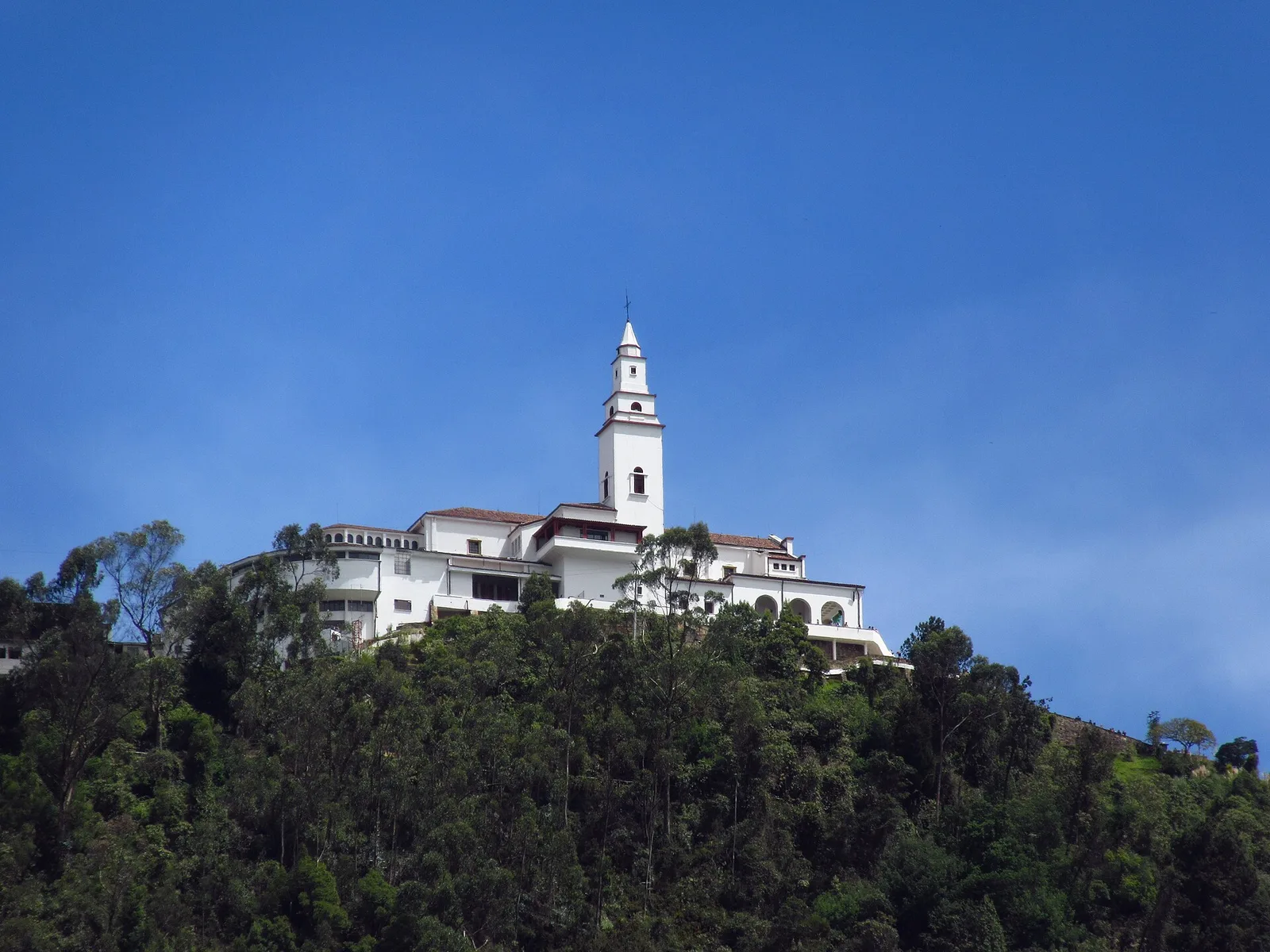
The white church of Monserrate on its forested hilltop under a blue sky
Photo: Felipe Restrepo Acosta · CC BY-SA 4.0

Day-by-day plan

A paced plan, not an endless list.

Day1

The Plaza de Bolívar, the Gold and Botero museums, and La Candelaria

Spend the day in the colonial center: the Plaza de Bolívar and the cathedral, the Botero Museum, lunch in La Candelaria, and the Gold Museum. Finish with an unhurried walk through the historic neighborhood before dinner.

  1. 45 min

    Plaza de Bolívar

    Start in Bogotá’s main square, ringed by the cathedral, Congress, and the Palace of Justice.

    The Plaza de Bolívar is the historic heart of Bogotá, a large cobbled square with a statue of Simón Bolívar, flanked by the Primate Cathedral, the Capitol (Congress), the Palace of Justice, and the city hall. It is worth starting here to get your bearings in the old center and for the cluster of landmarks on one square. Expect pigeons, street vendors, and frequent demonstrations, so keep your belongings close and your plans flexible.
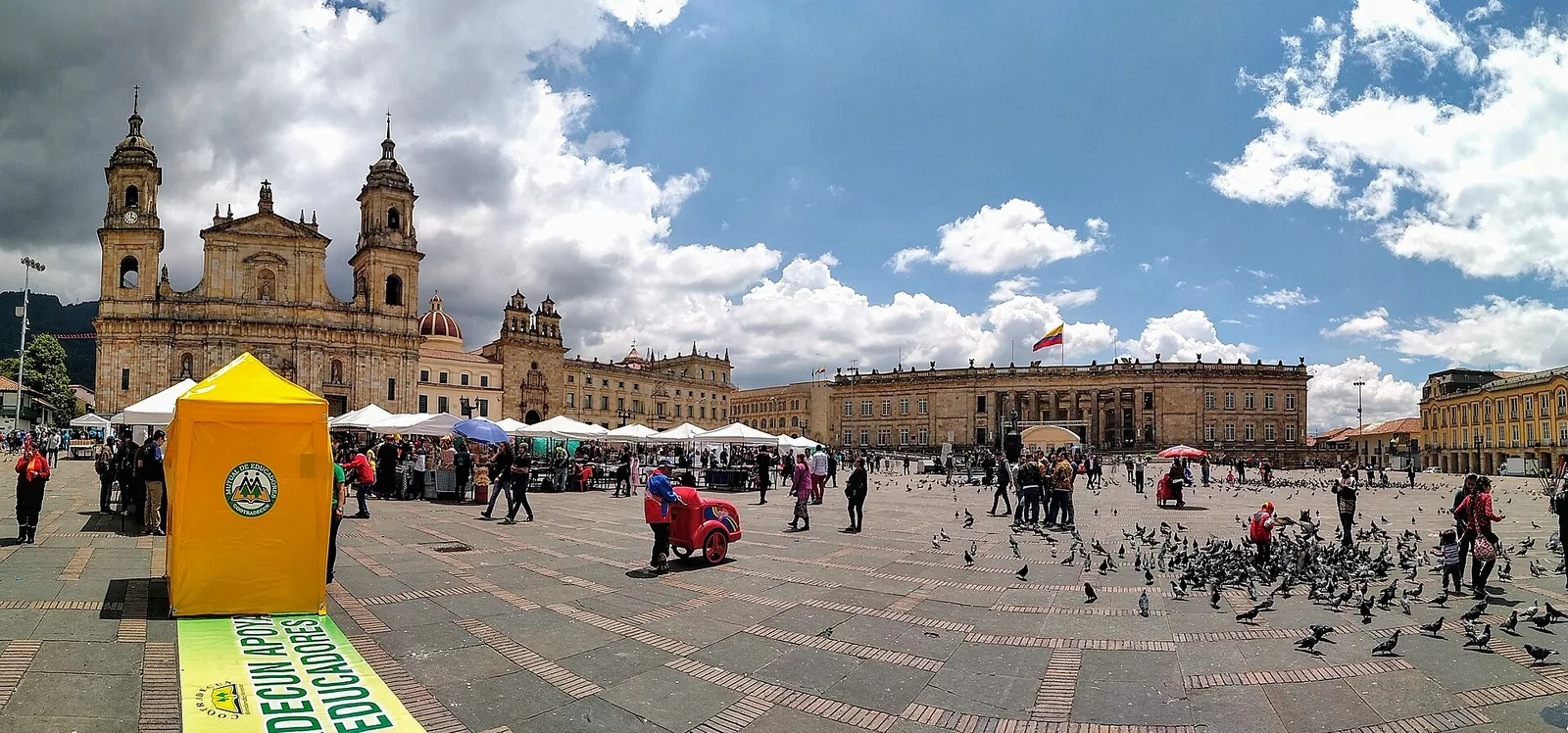
    Plaza de Bolívar, a wide cobbled square with pigeons, tents, and the cathedral and government buildings along its far side
    Photo: Javierleiva · CC BY-SA 4.0
  2. 45 min

    Primate Cathedral of Colombia

    Step into the neoclassical cathedral on the square, the seat of Colombia’s archbishop.

    The Primate Cathedral of Colombia stands on the east side of the Plaza de Bolívar, a large neoclassical church completed in the 19th century on the site of earlier cathedrals, with chapels, paintings, and the tomb of the city’s founder. It is worth a short visit for the architecture and the quiet interior after the busy square. Expect a working church with limited visiting hours and a dress code that asks for covered shoulders, so check the times.
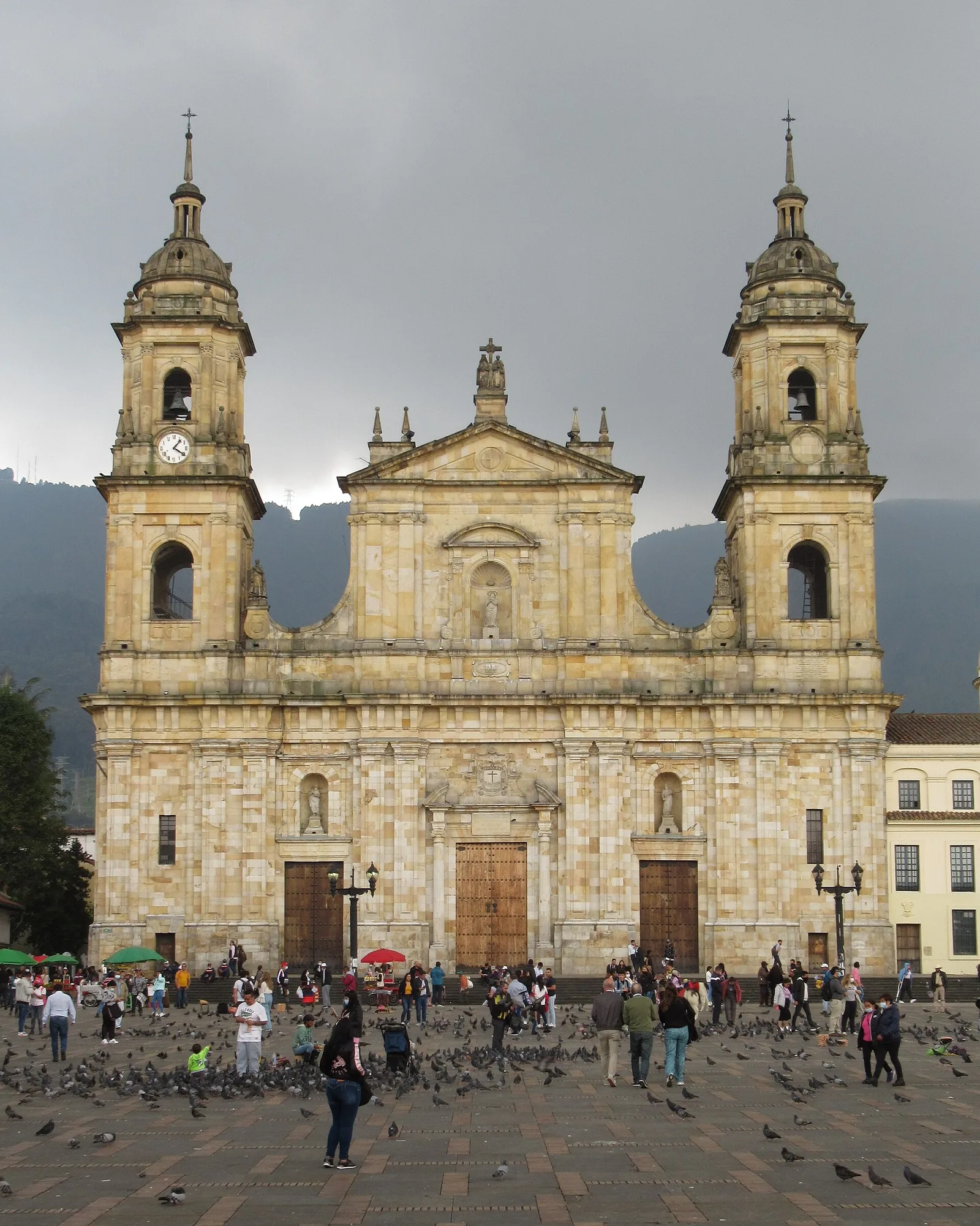
    The twin-towered, cream-colored facade of the Primate Cathedral of Colombia under a gray sky
    Photo: Felipe Restrpo Acosta · CC BY-SA 4.0
  3. 1 hour 30 min

    Botero Museum

    See Fernando Botero’s round-figured paintings and sculptures, with works by Picasso and Monet, in a colonial house (free admission; closed on Tuesdays).

    The Botero Museum, in a restored colonial house in La Candelaria, shows the art donated by Fernando Botero, including his own plump, round-figured paintings and sculptures and works by artists such as Picasso, Monet, and Dalí. It is worth an hour and a half for a lively, accessible collection in a calm courtyard setting. Expect a museum with free admission that is closed on Tuesdays, so check the hours.
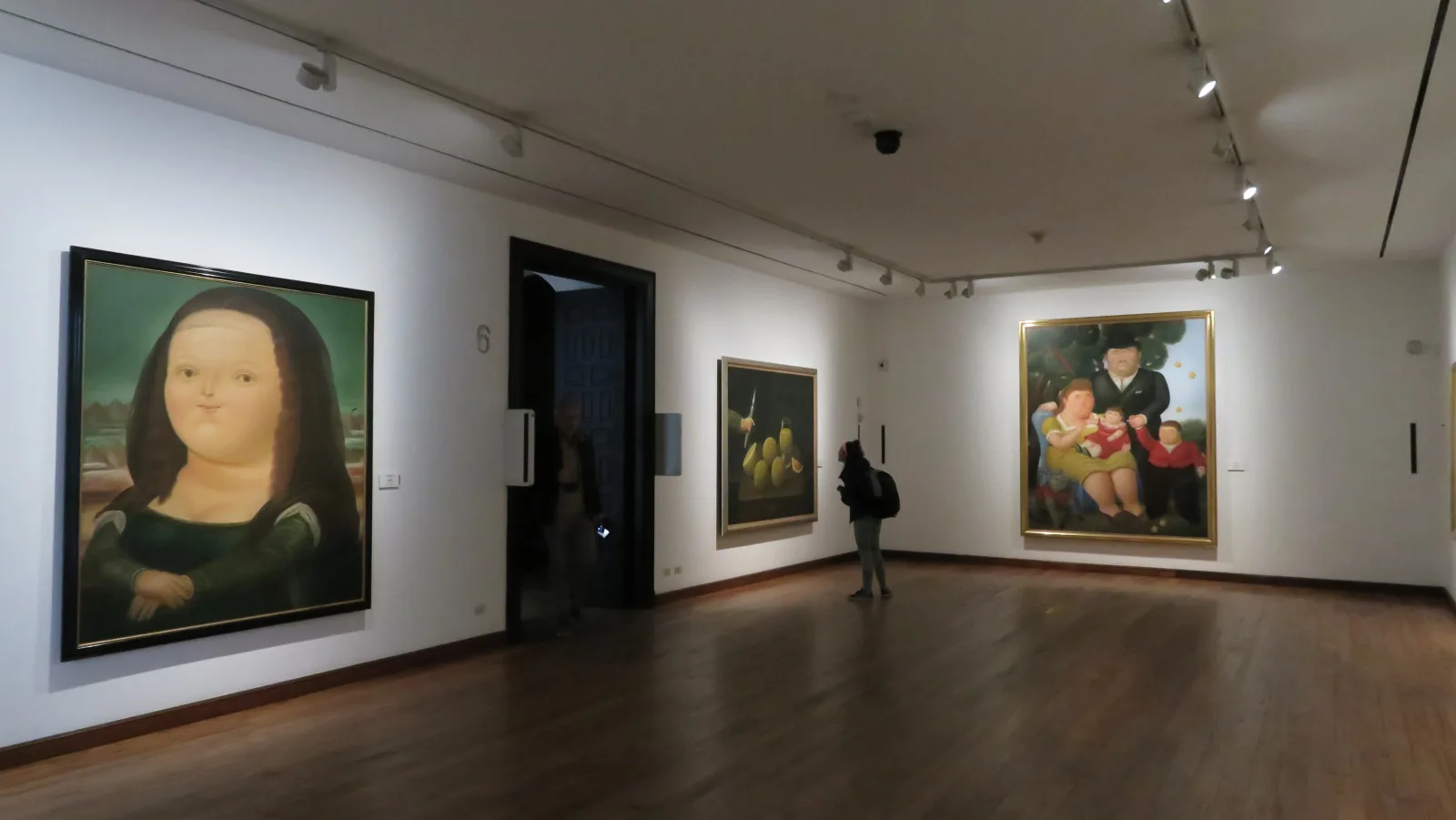
    A gallery of the Botero Museum with round-figured paintings by Fernando Botero on white walls
    Photo: Burkhard Mücke · CC BY-SA 4.0
  4. 1 hour 10 min

    Lunch in La Candelaria

  5. 1 hour 45 min

    Gold Museum

    See the world’s largest collection of pre-Hispanic gold in a modern museum (closed on Mondays; check the hours).

    The Gold Museum, or Museo del Oro, holds one of the largest collections of pre-Hispanic gold in the world, with tens of thousands of pieces made by Indigenous peoples of Colombia, including the famous Muisca raft. It is worth about two hours as the single best introduction to Colombia’s pre-Columbian cultures. Expect a ticketed, popular museum that is closed on Mondays and busy at weekends, so check the days and hours and consider going early.
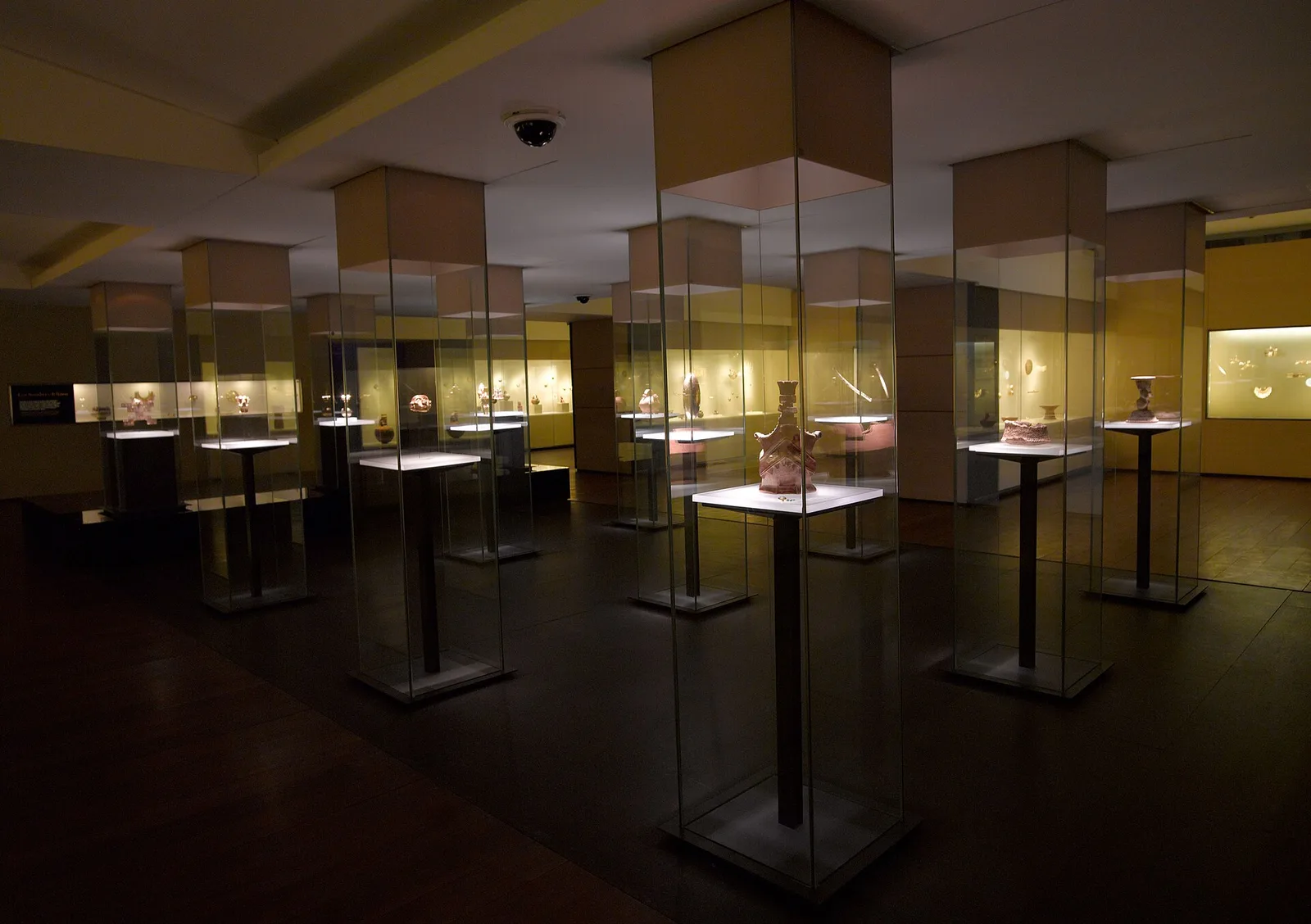
    Rows of glass display cases with lit gold artifacts in a darkened gallery of the Gold Museum
    Photo: Actividad Cultural Banco de la República · CC BY-SA 2.0
  6. 1 hour 10 min

    La Candelaria Historic District

    Wander the cobbled lanes, colonial houses, murals, and cafes of the old town (go in daylight).

    La Candelaria is Bogotá’s old town, a hillside neighborhood of narrow cobbled streets, colonial houses with balconies, murals, small museums, and cafes, around the Plaza de Bolívar. It is worth a slow wander for the atmosphere and street art, and for a coffee break with a view up to Monserrate. Expect a lively daytime neighborhood that gets quiet and less safe after dark, so keep to busier streets and leave by early evening.

  7. 40 min

    Afternoon coffee and a rest

  8. 1 hour 30 min

    Dinner in downtown Bogotá (go by taxi after dark)
Day2

Monserrate, La Macarena, the National Museum, and Zona G

Go up Monserrate early for the view over the city, then stroll the arts district of La Macarena and have lunch there. Visit the National Museum in the afternoon, rest, and spend the evening in Zona G.

  1. 2 hours 30 min

    Monserrate

    Ride the cable car or funicular up the hill for a pilgrimage church and a view over the whole city (3,150 meters; check times).

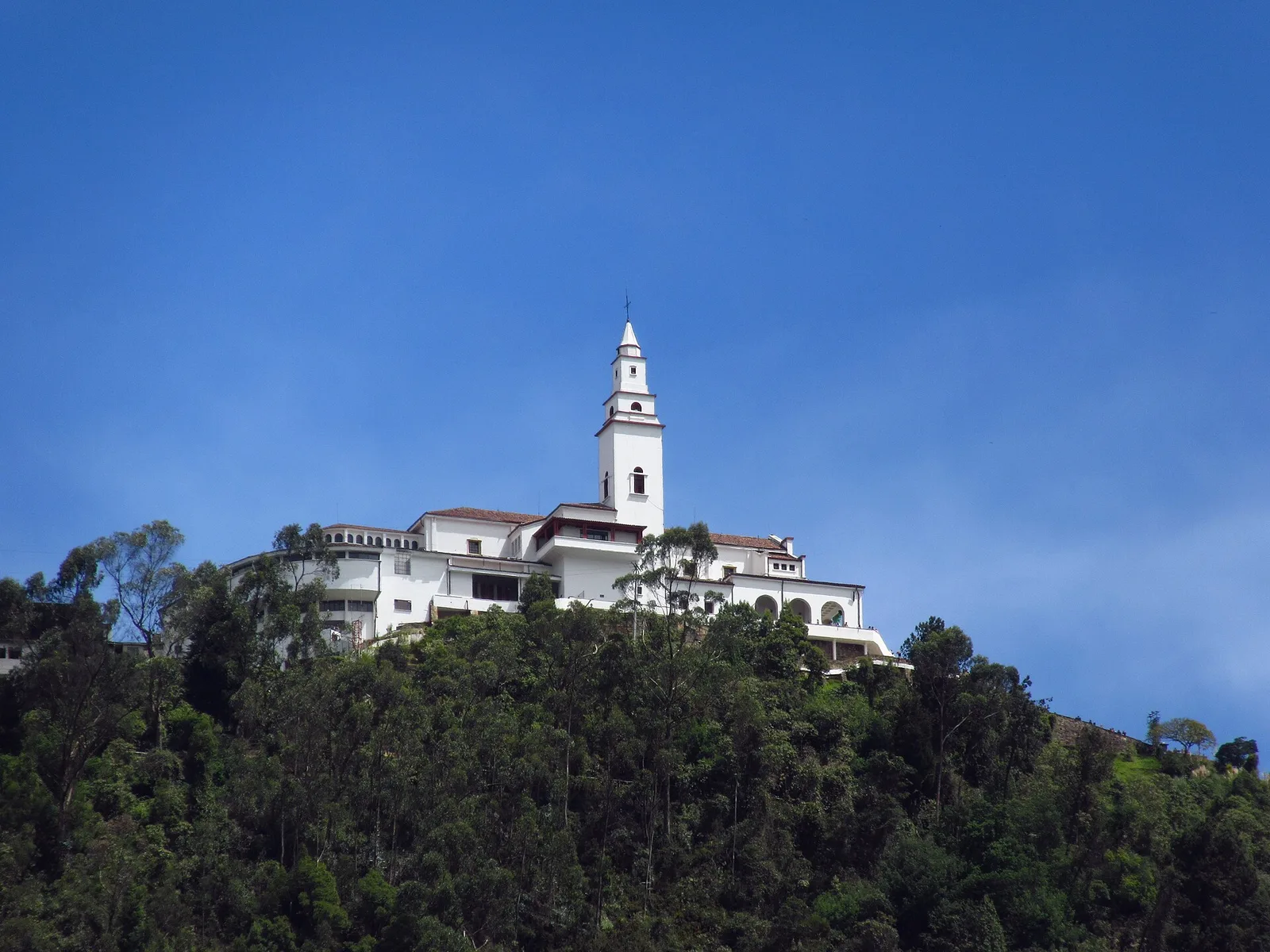
    Monserrate is the hill above Bogotá’s old town, crowned by a white pilgrimage church at about 3,150 meters, reached by a cable car or a funicular, with gardens, viewpoints, and cafes at the top. It is worth going up early on a clear morning for the view over the whole city and the plateau, and for the sanctuary itself. Expect thin air that can leave you breathless, a cool, windy summit, queues at weekends, and cable car and funicular times that vary, so check the schedule and dress warmly.

    The white church of Monserrate on its forested hilltop under a blue sky
    Photo: Felipe Restrepo Acosta · CC BY-SA 4.0
  2. 1 hour

    La Macarena

    Stroll the small arts district of galleries, bistros, and brick houses beside the old bullring.

    La Macarena is a small bohemian neighborhood of galleries, bistros, and brick houses near the old bullring and the city’s eastern hills, known for its restaurants and arts scene. It is worth a relaxed stroll and a late-morning lunch, in a calmer, more local setting than the old town. Expect a quiet residential area that is busiest at lunch and dinner, and plan a taxi or rideshare for the way back.

  3. 1 hour 15 min

    Lunch in La Macarena

  4. 1 hour 45 min

    National Museum of Colombia

    Tour Colombia’s national history and art museum in a former panopticon prison (closed on Mondays; check the hours).

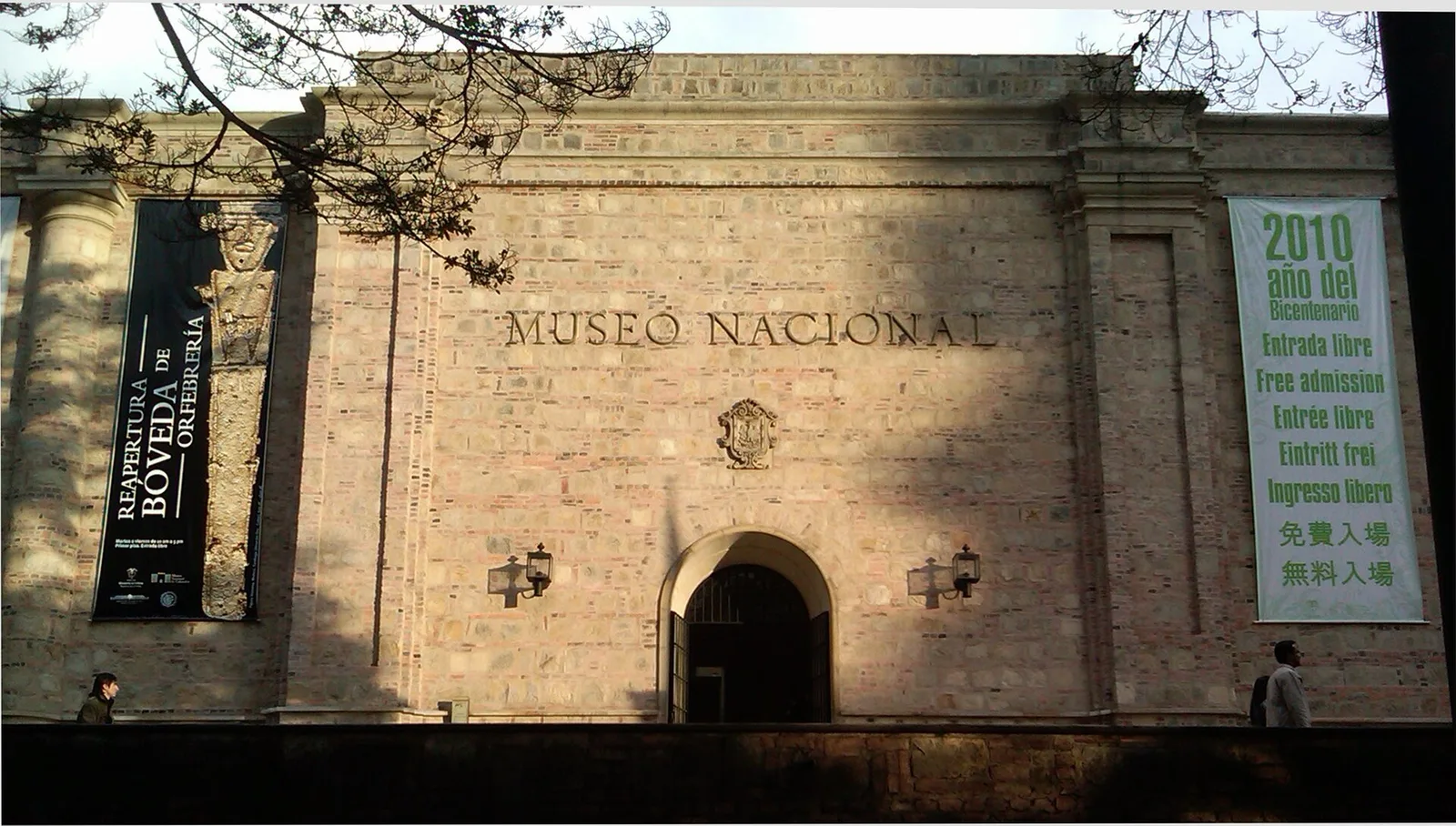
    The National Museum of Colombia is housed in a former panopticon-style prison built in the 19th century, and its galleries trace the country’s history from pre-Hispanic times to the present through archaeology, art, and everyday objects. It is worth about an hour and three quarters for a clear overview of Colombian history in a striking building. Expect a ticketed museum that is closed on Mondays, with good Spanish-language labeling and some English, so check the days and hours.

    The stone facade of the Museo Nacional de Colombia with the museum name above its arched entrance
    Photo: Peter Angritt · CC BY-SA 3.0
  5. 1 hour 30 min

    Rest at the hotel, then a taxi to Zona G (about 30 minutes)

  6. 1 hour

    Zona G

    Walk Bogotá’s upscale restaurant district for an evening of dining.

    Zona G, short for the Gourmet Zone, is a district of upscale restaurants, cafes, and food shops in the north of Chapinero, one of the city’s best-known dining areas. It is worth an evening for a wide range of Colombian and international cuisine. Expect a polished, pricey district where reservations are useful at dinner, and plan a taxi or rideshare to and from your hotel.

  7. 1 hour 30 min

    Dinner in Zona G

Day3

A day trip to the Salt Cathedral of Zipaquirá

Take the bus north to Zipaquirá for the underground Salt Cathedral, then lunch and a walk through the colonial plaza and the pedestrian Calle 4, before the return bus to Bogotá for dinner.

  1. 1 hour

    TransMilenio from central Bogotá to Portal del Norte (about 1 hour; allow more in rush hour)

  2. 1 hour 45 min

    Bus from Portal del Norte to Zipaquirá (about 1 to 2 hours, depending on traffic)

  3. 2 hours

    Zipaquirá Salt Cathedral

    Walk down into an underground cathedral carved in a working salt mine (ticketed; book ahead).

    The Salt Cathedral of Zipaquirá is an underground Catholic church carved inside a salt mine, with a Via Crucis of fourteen chapels, a vast central nave, and a giant cross, all lit in changing colors. It is worth the day trip as one of Colombia’s most unusual and best-known sights. Expect a ticketed visit with queues at weekends and holidays, a cool, damp interior, and a walk of about an hour, so book ahead online if you can and check the opening hours.

  4. 1 hour 10 min

    Lunch in Zipaquirá

  5. 45 min

    Plaza de los Comuneros

    See the town’s main square, with its cathedral, palm trees, and colonial buildings.

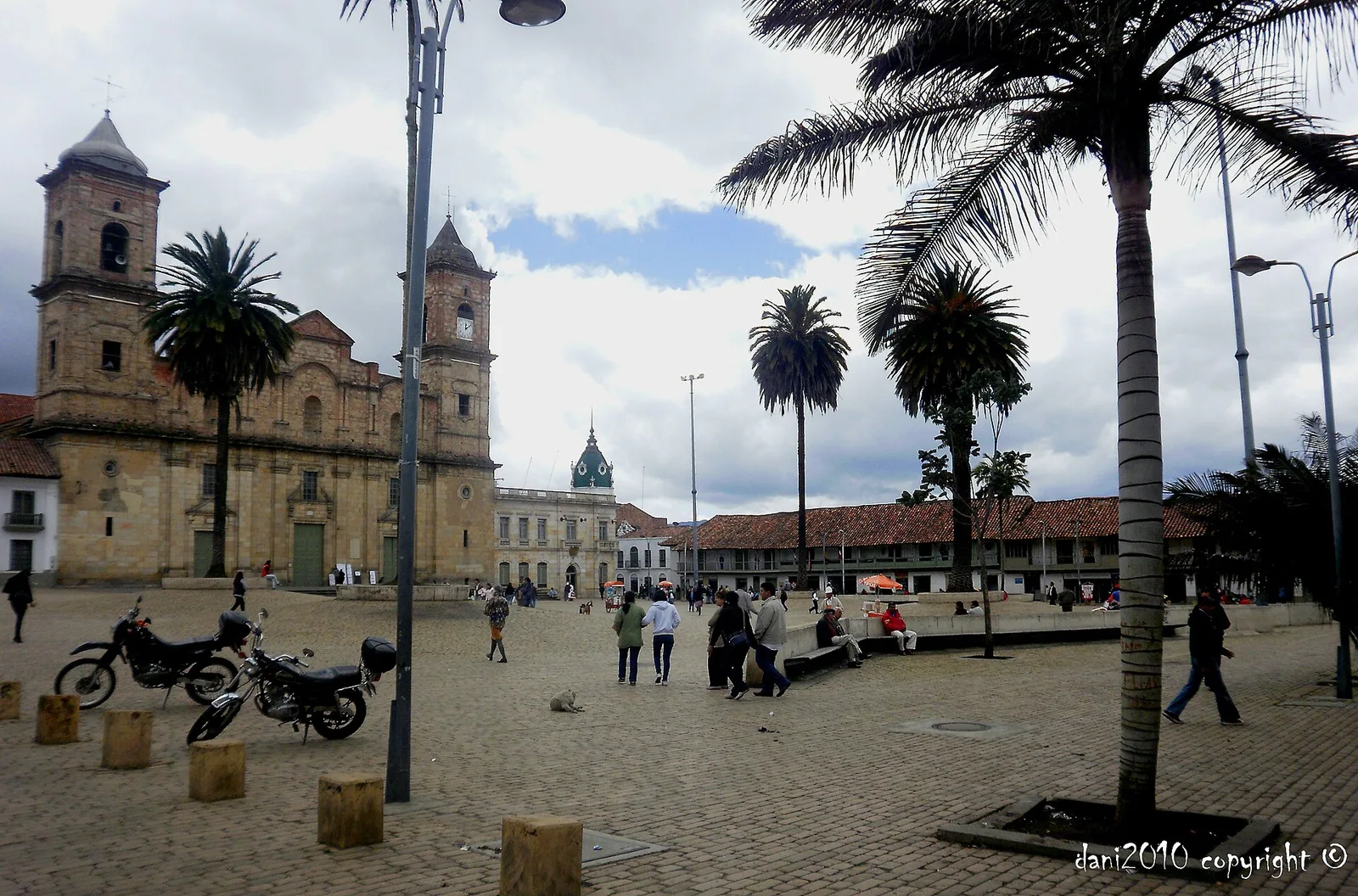
    The Plaza de los Comuneros is the main square of Zipaquirá, a tidy colonial plaza with palm trees, a large church, and cafes around it. It is worth a short stop after the salt mine to see the town itself. Expect a quiet, small-town square, with the most life at weekends.

    A plaza in Zipaquirá with a twin-towered church, palm trees, and parked motorcycles
    Photo: DnTrotaMundos ☮ · CC BY 3.0
  6. 1 hour

    Calle 4, Zipaquirá

    Stroll the pedestrian shopping street of shops, craft stalls, and cafes.

    Calle 4 is the pedestrian shopping street of Zipaquirá, running from the area where the buses arrive to the historic plaza, with shops, craft stalls, and cafes. It is worth an easy stroll for local crafts, a coffee, and the small-town atmosphere. Expect a relaxed street that is busier at weekends and a good place to look for souvenirs.

  7. 3 hours

    Bus back to Bogotá (about 1 to 2 hours), then TransMilenio to the center (about 1 hour)

  8. 1 hour 30 min

    Dinner near your hotel

Itinerary decisions

What makes the cut, what can wait, and what is less worth it.

Essential

  • The Gold Museum
  • Monserrate on a clear morning
  • The Salt Cathedral of Zipaquirá
  • La Candelaria and the Plaza de Bolívar

Optional

  • The Botero Museum
  • La Macarena and Zona G
  • The National Museum of Colombia

Not prioritized

  • A coffee-region trip, which does not fit in three days
  • Adding Guatavita or the Chicaque forest to this version

Before you use this plan

  • Hours, closures, prices, and conditions can change.
  • Bogotá sits at about 2,600 meters and Monserrate at about 3,150, so take the first day easy, drink water, and expect to be short of breath on stairs and climbs.
  • Monserrate is reached by cable car or funicular, and sometimes only the funicular runs (for example during maintenance periods in the autumn), so check which is available. Times vary by day and it is busiest on Sundays and holidays, so go early on a clear morning. The walking path is free but is only open in the morning and is closed on Tuesdays, so do not rely on it unless local sources confirm it is open and busy.
  • The Gold Museum and the National Museum are closed on Mondays and the Botero Museum is closed on Tuesdays, so start the trip on a Wednesday to Saturday (Day 1 cannot fall on a Monday or Tuesday, and Day 2 cannot fall on a Monday). Check each official site for your dates.
  • Keep belongings close and avoid walking in La Candelaria and downtown after dark; use taxis or rideshare apps in the evening, and keep your phone out of sight on the street.
  • Zipaquirá is reached by bus from the Portal del Norte, which is itself about an hour from the center on TransMilenio, and the bus takes about 1 to 2 hours each way depending on traffic, so Day 3 is a long day. The Salt Cathedral is a walk or short taxi up from the town bus terminal. A tourist train may run on some weekends, but confirm that with Turistren, since the bus is the dependable option. Book the Salt Cathedral ahead online if you can, choosing a later slot to allow for bus delays, since weekends and holidays are crowded, and allow time for return traffic.
  • This is a public example; Dayworthy adapts it to your dates, pace, hotel, and interests inside the app.

Dayworthy

Turn this example into your trip.

Dayworthy adapts the itinerary to your dates, pace, hotel, interests, and saved places.