Dayworthy itinerary

A realistic 3-day Bangkok itinerary for first-time visitors

Bangkok is thrilling, generous, hot, crowded, and easy to overpack. This three-day plan protects the palace-and-temple essentials, gives modern Bangkok and Chinatown their own rhythm, and saves the final day for a softer mix of temples, city views, and breathing room.

Destination
Bangkok, Thailand
Length
3 days
Pace
balanced
The Grand Palace complex in Bangkok
Credit: Preecha.MJ, via Wikimedia Commons (CC BY-SA 4.0) · CC BY-SA 4.0

Day-by-day plan

A paced plan, not an endless list.

Day1

The Grand Palace, Wat Pho, Wat Arun, flower markets, and a riverside first day

Start with Bangkok’s most important royal and temple sights while energy is high, then keep the afternoon along the river instead of fighting traffic across town. This is the classic opening day, but the breaks are what keep it realistic.

  1. 2 hours

    The Grand Palace

    Explore the majestic grounds and sacred Emerald Buddha temple early before the heat peaks.

    This is the old heart of Siam’s monarchy, a sprawling complex that has anchored royal life and state pageantry since the late 18th century. It’s worth visiting if you want Bangkok’s classic must-see: layered temple details, gilded buildings, and a sense of how the capital was formally presented to the world. Expect crowds and a very polished historic site rather than a quiet, contemplative palace experience.
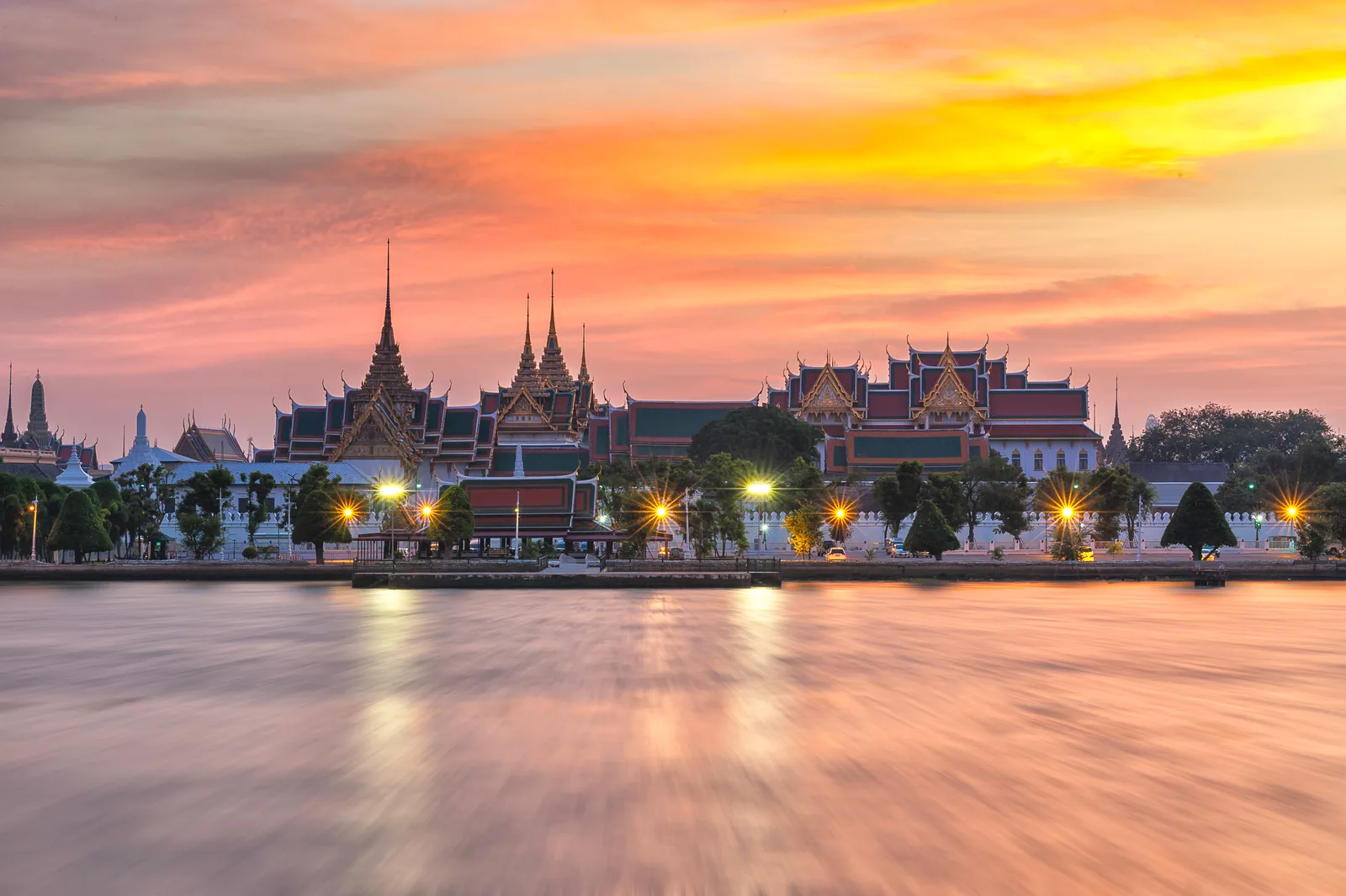
    The Grand Palace complex in Bangkok
    Credit: Preecha.MJ, via Wikimedia Commons (CC BY-SA 4.0) · CC BY-SA 4.0
  2. 1 hour 15 min

    Wat Pho

    Visit the Reclining Buddha and use this as the calmer counterpoint to the Grand Palace.

    Wat Phra Chetuphon—better known as Wat Pho—is one of Bangkok’s essential temple visits, combining scale, atmosphere, and history in a way that feels distinctly Thai. It’s especially worth it for the Reclining Buddha, the quieter chapel grounds, and the detailed murals and decoration that reward a slow wander rather than a quick photo stop. Expect a busy but dignified site where covering up, moving respectfully, and taking your time make the visit much better.
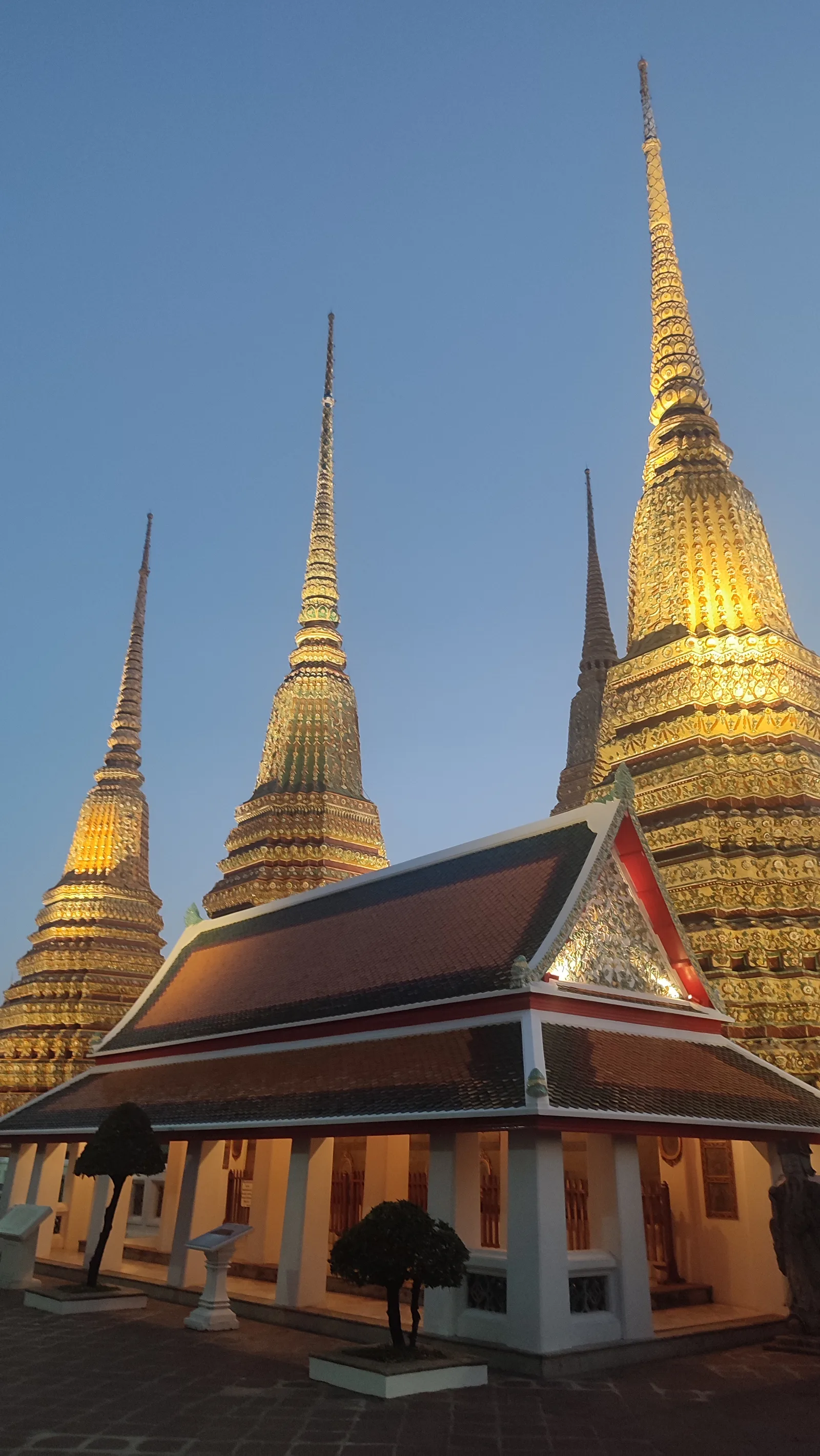
    Wat Pho in Bangkok
    Credit: Deepak-nsk, via Wikimedia Commons (CC0) · CC0
  3. 1 hour 15 min

    Lunch in Tha Tien

    Stay close to the river and the next ferry move. After two major temple stops, convenience matters more than chasing a famous restaurant across town.

  4. 1 hour 15 min

    Wat Arun

    Cross the river when the light is good and give yourself time for the steep details, not just a photo.

    Set on the west bank of the Chao Phraya in Thonburi, Wat Arun is a working Buddhist temple with a striking mix of Thai, Hindu, and Buddhist design. It is worth visiting for the dramatic prang, the riverside setting, and the sense of place it gives you in Bangkok’s old waterway landscape. Expect a short but memorable stop that’s more about architecture, atmosphere, and photos than a long museum-style visit.
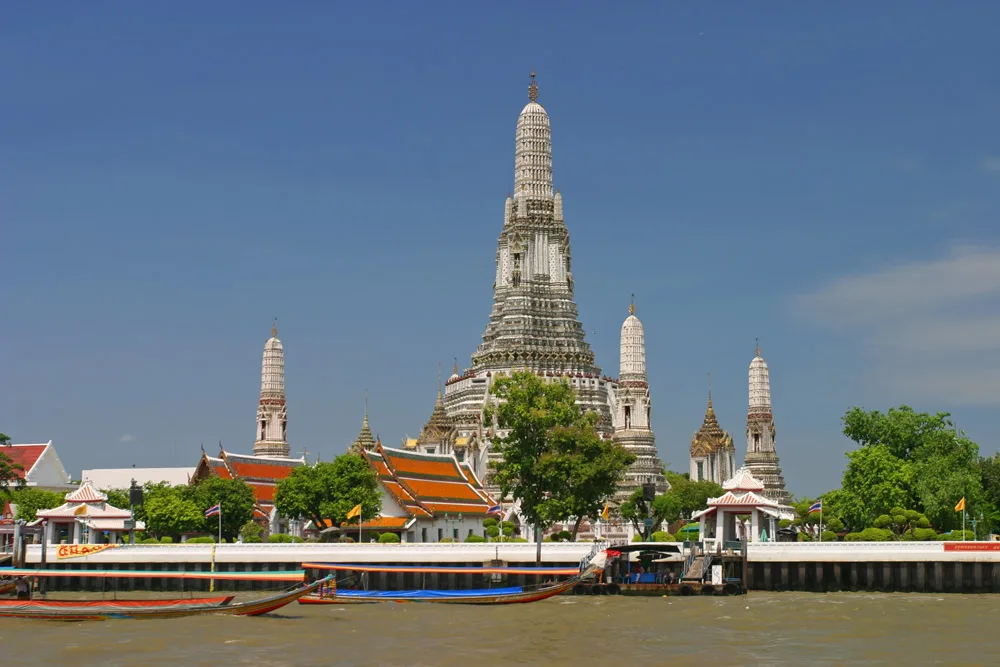
    Wat Arun beside the Chao Phraya River in Bangkok
    Credit: Diliff, via Wikimedia Commons (CC BY 2.5) · CC BY 2.5
  5. 1 hour

    Pak Khlong Talat

    Use the flower market as a sensory shift after the temples.

    Pak Khlong Talat is Bangkok’s primary flower market, with stalls and side streets packed with blossoms, fruit, and vegetables near Memorial Bridge. It’s worth a visit if you want a local, sensory experience rather than a polished attraction: the market is especially lively before dawn when deliveries arrive by boat and truck, and the whole area feels deeply tied to everyday Bangkok life. Because it operates around the clock, you can come almost anytime, but the best energy is in the early hours.
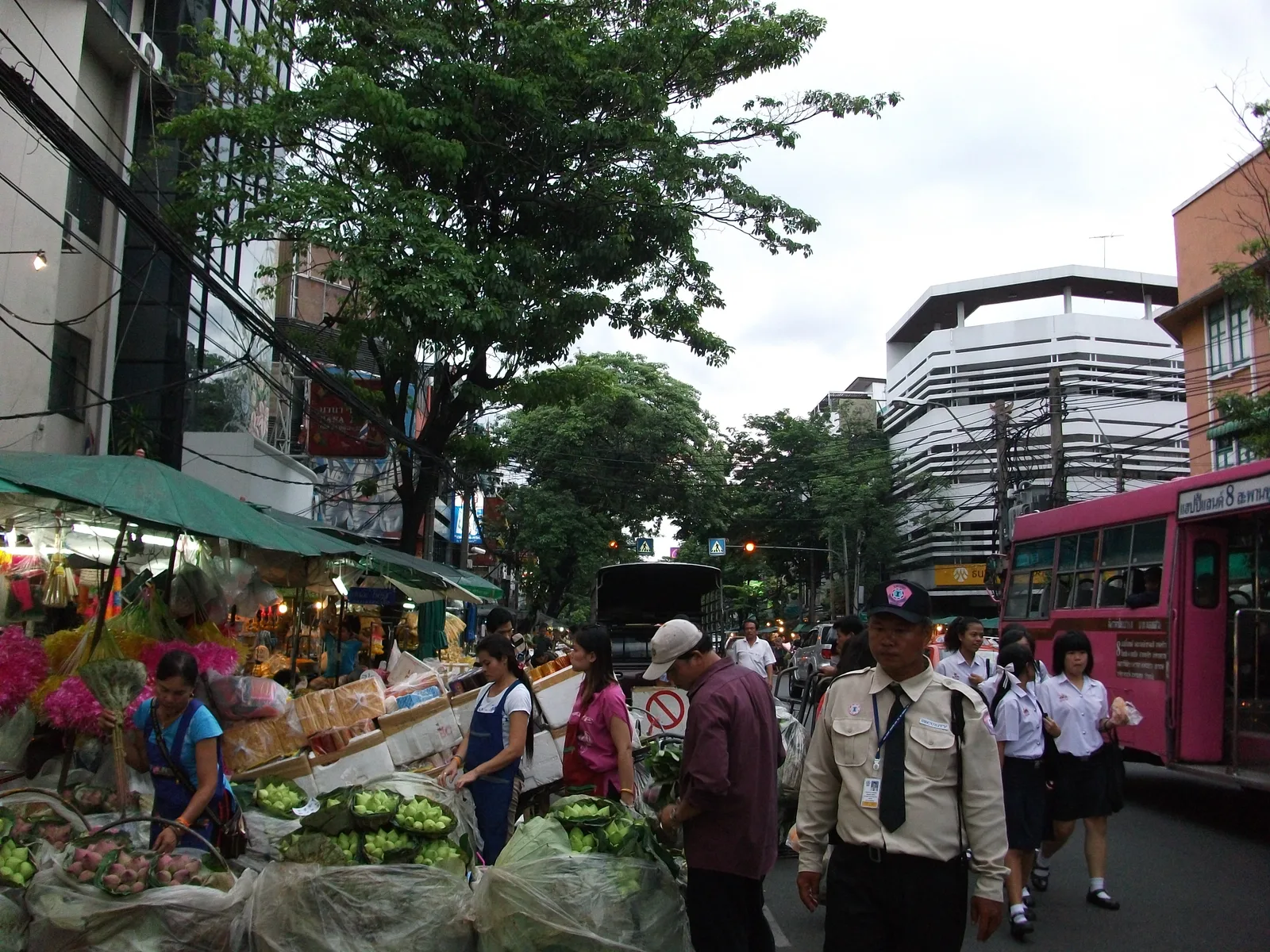
    Pak Khlong Talat flower market in Bangkok
    Credit: Sry85, via Wikimedia Commons (CC BY-SA 4.0) · CC BY-SA 4.0
  6. 1 hour 30 min

    Afternoon rest and refresh

    Protect this pause. Bangkok heat can quietly drain the day, especially after palace dress codes, temple courtyards, and river transfers.

  7. 1 hour

    Chao Phraya Promenade

    Stroll along the illuminated river walkway as the city cools down.

    Chao Phraya Promenade is a relaxed stretch along Bangkok’s main river, better suited to strolling, people-watching, and catching the city from the water’s edge than to checking off a single landmark. It’s worth a stop if you like atmospheric riverfront scenes, access to ferry piers, and a break from traffic-heavy streets; you’ll usually get the most out of it in the late afternoon or evening. Expect a mix of open walkway, views across the river, and the everyday rhythm of Bangkok moving by boat.
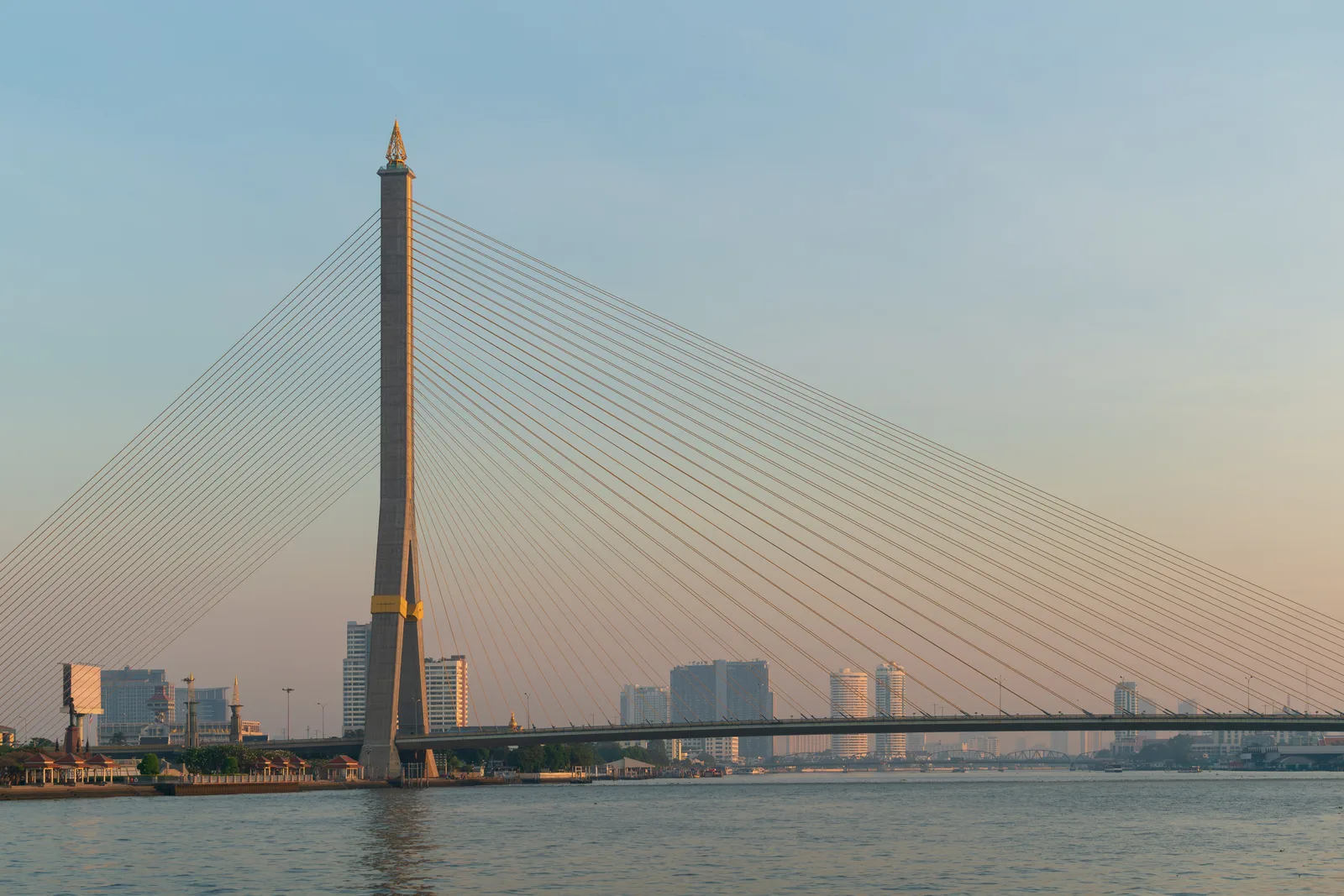
    The Chao Phraya riverside in Bangkok
    Credit: Dominic Nelson, via Wikimedia Commons (CC BY-SA 4.0) · CC BY-SA 4.0
  8. 1 hour 30 min

    Dinner by the river

    Stay riverside for dinner if the day ran long. The view and easier logistics are more useful than adding another neighborhood.
Day2

Golden Mount, Jim Thompson House, Siam, Lumphini Park, and Chinatown at night

Use day two to show Bangkok’s range: an old-city hilltop temple, a teak-house museum, contemporary art, park downtime, and Yaowarat after dark. The route has contrast without pretending the whole city is walkable.

  1. 1 hour 15 min

    Wat Saket / Golden Mount

    Start early for the climb and views before the day gets too hot.

    Set atop the Golden Mount, Wat Saket pairs a gentle stair climb with sweeping views and a quiet, reflective temple atmosphere. It is worth visiting if you want a break from Bangkok’s traffic and a little old-city character; expect something more serene and scenic than flashy. The payoff is best for travelers who enjoy temples, city views, and a slower pace.

  2. 1 hour 30 min

    Jim Thompson House Museum

    Tour the beautiful traditional teak complex set in lush tropical gardens.

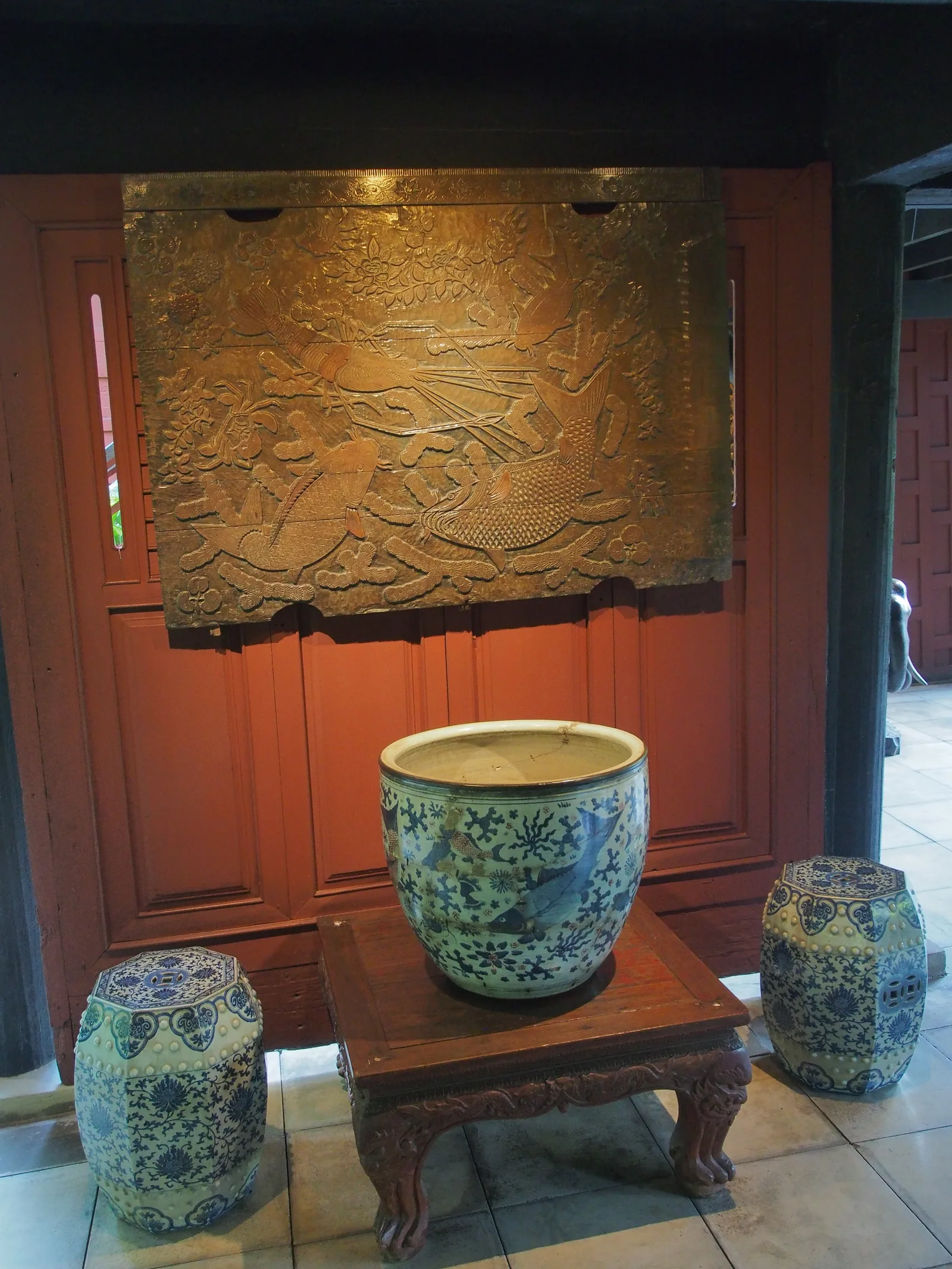
    Set just off the city’s rush, the Jim Thompson House Museum feels more intimate than a typical big-ticket sight: traditional wooden houses, shady gardens, and a compact museum trail make it an easy cultural stop. It’s worth visiting if you like design, history, or a quieter break from Bangkok’s heat and traffic; if you want high-energy sightseeing, it may feel more like a pleasant pause than a must-do headline attraction.

    Jim Thompson House Museum in Bangkok
    Credit: Clay Gilliland, via Wikimedia Commons (CC BY-SA 2.0) · CC BY-SA 2.0
  3. 1 hour 15 min

    Lunch in Siam

    Use Siam as the practical reset between the museum morning and the afternoon art/park loop.

  4. 1 hour 30 min

    Bangkok Art and Culture Centre

    Browse contemporary Thai visual art and craft shops in a modern atrium.

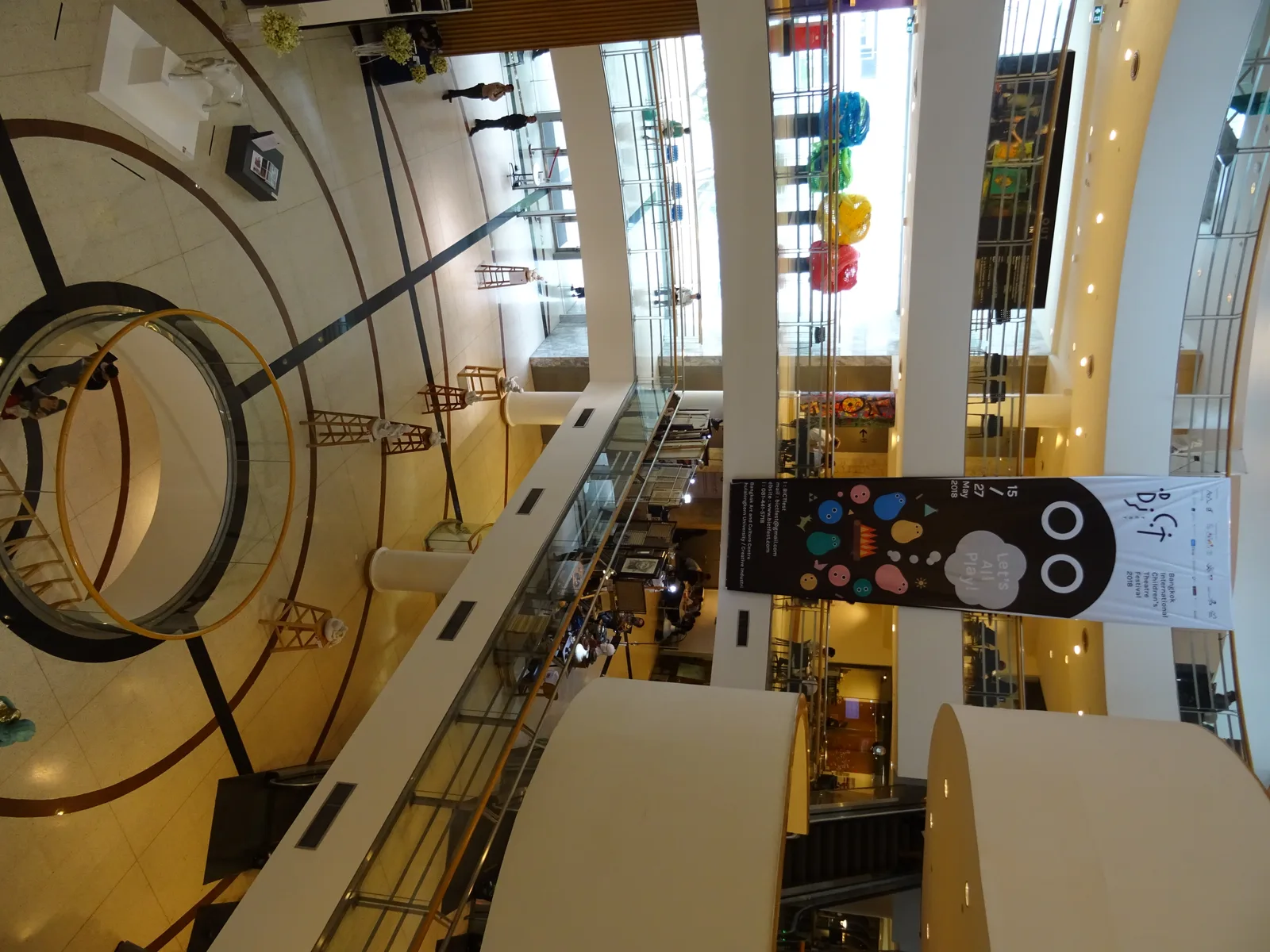
    The Bangkok Art & Culture Centre is one of the city’s easiest places to dip into modern art and creative culture without needing a full day or a big budget. It mixes rotating exhibitions with music, theatre, film, design events, cafés, bookshops, craft stores, and an art library, so it feels more like a cultural hangout than a formal museum. It’s worth visiting if you like seeing what Bangkok’s contemporary scene is doing now, but it’s less compelling if you want a single blockbuster collection or a quiet, focused gallery experience.

    Bangkok Art and Culture Centre
    Credit: Christophe95, via Wikimedia Commons (CC BY-SA 4.0) · CC BY-SA 4.0
  5. 1 hour 15 min

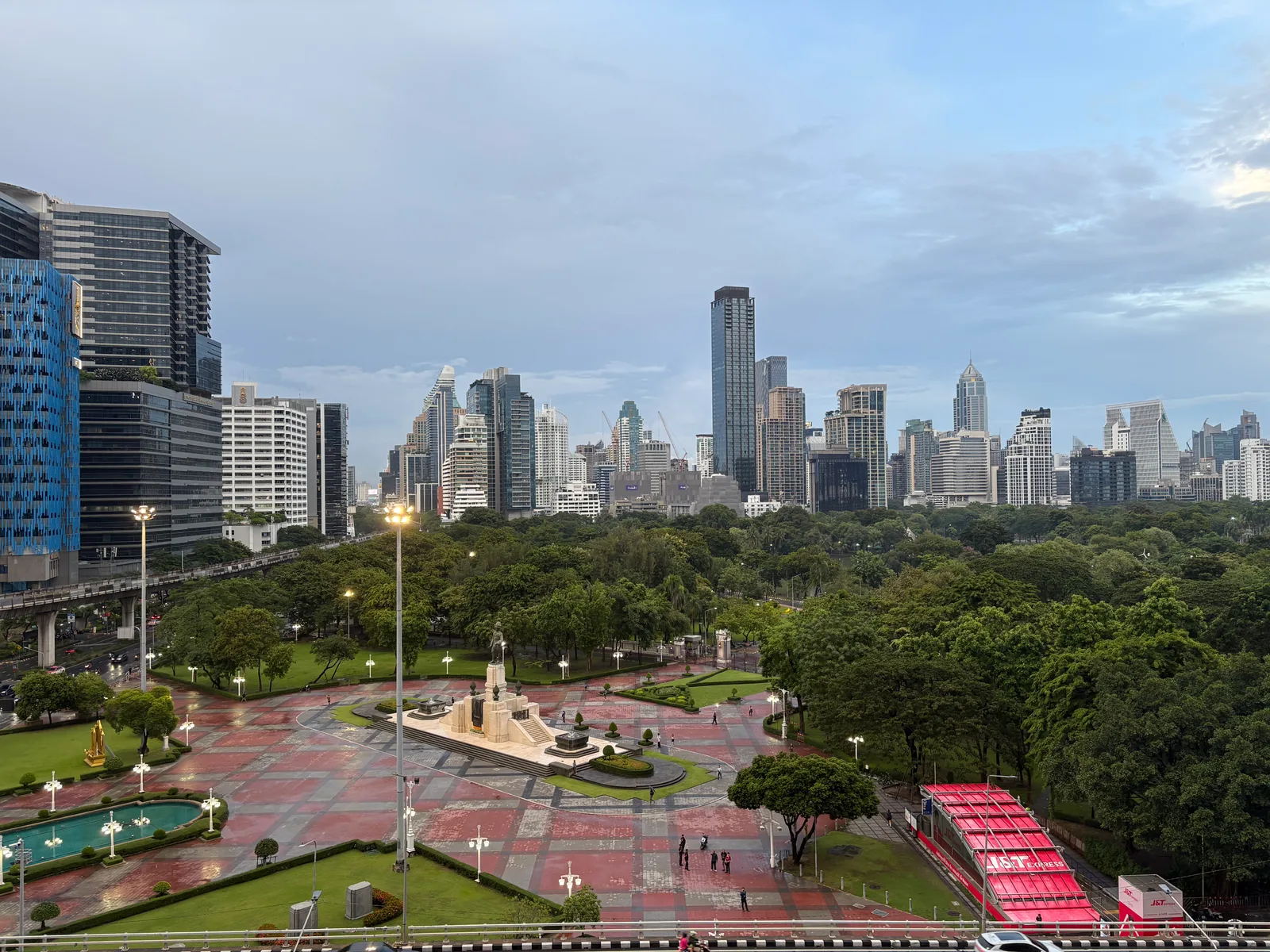
    Lumphini Park

    Take an easy late-afternoon walk around the lake to spot resident monitor lizards.

    Lumphini Park is one of Bangkok’s most valuable patches of public open space: a broad, leafy park with a lake, playgrounds, and a loop that draws walkers and joggers morning and evening. It feels less like a sightseeing stop and more like a local reset button, especially if you want a calmer side of the city without leaving the center. It’s worth a visit for an easy stroll, a boat rental on the water, or simply a break from traffic and heat.

    Lumphini Park in Bangkok
    Credit: Chainwit., via Wikimedia Commons (CC BY 4.0) · CC BY 4.0
  6. 1 hour 30 min

    Downtime and refresh

    Take this break seriously before Chinatown. Yaowarat is best when you arrive with appetite and patience.

  7. 1 hour 30 min

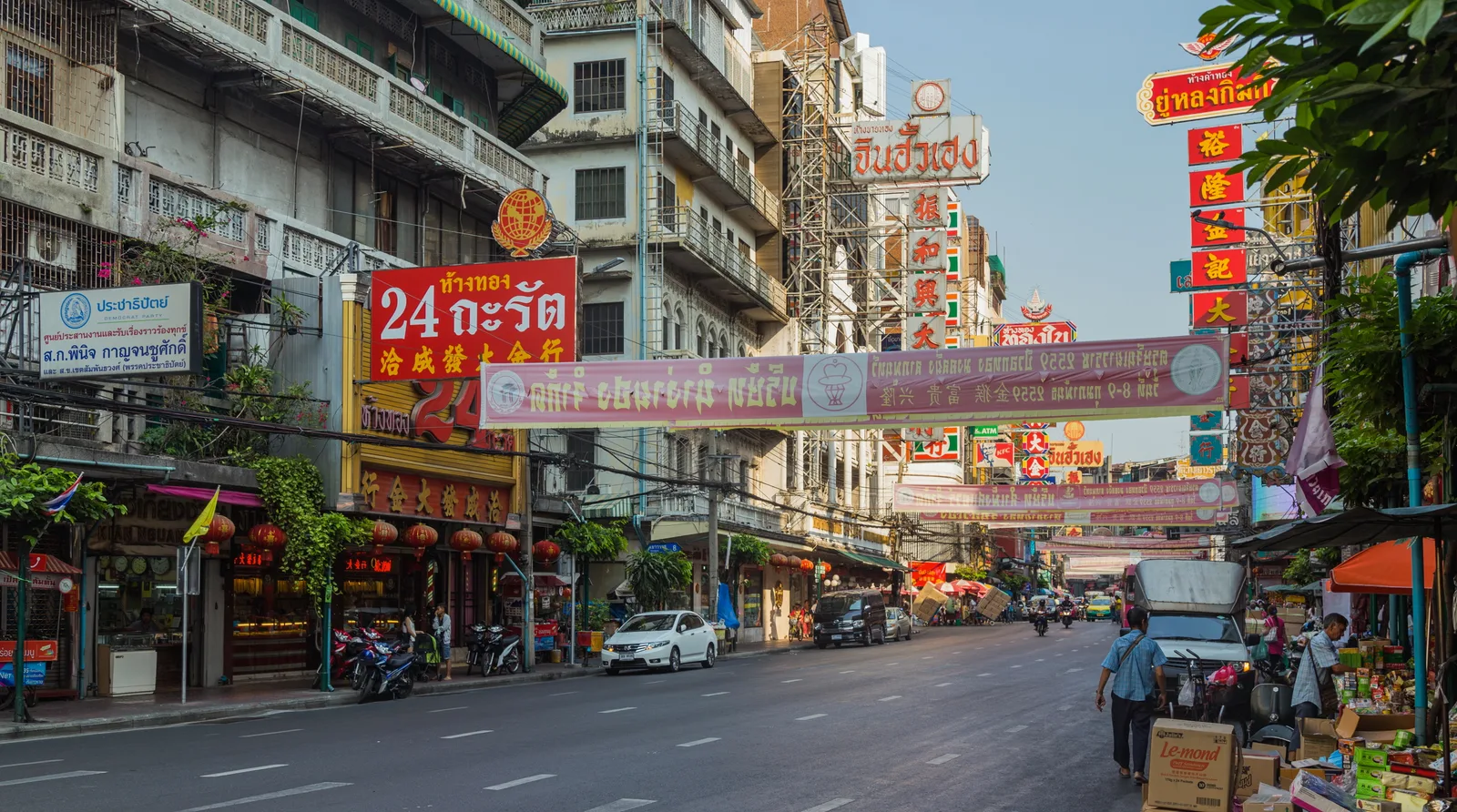
    Yaowarat Road

    Wander under neon lights through the bustling street food heart of Chinatown.

    Yaowarat Road is the beating heart of Bangkok’s Chinatown, where old Chinese-Thai trading streets, temples, gold shops, and snack stalls all crowd together. It’s worth coming for the atmosphere as much as the food: by night the road turns into one of the city’s best-known eating districts, with locals and visitors spilling into the sidewalks. Expect energy, traffic, and plenty of choices rather than a single neat sightseeing stop.

    Yaowarat Road in Bangkok Chinatown
    Credit: Marcin Konsek, via Wikimedia Commons (CC BY-SA 4.0) · CC BY-SA 4.0
  8. 1 hour 30 min

    Dinner in Chinatown

    Let dinner be part of the walk: snacks, noodles, seafood, fruit, or dessert. Choose a few stops instead of trying to sample everything.

Day3

Marble Temple, quieter museums, Ratchaprasong, and a skyline finale

The final day is intentionally less temple-heavy. It gives you a graceful morning, an easy central afternoon, and one high-view evening without squeezing in another sprawling market or cross-city detour.

  1. 1 hour 15 min

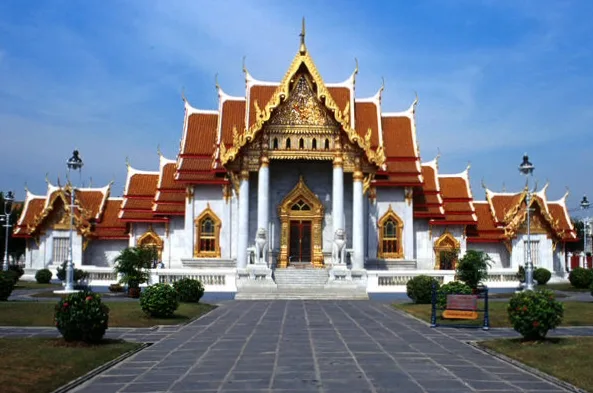
    Wat Benchamabophit / Marble Temple

    Use this as a quieter, more graceful temple morning after the big-ticket first day.

    Known as the Marble Temple, Wat Benchamabophit rewards visitors who appreciate architecture and a calmer temple experience. Its polished stone, graceful roofline, and orderly grounds make it feel more serene than many of Bangkok’s busier sights, so it’s a good stop if you want a slower-paced cultural visit rather than a quick photo hunt. Expect a working temple atmosphere: dress respectfully, move quietly, and give yourself time to notice the details rather than rushing through.

    Wat Benchamabophit, the Marble Temple in Bangkok
    Credit: The original uploader was NamKhaeng at French Wikipedia., via Wikimedia Commons (CC BY-SA 3.0) · CC BY-SA 3.0
  2. 1 hour 30 min

    Suan Pakkad Palace Museum

    Explore eight traditional Thai houses housing fine antiquities away from crowds.

    Suan Pakkad Palace Museum is less a single museum than a small cluster of traditional Thai houses filled with art, furniture, ceramics, and royal-era curiosities. It’s worth a stop if you like atmospheric, low-key places that feel personal rather than grand, with enough variety to make the visit rewarding without demanding hours. Expect a peaceful, somewhat old-fashioned visit that appeals most to travelers who enjoy history, architecture, and quiet corners over big-ticket spectacle.

  3. 1 hour 15 min

    Lunch in Ratchathewi

    Keep lunch simple and central so the afternoon does not become a traffic puzzle.

  4. 45 min

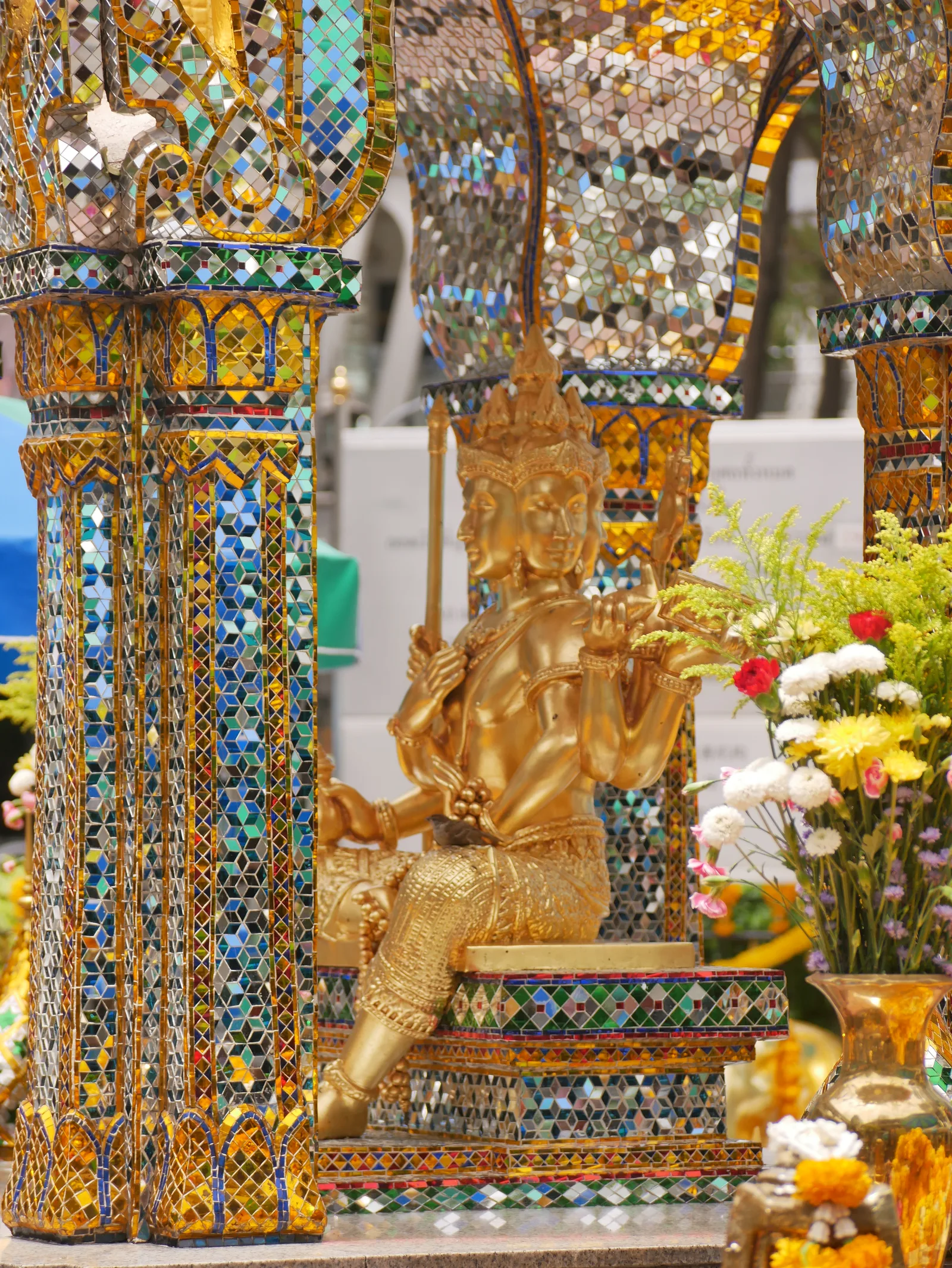
    Erawan Shrine

    Treat this as an active devotional space in the middle of the city, not a spectacle.

    The Shrine of Erawan is a compact but deeply atmospheric Hindu shrine in the middle of one of Bangkok’s busiest shopping-and-transit districts. It’s worth a stop if you want to see a living devotional site rather than a curated monument: people come to pray, make offerings, and watch traditional dancers perform as thanks for answered wishes. Expect a modest space with a lot of energy, so it’s more about the experience and people-watching than about spending a long time sightseeing.

    Erawan Shrine in Bangkok
    Credit: กสิณธร ราชโอรส, via Wikimedia Commons (CC BY-SA 4.0) · CC BY-SA 4.0
  5. 1 hour

    Ratchaprasong SkyWalk

    Use the elevated walkways to move through central Bangkok without fighting every intersection.

    This skywalk is less a destination than a very practical way to move around central Bangkok without fighting the heat and road crossings. It is worth using if you’re shopping, hotel-hopping, or linking major malls and transit in the Ratchaprasong area; the real appeal is convenience and a bit of urban people-watching from above. If you want a scenic landmark, it’s not that—think functional, busy, and often most useful when the streets below are at their most congested.

  6. 1 hour 45 min

    Coffee and cooling break

    A deliberate air-conditioned pause keeps the final evening enjoyable. Bangkok rewards stamina, but only if you manage it.

  7. 1 hour 30 min

    King Power Mahanakhon

    Take in 360-degree sunset views across Bangkok from Thailand's highest observation deck.

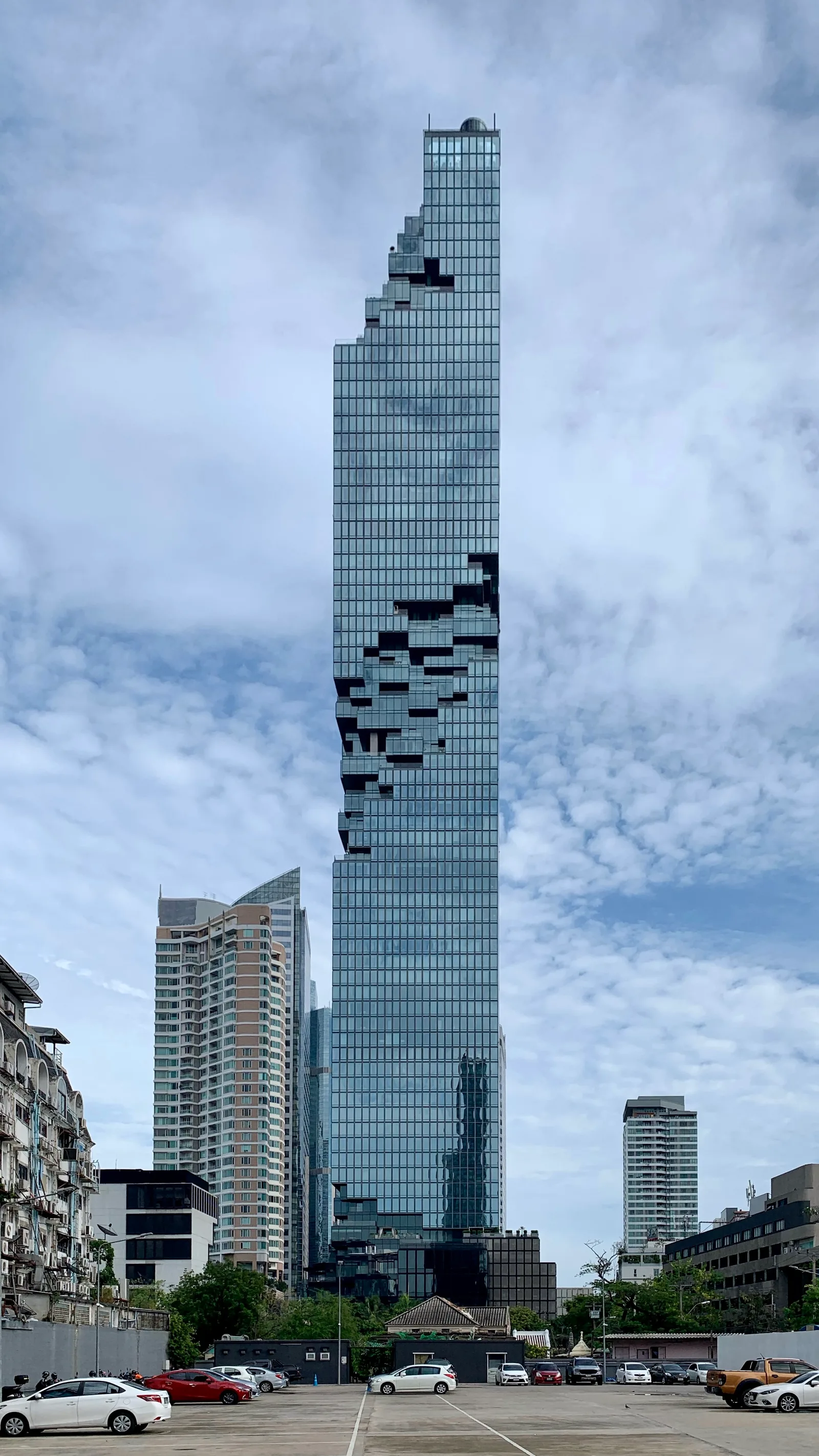
    Rising from Silom/Sathon, this mixed-use skyscraper is worth a look for its dramatic, pixel-cut silhouette and its place in Bangkok’s recent skyline story. It combines hotel, retail, and residences, so the appeal is partly architectural and partly about being in a polished, central district rather than a single standalone attraction. Expect a high-end, urban atmosphere and a building that looks best from a distance as much as from up close.

    King Power Mahanakhon tower in Bangkok
    Credit: Chainwit., via Wikimedia Commons (CC BY-SA 4.0) · CC BY-SA 4.0
  8. 1 hour 30 min

    Farewell dinner in Silom

    End somewhere with an easy ride back to your hotel. A final Bangkok dinner should feel celebratory, not logistically heroic.

Itinerary decisions

What makes the cut, what can wait, and what is less worth it.

Essential

  • Give the Grand Palace, Wat Pho, and Wat Arun one focused first day instead of scattering temple fatigue across the trip.
  • Use the river and BTS/SkyWalk logic where possible; Bangkok is not a city to solve entirely on foot.
  • Save Chinatown for evening, when the food energy makes the crowds feel more worthwhile.

Optional

  • Add a floating market only if you are willing to spend most of a day on logistics.
  • Swap Mahanakhon for a rooftop bar if you prefer a slower final evening over a ticketed viewpoint.
  • Add more shopping time in Siam if malls, design stores, or food courts are part of the appeal.

Not prioritized

  • Trying to include every famous market, mall, temple, and rooftop in three days.
  • Crossing the city repeatedly by taxi during peak traffic.
  • Adding far-out day trips before giving central Bangkok enough time to make sense.

Before you use this plan

  • Temple dress codes are real. Cover shoulders and knees, and bring layers that work in heat.
  • The Grand Palace, major temples, restaurants, viewpoints, and museums can change hours or entry rules. Confirm important anchors before going.
  • Heat, humidity, rain, and traffic can change the pace quickly. Build in water, shade, and air-conditioned breaks.
  • This public guide is a realistic example; Dayworthy adapts the order to your hotel, dates, pace, mobility, and interests inside the app.

Dayworthy

Turn this example into your trip.

Dayworthy adapts the itinerary to your dates, pace, hotel, interests, and saved places.